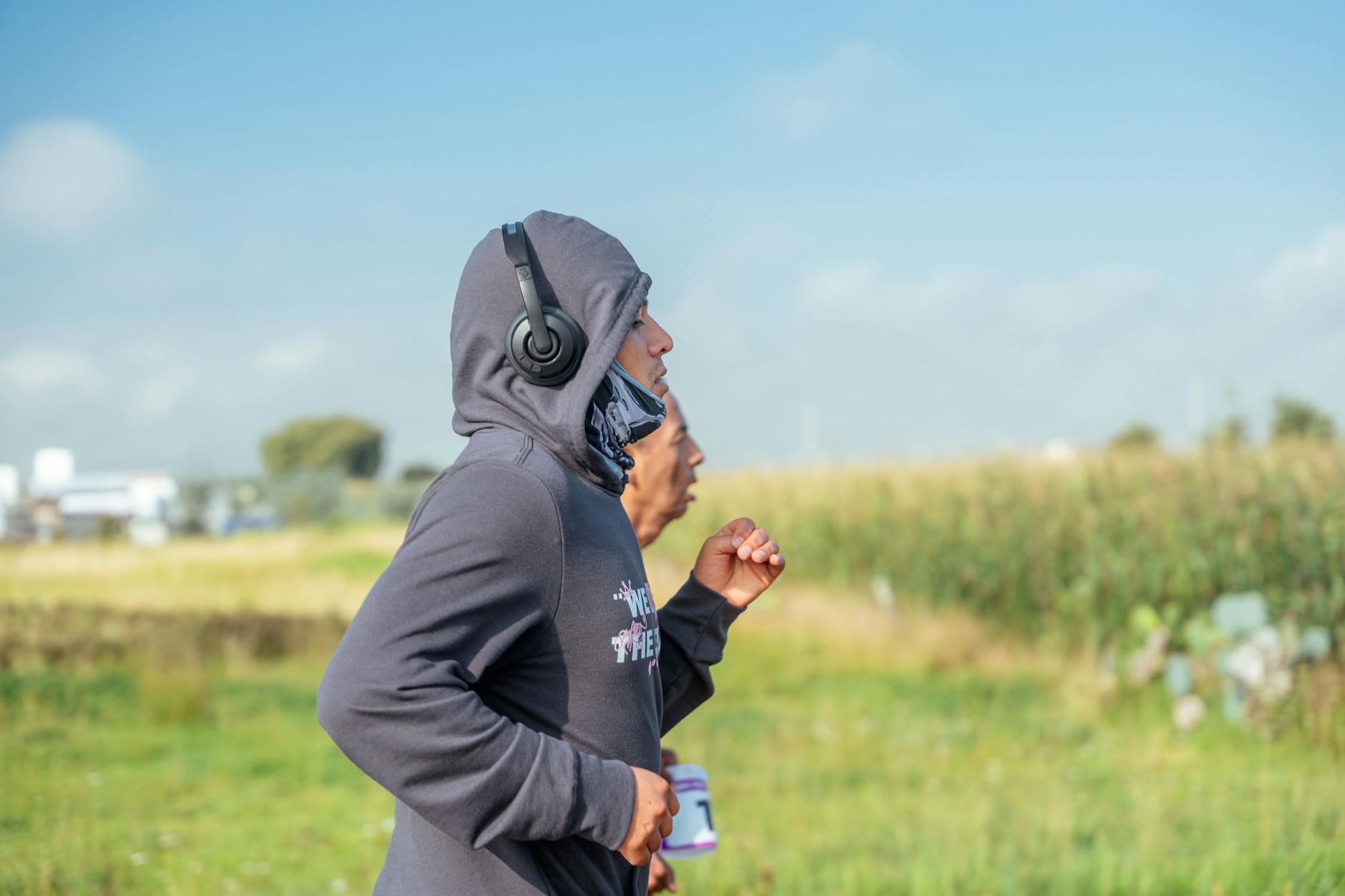
Photo by Pexels LATAM on Pexels
You’re two kilometres into a run and already gasping. Your chest feels tight, your breathing is ragged, and you’re pretty sure your lungs are the problem. Spoiler: they probably aren’t. For most everyday runners, breathing issues during a run aren’t about lung capacity — they’re about mechanics, pace, and habits that nobody ever bothered to teach you.
The good news is that breathing is one of the few things in running you can actually change fairly quickly. Not overnight, but within a few weeks of deliberate practice, most runners notice a real difference. This article won’t promise you’ll breathe like a Kenyan Olympian. But it will give you practical, specific things to try the next time you lace up.
Why you get breathless (and it’s not always your fitness)
Before fixing anything, it helps to understand what’s actually happening. When you run, your muscles demand more oxygen. Your heart pumps faster, and your breathing rate increases to match. The problem for most runners isn’t that their lungs can’t supply enough oxygen — it’s that they’re running too fast for their current fitness level, breathing shallowly from the chest, or both.
Running too hard too soon is the most common culprit. If you can’t hold a short conversation at your current pace — not recite a speech, just string together a sentence — you’re probably running faster than your aerobic system can comfortably support. That’s a pacing problem, not a breathing problem. Slow down first before you try to fix anything else.
Shallow chest breathing is the second issue. Most of us breathe from the upper chest by default, especially when we’re anxious or working hard. This is inefficient — you’re moving a small amount of air with a lot of effort. Belly breathing, or diaphragmatic breathing, pulls air deeper into the lungs and is significantly more efficient under exercise load.
Belly breathing: what it is and how to practise it
Diaphragmatic breathing means letting your belly expand outward as you inhale, rather than lifting your shoulders or puffing out your chest. Your diaphragm — the dome-shaped muscle beneath your lungs — contracts and flattens, creating space for your lungs to fill more completely.
To practise it, lie on your back and place one hand on your chest, one on your stomach. Breathe in slowly. If only your chest hand rises, you’re chest breathing. Try again, this time consciously pushing your belly hand upward on the inhale. It feels odd at first, especially if you’ve been chest-breathing your whole life.
Once you can do this lying down, try it standing still, then walking, then at an easy jog. It takes a few weeks before it starts to feel natural during a run. Don’t try to nail this in one session — it’s a gradual rewiring, not a quick fix.
Nose vs mouth breathing: what actually works
This one gets debated endlessly. Some coaches swear by nose-only breathing. The truth is more nuanced.
Nose breathing filters and humidifies the air, which can reduce airway irritation — useful in cold or dry conditions. It also encourages slower, more controlled breathing, which can help at easy paces.
Mouth breathing allows you to move more air, faster. At higher intensities — tempo runs, intervals, race pace — your body simply needs more oxygen than your nose can supply efficiently.
The practical answer: breathe through both, and let intensity dictate the balance.
| Effort Level | Perceived Exertion (1–10) | Breathing Pattern |
|---|---|---|
| Easy run / recovery | 4–5 | Nose + mouth, relaxed rhythm |
| Comfortable long run | 5–6 | Mostly nose, mouth as needed |
| Tempo / threshold | 7–8 | Mouth-dominant, controlled rhythm |
| Intervals / race effort | 8–9+ | Full mouth breathing |
At an easy pace — say, 6:30–7:00/km for many recreational runners — you should be able to breathe mostly through your nose with your mouth gently open. If you’re gasping through your mouth at that pace, the pace is too fast.
Breathing rhythm: should you count your steps?
Rhythmic breathing means syncing your breaths to your footstrikes. The most commonly recommended pattern for easy running is a 3:2 ratio — inhale for three steps, exhale for two. This means you alternate which foot hits the ground at the start of each exhale, which research suggests may reduce impact stress on the body by distributing the load more evenly.
At harder efforts, a 2:1 pattern (inhale two steps, exhale one) is more manageable when you need more air. During all-out efforts, most runners naturally shift to 1:1 or just breathe as fast as they need to — and that’s fine.
If counting steps while running sounds like one more thing to think about, you don’t have to. Many runners find it useful early on but drop it once good habits form. Use it as a training tool, not a rule you must follow forever.
What to do when you get a stitch
Side stitches — that sharp cramp under your ribs — are closely linked to breathing patterns and are extremely common in less experienced runners. The exact cause isn’t fully understood, but according to sports medicine research, they’re likely related to irritation of the diaphragm or the ligaments connecting it to surrounding organs.
Practical things that help:
- Slow down or walk briefly — trying to push through a stitch rarely works and usually makes it worse
- Exhale forcefully when the foot on the opposite side to the stitch hits the ground — if the stitch is on your right, breathe out hard on your left footstrike
- Press two fingers firmly into the stitch and bend slightly forward while exhaling
- Don’t eat a large meal within 2 hours of a run — a heavy stomach increases stitch frequency significantly
Stitches tend to get less frequent as your fitness and breathing mechanics improve. If you’re getting them on every single run, your pacing and pre-run eating are the first places to look.
Breathing in cold weather
Cold air is legitimately harder to breathe. It’s drier, and your airways have to work harder to warm and humidify it before it reaches your lungs. This can cause coughing, tightening, or that familiar burning sensation in your chest on a winter run.
A few things that help:
- Breathe in through your nose as much as possible — your nasal passages warm the air better than your mouth
- Use a buff or scarf loosely over your mouth in very cold weather — this recirculates some warm, humid air and reduces the harsh effect of cold air
- Warm up gradually — starting at a very easy pace for the first 5–10 minutes gives your airways time to adjust
If you have asthma or exercise-induced bronchoconstriction, cold weather may trigger symptoms. Worth talking to your GP if you regularly experience significant wheezing or chest tightness — this is manageable with the right advice, and you don’t have to just push through it.
When your breathing improves (realistic timeline)
Breathing better while running isn’t a one-session fix, but improvement comes faster than most people expect.
| Timeframe | What to expect |
|---|---|
| 1–2 weeks | Belly breathing starts to feel less awkward at easy paces |
| 3–4 weeks | Breathing rhythm feels more natural; fewer mid-run panics |
| 6–8 weeks | Noticeable improvement if pacing is also dialled in |
| 10–12 weeks | Breathing feels largely automatic at easy and moderate efforts |
The biggest caveat: none of this replaces the fitness gains that come from consistent training. Your breathing will naturally become more efficient as your cardiovascular fitness improves. Technique helps, but time on your feet is still the main driver.
The honest takeaway
- Slow down first. Most breathing problems in recreational runners are pacing problems in disguise. If you can’t speak a sentence at your current pace, you’re going too fast.
- Practise belly breathing off the run — lying down, then standing, then walking. Don’t expect to rewire it mid-race.
- Use nose and mouth together, letting your effort level guide the balance. Nose-only breathing is fine at easy paces; mouth breathing at hard efforts is completely normal.
- Rhythmic breathing (3:2 at easy efforts) is worth trying if you want something concrete to focus on, but it’s a tool, not a law.
- Give it 6–8 weeks of deliberate practice alongside consistent running. The breathing improvements you’re looking for are real — they just take a bit of patience.