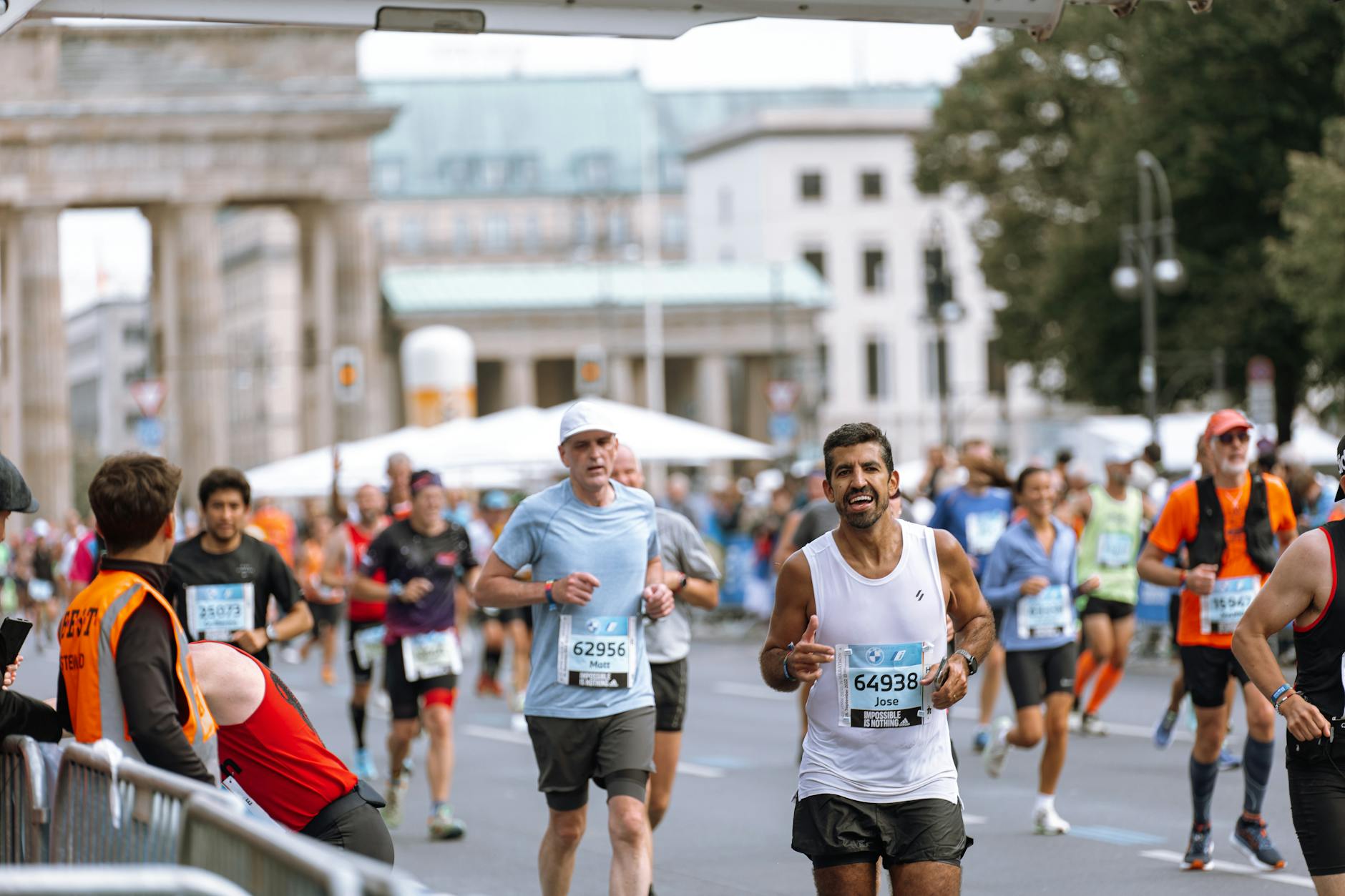
Photo by Eddson Lens on Pexels
Post-marathon recovery timeline: what to expect
You crossed the finish line. You cried, possibly hobbled, definitely ate something you’d never normally eat at 11am. And then — maybe the next day, maybe a week later — a small voice in your head started asking: when can I run again?
That question is more complicated than it sounds. Because finishing a marathon doesn’t just leave you tired. It leaves you genuinely damaged — and not in a dramatic way, just in the way that 26.2 miles of repetitive impact, glycogen depletion, and sustained effort does to a human body that isn’t made of carbon fibre. The good news is that your body knows exactly what to do with that damage. Your job is to get out of its way.
This is a realistic, week-by-week breakdown of what post-marathon recovery actually looks like — not the Instagram version where someone’s back doing tempo runs eight days later, but the version that applies to the rest of us.
What’s actually happening in your body after a marathon
Before you can understand the timeline, it helps to understand what you’re recovering from. It’s not just sore legs.
During a marathon, your muscles sustain significant microscopic tears — this is normal, and it’s how muscles rebuild stronger. But the damage from 26.2 miles is substantial. Research has shown elevated markers of muscle damage and inflammation in the bloodstream for up to two weeks post-race. Your immune system is suppressed. Your glycogen stores are depleted. Your tendons, ligaments, and connective tissue have been under load for three, four, five or more hours. Even your gut takes a hit — many runners experience GI distress for a day or two after a race.
None of this means you’ve broken yourself. It means you’ve done something hard, and recovery is a physiological process, not just a mood.
The first 48 hours: rest is the job
This is the one phase where the answer is genuinely simple. Do nothing. Walk slowly if you need to move. Eat. Drink. Sleep if you can, though many runners find sleep oddly disrupted the night after a marathon due to adrenaline and cortisol still circulating.
Expect: significant DOMS (delayed onset muscle soreness) peaking around 24–48 hours post-race. Stairs will be your enemy. Your quads will feel like they’ve been worked over with a cricket bat. This is normal.
What helps:
– Gentle walking to keep blood moving
– Protein-rich meals to begin muscle repair (aim for 1.6–2.2g per kg of bodyweight across the day)
– Compression socks if they help you feel better — evidence is mixed, but they don’t hurt
– Ice baths are polarising — some runners swear by them, but some research suggests they may blunt the adaptation response. Don’t stress if you skip them.
What doesn’t help: running. Don’t run.
Days 3–7: you’ll feel better before you are better
This is the tricky bit. By day three or four, plenty of runners feel surprisingly okay. The acute soreness starts to fade. You get restless. You think maybe you’re one of those fast recoverers.
You might be. But most people aren’t, and the internal damage — the muscle fibre breakdown, the inflammation, the connective tissue stress — is still very much in progress even when you stop limping. Research published in sports science literature has documented that muscle damage markers remain elevated for 7–14 days post-marathon, even when runners report feeling fine.
This week, gentle movement is fine — easy walking, light stretching, maybe a swim or easy bike if you want to feel like you’re doing something. But running, especially anything with pace or purpose, is still a bad idea.
Weeks 2–3: the first easy runs back
Most runners can ease back into running somewhere in week two — but the word to hold onto here is easy. We’re talking 20–30 minutes at a genuinely relaxed pace (think 60–90 seconds per kilometre slower than your marathon pace). No targets. No Strava comparisons. Just movement.
Your legs may feel heavy or flat. Your pace may feel embarrassingly slow for the effort. That’s not fitness loss — that’s your body still in repair mode. Expect it and don’t fight it.
If you feel any sharp pain, persistent joint soreness, or anything that feels wrong rather than just tired, back off. Post-marathon is a window of elevated injury risk — your body is compromised, and overuse injuries are easy to pick up when your tissues are still healing.
Week 4: building back, carefully
By week four, most runners — not all — are ready to run three or four times a week again at easy effort. Some light structure can return: maybe one slightly longer run, maybe a few strides at the end of a run to get your legs moving. Nothing that resembles a workout yet.
This is also when the psychological side of recovery can get harder. The race high has faded. Your fitness feels like it’s gone. You might feel flat or directionless — sometimes called the post-marathon blues — and it’s common enough that the NHS acknowledges post-event low mood as a real experience following significant personal events. Having something on the calendar — a low-key race, a new goal, even just a parkrun — can help more than any training advice.
The full recovery timeline at a glance
| Phase | Timeframe | What’s happening | What you can do |
|---|---|---|---|
| Immediate recovery | Days 1–2 | Peak soreness, immune suppression, glycogen depleted | Rest, eat, walk gently |
| Early recovery | Days 3–7 | Feeling better, but muscle damage still present | Walking, swimming, easy cycling — no running |
| Return to running | Weeks 2–3 | Inflammation settling, tissues repairing | Very easy runs, 20–30 min, slow pace |
| Rebuilding | Week 4 | Most systems recovered, energy returning | 3–4 easy runs/week, light structure |
| Back to training | Weeks 5–6 | Fitness returning, workouts possible | Gradual return to structured training |
| Full training load | Week 6+ | Fully recovered for most runners | Race-specific training can resume |
Note: these timelines assume a healthy race and no injury. If you ran through pain, had a very hard race, or finished significantly slower than planned (often a sign the effort was maximal), shift everything back by a week or two.
How marathon experience affects your recovery
It’s worth saying: your first marathon typically takes longer to recover from than your fifth. Not because you’re less fit, but because your body is encountering this specific stress for the first time and hasn’t developed any adaptive response to it.
First-time marathoners should be conservative and err toward the longer end of every recovery window. Runners who’ve raced frequently and know their body well can sometimes compress the timeline slightly — but “I feel fine” remains an unreliable guide for everyone.
Age also matters. Runners over 50 generally need a longer recovery window, not because they’re less capable, but because tissue repair simply takes longer as you get older. That’s biology, not a criticism.
Signs your recovery is going off track
Most people recover without problems. But here’s what warrants pausing or seeing a physio:
- Pain (not soreness) that gets worse rather than better after a few days
- Swelling or heat in a specific joint — knee, ankle, hip
- Fatigue that doesn’t improve at all after two weeks
- Any shin pain that’s sharp or localised (stress fractures are more common post-marathon when bones are compromised)
- Feeling genuinely unwell — fever, persistent GI issues, dizziness on easy efforts
None of these are panic territory, but they’re worth taking seriously rather than running through.
The honest takeaway
- Don’t run for at least seven days after a marathon, even if you feel okay. The internal damage isn’t visible, and feeling fine doesn’t mean you are fine.
- Weeks two and three are for easy running only — 20–30 minutes, genuinely slow, no pace targets, no ego.
- Full return to structured training takes most everyday runners five to six weeks. That’s not a failure — that’s a physiological fact.
- Post-marathon blues are real. Having a low-key next goal — even just getting back to parkrun — helps more than most training advice.
- First-timers and older runners should be more conservative, not less. The marathon deserves respect in recovery just as much as in training.