Photo by Towfiqu barbhuiya on Pexels
You noticed it about ten days ago. A dull ache in your shin, or maybe your foot, that showed up around kilometre 4 and faded once you stopped. Then it started showing up at kilometre 2. Then it was there before you even laced up. You told yourself it was shin splints, took two rest days, and it didn’t go away. Now you’re googling at 11pm, and the word “stress fracture” has started appearing in your search results, and your stomach has dropped a little.
Fair enough. A stress fracture is one of the few running injuries that genuinely does require you to stop running — not reduce mileage, not swap to grass, stop — and that’s a hard thing to hear when you’ve got a half marathon in six weeks. But it’s also one of the more predictable injuries in terms of how it develops and how it heals, which means it’s one you can usually catch early if you know what you’re looking for.
This article covers what a stress fracture actually is, the symptoms that separate it from ordinary muscle soreness, why it happens to runners who are often doing everything “right,” and what recovery genuinely looks like — timeline included, no vague reassurances.
What a stress fracture actually is
A stress fracture is a tiny crack in a bone, caused not by one big impact but by repeated loading that outpaces the bone’s ability to repair itself. Bone is living tissue — it constantly breaks down and rebuilds in response to the stress you put on it. That’s a good thing; it’s how bone gets stronger with training. The problem starts when the rate of breakdown (from repeated running impact) outpaces the rate of rebuilding, usually because of a sudden jump in volume or intensity, or because the bone was already weakened by low energy availability.
In runners, stress fractures show up most commonly in the tibia (shin), the metatarsals (bones in the midfoot), the fibula, the navicular bone (top of the foot), and occasionally the femoral neck (hip). Metatarsal and tibial stress fractures are the most frequent for everyday runners; femoral neck stress fractures are rarer but more serious, and need faster medical attention because of the blood supply to that part of the bone.
Symptoms: how to tell it’s not just tight muscles
This is the part that matters most, because the earlier you catch a stress fracture, the shorter your recovery. The classic pattern:
- Pain that’s localised, not diffuse. You can point to it with one finger. Shin splints and muscle tightness tend to feel like a general ache along a length of muscle; a stress fracture tends to feel like a specific sore spot on the bone itself.
- Pain that worsens with activity and eases with rest — at first. Early on, it might only hurt during the run. As it progresses, it starts hurting during daily walking, then eventually it hurts even at rest, including at night.
- Pain that doesn’t improve with a few days off. Ordinary training soreness responds to rest. Stress fracture pain plateaus or gets worse when you go back to running, even gently.
- Tenderness to direct pressure. If pressing on the specific spot with your thumb reproduces the sharp pain, that’s a meaningful red flag.
- Swelling, sometimes, though not always — more common in metatarsal stress fractures than tibial ones.
- A hop test that hurts. Standing on the affected leg and hopping once is a rough but genuinely useful self-check. Sharp, localised pain on landing is a strong signal to get it checked rather than push on.
If you’re noticing two or more of these, don’t try to “run it out.” This is the one injury category where continuing to train on it can turn a 4-week problem into a 12-week one, or — in a worst case — a full fracture that needs surgical fixation.
What causes it — and it’s rarely just “too many miles”
The obvious cause is training load increasing faster than your bones can adapt — the classic mistake of jumping from 20km a week to 40km a week in a month because a race is coming up. But that’s only part of the picture. A few other contributors are common, and worth being honest with yourself about:
- Sudden changes in surface or footwear. Moving from road to a lot of track or treadmill running, or switching into a much more minimal shoe without transitioning gradually, changes loading patterns quickly.
- Low energy availability. This is a big one, especially for runners who are also trying to lose weight while increasing mileage. If you’re not eating enough to support your training load, your body deprioritises bone remodelling. This is particularly relevant for female runners, where under-fuelling combined with menstrual cycle disruption is a well-established risk factor — sometimes referred to as part of RED-S (Relative Energy Deficiency in Sport), a condition increasingly recognised in sports medicine.
- Poor sleep and high life stress, which affect recovery capacity generally, bone included.
- A history of previous stress fractures — once you’ve had one, you’re at higher risk of another, partly because whatever caused the first one (training error, fuelling, biomechanics) often hasn’t been fully addressed.
- Low bone density, which can be linked to long-term under-fuelling, certain medications, or — less commonly in runners under 50 — undiagnosed conditions worth ruling out with a GP if fractures keep recurring.
Notice that “doing too much” is on this list, but it’s not the whole list. Plenty of stress fractures happen to runners training sensible mileage who just aren’t eating enough to support it, or who ramped up gradually in volume but switched shoes too abruptly at the same time.
Getting a diagnosis — don’t self-diagnose off Google
If your symptoms match the pattern above, see a GP or sports physiotherapist rather than deciding for yourself. The standard path:
| Step | What happens | What it tells you |
|---|---|---|
| Clinical exam | Physio or GP presses on the site, checks hop test, reviews training history | Gives a working diagnosis, often enough to start treatment |
| X-ray | Often ordered first | Frequently misses early stress fractures — can look normal for 2–3 weeks even when a fracture is present |
| MRI | Ordered if X-ray is unclear or pain persists | Gold standard — detects stress reactions before they become full fractures |
| Bone scan | Less common now, used in specific cases | Highly sensitive but less specific than MRI |
Don’t be reassured by a clear X-ray in the first couple of weeks — it genuinely isn’t reliable that early. If symptoms strongly suggest a stress fracture but the X-ray is clean, ask about an MRI rather than assuming you’re in the clear.
Recovery: the real timeline, not the optimistic one
This is the part runners want to rush, and the part where rushing costs you the most time overall. Recovery depends heavily on location — some bones have a poor blood supply and are classed as “high-risk” sites that need more caution.
Low-risk stress fractures (most tibial shaft fractures, most metatarsals): generally 6–8 weeks of modified activity, with a gradual return to running starting around week 4–6 if pain-free.
High-risk stress fractures (femoral neck, navicular, anterior tibial cortex, fifth metatarsal): these need stricter rest, sometimes non-weight-bearing periods, and recovery can run 12–16 weeks or longer. These are also the fractures most likely to need orthopaedic involvement rather than physio-led management alone.
A rough phase breakdown for a low-risk stress fracture:
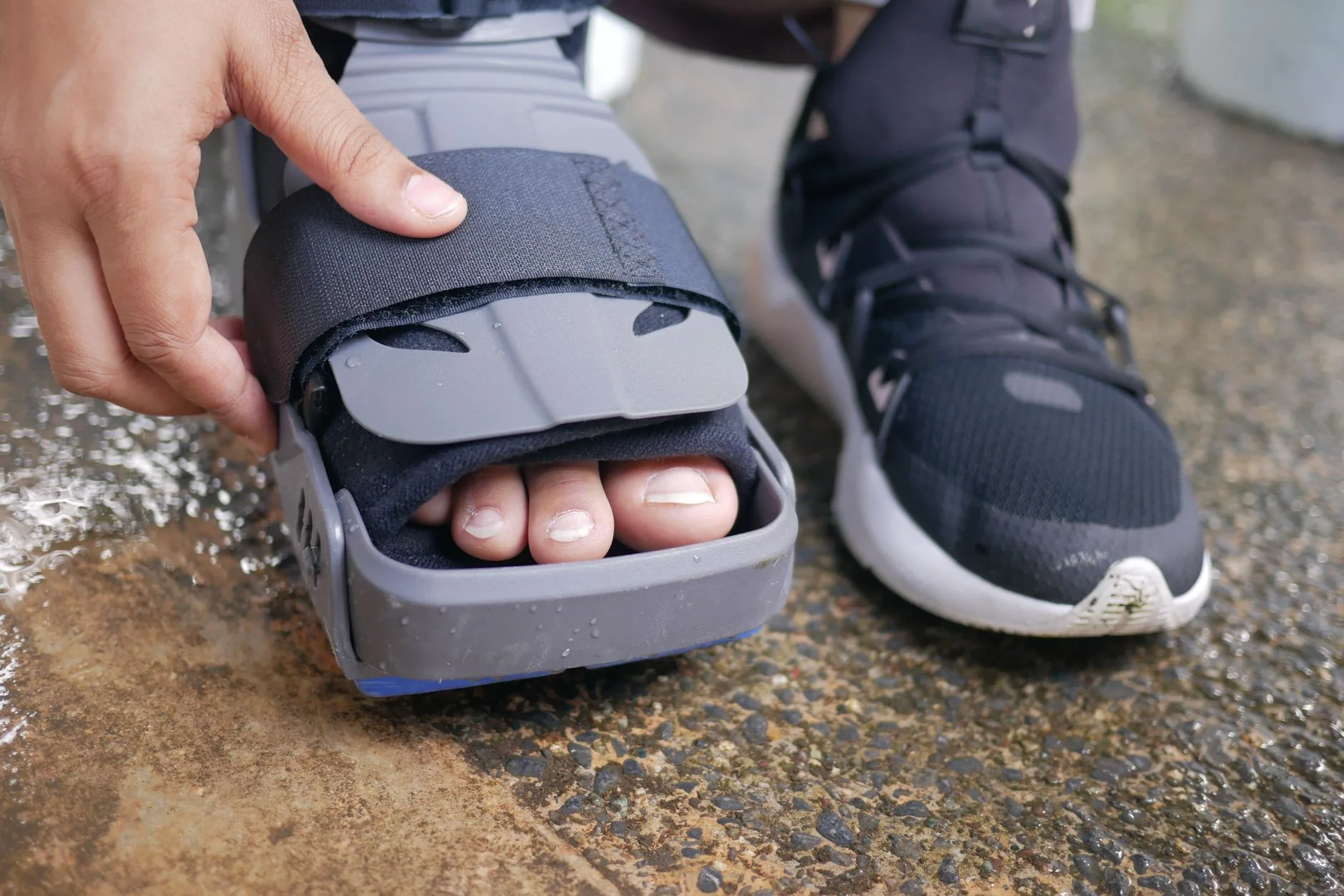
- Weeks 1–2: Complete rest from impact. Walking is usually fine if pain-free; if it isn’t, you may need crutches or a boot short-term. This is also the time to address the cause — get a dietitian referral if fuelling is a concern, or a gait assessment if footwear or biomechanics played a role.
- Weeks 2–6: Cross-training — swimming, cycling, deep-water running, the elliptical — to maintain fitness without loading the bone. This is where you protect the aerobic base you’ve built so the return to running doesn’t feel like starting over.
- Weeks 4–8 (if pain-free): Gradual run-walk reintroduction, often starting with very short intervals — think 1 minute running, 2 minutes walking, for 20 minutes total — increasing by no more than 10% per week in total running time.
- Weeks 8–12+: Build back toward normal training load, but slower than feels necessary. Many physios recommend doubling the usual “10% rule” caution period after a stress fracture specifically.
A bone density scan (DEXA) may be recommended if this is a second stress fracture, or if there’s a history of disordered eating, amenorrhea, or long-term low body weight — worth raising directly with your GP rather than waiting to be offered it.
Reducing your risk of a repeat
Once you’ve had one stress fracture, the goal isn’t just “get back to running” — it’s “get back to running without doing this again.” A few concrete habits help:
- Increase weekly mileage by no more than 10% per week, and hold that increase steady for 2–3 weeks before increasing again, rather than climbing every single week.
- Eat enough, especially carbohydrate and protein, relative to your training load — this isn’t about cutting calories while mileage goes up; the two need to move in the same direction.
- Add 2 sessions a week of impact-tolerant strength work — calf raises (3 sets of 15, progressing to single-leg), squats, and step-ups — which has reasonable evidence for improving bone loading tolerance over time.
- Replace running shoes every 500–800km, and avoid making major shoe changes (new minimal shoe, big change in drop) during a mileage build.
- Build a genuine aerobic base before adding intensity — a lot of stress fractures happen when runners add speed work too early in a return to training, rather than from steady mileage alone.
If you want a structural way to manage the build-back phase without repeating past mistakes, it’s worth reading up on how a proper base-building block works before you jump back into a race training plan — the discipline of holding back early pays off later.
The Honest Takeaway
- A localised, specific sore spot that doesn’t improve with a few rest days and gets worse with activity is the key red flag — don’t talk yourself out of it because you’ve got a race coming up.
- Get it checked properly. A clear X-ray in the first two to three weeks doesn’t rule out a stress fracture — ask about an MRI if symptoms persist.
- Expect 6–8 weeks for low-risk sites, 12–16+ weeks for high-risk ones (femoral neck, navicular, fifth metatarsal) — plan your race calendar around reality, not hope.
- Use the enforced break to actually investigate the cause — training load, fuelling, sleep, shoe age — rather than just waiting out the clock and repeating the same mistake.
- When you return, increase total running time by no more than 10% a week, and consider two strength sessions weekly as a long-term habit, not a temporary fix.
Next read: Base building for runners: what it is and why it matters