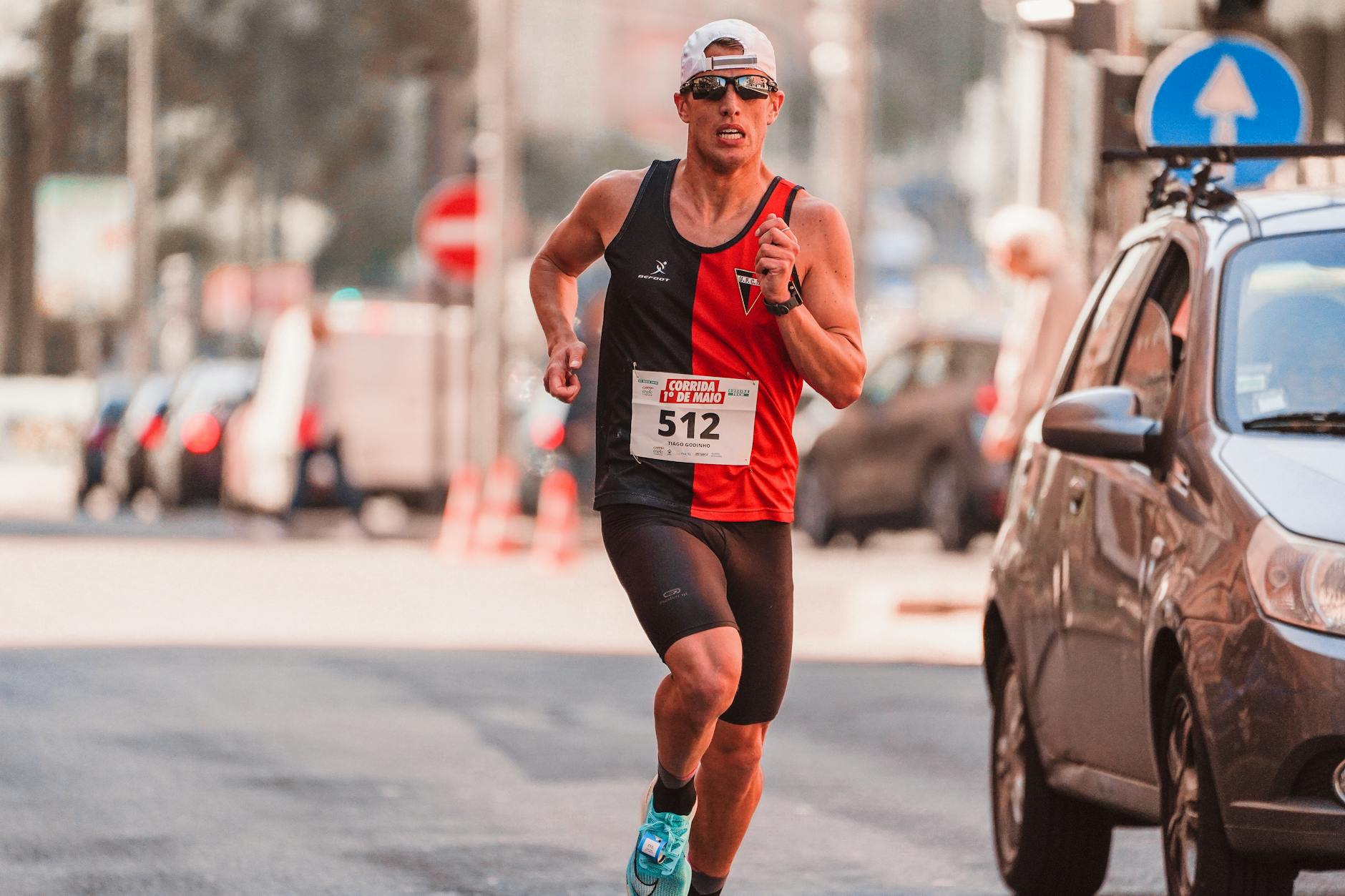
Photo by RUN 4 FFWPU on Pexels
You’re somewhere around mile 10. Your legs have turned to concrete, your brain is telling you to stop, and you still have a 5K to go. This is bonking — and it’s not a fitness failure. It’s almost always a pacing or fuelling mistake, and it’s one of the most common ways a half marathon falls apart.
The good news is that bonking in a half marathon is largely preventable. Unlike the marathon, where even well-prepared runners can hit the wall, the 13.1-mile distance is short enough that with the right approach to pacing, nutrition and training, you can cross the finish line still feeling like a functional human being. Not effortlessly — it’s still hard — but in control.
This article is for runners who’ve either bonked before and don’t want to repeat it, or who are approaching their first half and want to get this right from the start. Here’s what actually works.
What bonking actually is (and why it happens in a half)
“Bonking” or “hitting the wall” refers to the point where your body’s glycogen stores — the carbohydrate fuel stored in your muscles and liver — run critically low. Your pace drops, your mood crashes, your legs stop cooperating. In a marathon, this typically happens around mile 18–20. In a half marathon, it usually hits around mile 9–11.
The half marathon sits in an awkward physiological zone. At easy paces (say, 6:30–7:30/km), your body burns a higher proportion of fat, which is abundant. But the moment you’re pushing into your actual race effort — probably somewhere between 5:00 and 6:30/km for most everyday runners — you’re burning through glycogen fast. Add in race-day nerves, a slightly too-fast first mile, and skipped pre-race nutrition, and you’ve set yourself up for a rough final 5K.
Start slower than feels right (seriously)
If you only take one thing from this article, make it this: your first 3 miles should feel almost embarrassingly easy. Not jogging, but controlled — at least 15–20 seconds per kilometre slower than your goal pace.
Most runners who bonk in a half marathon started too fast. It feels great in mile 1. Mile 2 feels fine. By mile 8, you’re paying for it. Race adrenaline, a downhill opening section, and the crowd all push you out faster than your training supports.
Here’s a rough pacing structure for a runner targeting a 2:15 half marathon (roughly 6:24/km average):
| Section | Miles | Target pace | Feel |
|---|---|---|---|
| Opening easy | 1–3 | 6:40–6:50/km | Comfortable, controlled |
| Settle in | 4–8 | 6:20–6:30/km | Steady, rhythmic |
| Race pace | 9–11 | 6:10–6:20/km | Working hard |
| Finish strong | 12–13.1 | Whatever you have | Empty the tank |
The numbers will shift depending on your goal time, but the principle is the same: negative split, or at worst even split. Going out at goal pace in mile 1 is one of the surest ways to blow up.
Pre-race fuelling: the 24 hours that matter most
What you eat the morning of the race matters. What you eat the day before matters more.
In the 24 hours before your half, focus on carbohydrates. Not a mountain of pasta at 9pm, but steady carb-rich meals across the day — rice, bread, oats, potatoes. You’re topping up your glycogen stores, not stuffing yourself.
Race morning, eat 2–3 hours before the start if you can. Something familiar, easy to digest, and carb-forward: porridge, white toast with banana, a bagel with peanut butter. Around 60–90g of carbohydrates is a reasonable target. Research from the British Nutrition Foundation supports carbohydrate loading in the days before endurance events, even for recreational athletes.
If you can only manage 60–90 minutes before the start, keep it lighter: a banana, a small energy bar, a slice of toast. Don’t experiment on race day. Whatever you eat, it should be something you’ve eaten before long training runs.
In-race fuelling: don’t skip the gels
Many half marathon runners skip gels entirely. “It’s only 13 miles, I’ll be fine.” Sometimes they are. Often, they’re not — especially if the race takes 1:50 or more to complete.
A general rule: if your half marathon will take longer than 90 minutes, you need to fuel during the race. Your glycogen stores last roughly 60–90 minutes at moderate-to-hard effort. Beyond that, you’re drawing the tank low.
Here’s a simple in-race fuelling plan:
- Before the start: Take a gel 10–15 minutes before the gun if you haven’t eaten in 2+ hours
- Mile 5–6: First gel or chews (roughly 45–50 minutes in for a 2:00–2:15 finisher)
- Mile 9–10: Second gel if needed (especially if you’re flagging or it’s warm)
- Water: Sip at every aid station, don’t gulp, don’t skip them
If you find gels unpleasant (many people do), real food alternatives like Medjool dates, banana pieces, or chews work well too. Sports Science research published via the European Journal of Sport Science consistently shows that carbohydrate intake during events over 75 minutes improves performance — including for recreational runners.
The critical rule: practise this in training. A gel you’ve never tried before, taken on mile 6 of a race, is a gamble with your stomach.
Your long runs are doing the heavy lifting
You can’t fuel your way out of undertrained legs. The foundation of avoiding a half marathon bonk is having done the long runs — plural, not singular.
For most runners, that means getting to at least 16–18km (10–11 miles) in training before race day, ideally with two or three runs in the 14–18km range in the 6–8 weeks leading up to the race. These long runs teach your body to burn fat more efficiently at race effort, push back the point at which glycogen runs low, and build the mental resilience that miles 10–13 demand.
Run your long training runs at a genuinely easy pace — around 60–75 seconds per kilometre slower than your goal half marathon pace. They’re not meant to simulate race effort. They’re meant to build your aerobic engine and your glycogen efficiency.
If life has gotten in the way and your longest run before race day is only 12km, manage your expectations accordingly: race conservatively, fuel early, and don’t go out too fast.
Heat, hills and other things that accelerate bonking
Even with perfect pacing and fuelling, external conditions can push you into the wall faster than expected. Be honest with yourself about these factors on race day:
Heat: Running in temperatures above 18°C significantly increases carbohydrate burn and sweat loss. If it’s warm, slow down by 10–20 seconds per kilometre from the start. Trying to hit your cool-weather goal pace in 22°C heat is how bonks happen.
Hills: A hilly course burns more glycogen than a flat one. If your race has significant elevation, factor that into your pacing strategy and consider fuelling slightly earlier.
Illness or poor sleep: A bad night’s sleep won’t ruin you, but it does raise your perceived effort. Running on illness is a different matter — if you’re genuinely unwell, the race will be brutal. There’s no shame in deferring.
Your training conditions vs. race conditions: If you’ve trained on flat roads and your race is hilly, or you’ve trained alone and the race atmosphere pulls you out faster than planned — these are real risks. Name them before race day so they don’t catch you off guard.
The week before: don’t sabotage your prep
Taper week is where a lot of runners accidentally set up a bonk. They cut their mileage (correct) but also cut their carbs (wrong). You should be eating more carbohydrates in the final 2–3 days, not less, even though you’re running less.
Also resist the urge to cram in extra runs because you feel undertrained. A 15km run four days before the race will not build fitness — it will leave your legs flat on the start line.
In the final week: keep easy running easy, do one or two short shakeout runs, eat well, sleep where you can, and stay off your feet as much as possible the day before.
The honest takeaway
- Pace conservatively in the first 3 miles. Feeling strong early is normal; acting on it is the mistake. Hold back 15–20 seconds per km from your goal pace for the opening section.
- Fuel before you need to. If your race will take more than 90 minutes, take a gel at mile 5–6 and again around mile 9–10. Don’t wait until you feel bad — by then it’s too late.
- Train your long runs. Two or three runs of 16–18km before race day make the second half of your race survivable. Skipping them and hoping for the best is a gamble that usually loses.
- Account for race-day conditions. Heat, hills and adrenaline all change the equation. Build in contingency — a slightly slower target pace, an extra gel in your pocket.
- Practice everything in training. Your gel brand, your pre-race breakfast, your race-day shoes. Race day is not the day to try something new.
The half marathon is genuinely achievable without hitting the wall. It just requires honesty about your preparation and discipline in the first few miles when every instinct is telling you to go faster. Trust the slower start. Fuel early. And enjoy the fact that mile 12 can feel strong instead of like a survival exercise.