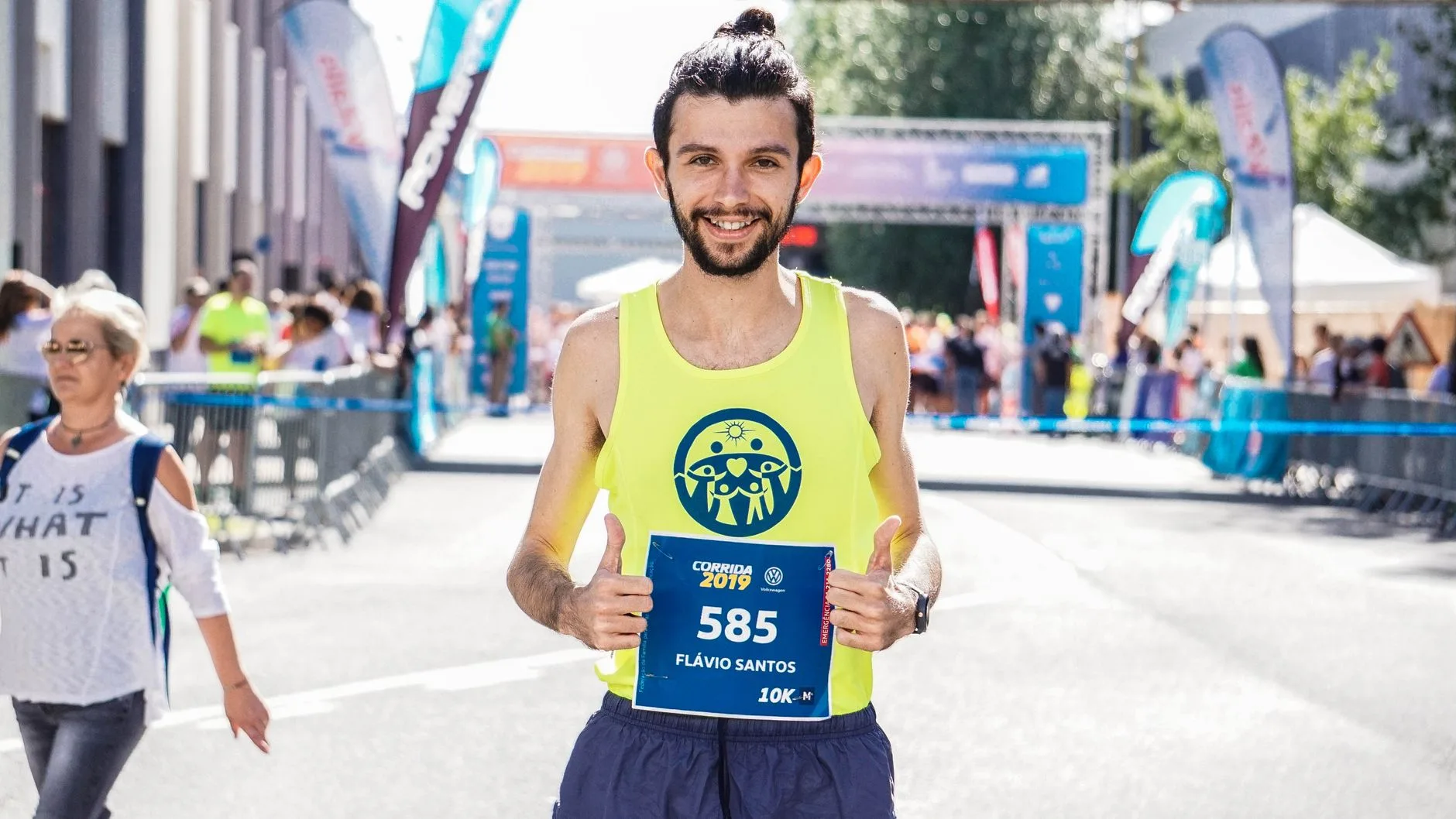
Photo by RUN 4 FFWPU on Pexels
Race day is nothing like training. You’ve done the runs — maybe not every single one, maybe with a couple of skipped weeks in there — but you’ve put the work in. Then you show up on the morning of your first 10k and it all feels completely different. The crowd, the noise, the adrenaline, the queues for the toilets. Nobody really tells you about any of that.
This isn’t a guide about training. That ship has sailed. This is about what actually happens on the day — what to expect from the moment you arrive to the moment you cross the finish line — so you can make sensible decisions instead of panicking, going off too fast, or standing at the start wondering if you’ve forgotten something important (you probably haven’t).
A 10k is a brilliant distance. It’s long enough to feel like a proper achievement, short enough that you don’t need gels or complex fuelling strategies. Most first-timers finish somewhere between 55 minutes and 75 minutes. Whatever your goal, the experience will be more enjoyable if you know what’s coming.
Getting there: arrive earlier than you think you need to
If the race starts at 9:30am and you rock up at 9:15am, you’re going to be stressed. Bag drop queues, toilet queues, finding your start corral — it all takes longer than it looks on paper. Aim to arrive at least 45–60 minutes before your wave start.
Most 10k races use chip timing, so your time doesn’t start until you cross the start mat. You don’t need to be at the front. Find your allocated corral (usually based on your predicted finish time), and if you don’t know which one to join, go towards the back half. It’s far easier to pass people than to be passed when you’ve gone off too hard.
Eat something 2–3 hours before the race — nothing new, nothing heavy. A bowl of porridge, a bagel with peanut butter, whatever you’ve eaten before long training runs. Race morning is not the time to experiment with a new café breakfast.
The start: slow down, you will go too fast
This is the single most predictable mistake in every first 10k. You feel incredible at the start. The crowd energy is real, your legs are fresh, and everything feels easier than it does in training. So you run the first kilometre 30–45 seconds per kilometre faster than you should.
By kilometre 6 or 7, you’re suffering.
If your training pace has been around 6:30/km, you should be starting at 6:30/km — not 5:55/km just because you feel good. Look at your watch in the first 500 metres. If you’re ahead of your target pace, back off. The first 3 kilometres should feel almost too easy. That’s correct.
A good way to think about it: if you can’t hold a short conversation in the first 3km, you’re going too fast.
What the course will actually feel like, kilometre by kilometre
Here’s an honest breakdown of how most first-timers experience a 10k:
| Kilometre | What you’ll likely feel | What to do |
|---|---|---|
| 1–2 | Buzzing, legs feel fresh, easy to overcook it | Hold back, trust your pace |
| 3–4 | Settling in, crowd thins out, breathing steadies | Find your rhythm, check your pace |
| 5 | Halfway — can feel harder than expected | Keep pace steady, don’t panic |
| 6–7 | This is where under-fuelled or too-fast runners start struggling | Maintain form, shorten your stride if tired |
| 8–9 | Uncomfortable but manageable if paced well | Focus on short targets — next lamp post, next turn |
| 10 | You’ll find something extra | Run it in, it’ll hurt for about 3 minutes |
That dip around kilometre 5–6 is completely normal. It’s not a sign you’ve failed or trained badly. It’s just the middle of the race, and the middle of races is hard. Keep your stride short and controlled rather than pushing harder.
Hydration and fuelling: keep it simple
For most 10k runners, you don’t need gels. If you’re finishing in under 70 minutes and you’ve eaten properly beforehand, your glycogen stores are more than sufficient. Gels are for longer efforts.
Water stations are usually at the 5km mark and near the finish. Take a cup if you feel like it — there’s no obligation. If it’s a warm day (above 18°C), take it. If it’s a cold morning in March, you can probably skip it and be fine.
If you do want to practise with gels for future races, research from Asker Jeukendrup at the University of Birmingham suggests that for efforts under 75 minutes, rinsing carbohydrate in the mouth (without swallowing) can improve performance — but that’s more relevant to racing at high intensity than to a steady first-time 10k.
The practical rule: drink water if you’re thirsty. Don’t force it.
Race day nerves: what’s normal and what to do with them
Some nerves are useful. They sharpen focus, raise your heart rate slightly, and prepare your body to work. If you feel some anxiety in the morning, that’s fine — it means the race matters to you.
What’s less useful is spiralling into worst-case thinking: “what if I have to stop”, “what if I’m last”, “what if I can’t finish.” Here’s the honest reality: most 10k races have walkers. Most have people finishing in 85+ minutes. Nobody is watching you with a stopwatch and a clipboard.
If you find your heart rate is sky-high at the start due to nerves, your first kilometre pace will feel easier than it is. This is another reason to run the first few kilometres conservatively based on your watch, not how your body feels.
The NHS notes that mild pre-event anxiety is a normal physiological response and not a sign anything is wrong. Acknowledge the nerves, then focus on something practical — your breathing, your foot strike, your kilometre target.
Pacing: what times look like for real runners
You don’t need to chase a fast time in your first 10k. The goal is to finish feeling like you ran well — not to collapse over the line having blown up at 7km. Here’s a realistic picture of finish times and what even-pace splits look like:
| Finish time | Pace per km | What it typically takes |
|---|---|---|
| 45 minutes | 4:30/km | Strong club runner territory |
| 50 minutes | 5:00/km | Solid trained recreational runner |
| 55 minutes | 5:30/km | Good consistent training base |
| 60 minutes | 6:00/km | Achievable with 8–10 weeks training |
| 65 minutes | 6:30/km | Very common first-time target |
| 70 minutes | 7:00/km | Completely respectable — most fields include many finishers here |
| 75+ minutes | 7:30+/km | Still a 10k finish. Still counts. |
If you’ve been following a structured plan — like an intermediate 10k training plan that includes tempo runs and longer easy efforts — you’ll have a better sense of your realistic pace. If you’ve been running more casually, don’t obsess over the clock for this first race.
After the finish: what to actually do
You will feel a strange mix of relief, elation, and possible nausea in the first five minutes after finishing. This is normal. Keep walking — don’t just stop and stand still, as your blood pressure can drop sharply when you go from running to nothing.
Pick up your medal, get some water, eat something if there’s food available. Your legs will be tired but probably not wrecked — 10k is recoverable quickly for most people. A very easy 20-minute jog two days later, or a casual walk the day after, is usually all the recovery you need.
One thing worth noting: the post-race feeling is addictive. A lot of runners sign up for their next race within 48 hours of finishing their first. That’s fine — just resist the urge to immediately jump to half marathon training without giving yourself a week or two to process and rest. If you do want to think about what’s next, there’s a world of difference between recovery running and structured training, and understanding the difference between an easy run and a recovery run will help you manage that transition sensibly.
The Honest Takeaway
- Go out slower than feels natural. The first 2km of your first 10k will almost certainly be faster than they should be unless you actively hold back. Use your watch, not how your legs feel.
- You don’t need gels, complex hydration plans, or special nutrition. Eat a normal pre-run meal 2–3 hours before, take water at the 5km station if it’s warm, and that’s genuinely enough.
- The middle kilometres are the hardest. Around 5–7km, most runners feel a dip. It’s not failure — it’s just racing. Shorten your stride, keep your effort steady, and it passes.
- Arrive early, check your corral, and don’t stand at the front if your pace doesn’t belong there. Chip timing means your time starts when you cross the line, not when the gun goes.
- Finishing is the only goal for race number one. A 10k finish in 72 minutes beats a 10k DNF at any pace. Enjoy it — this is the only time you’ll ever run your first one.
Next read: How to deal with race day nerves (and actually run well)