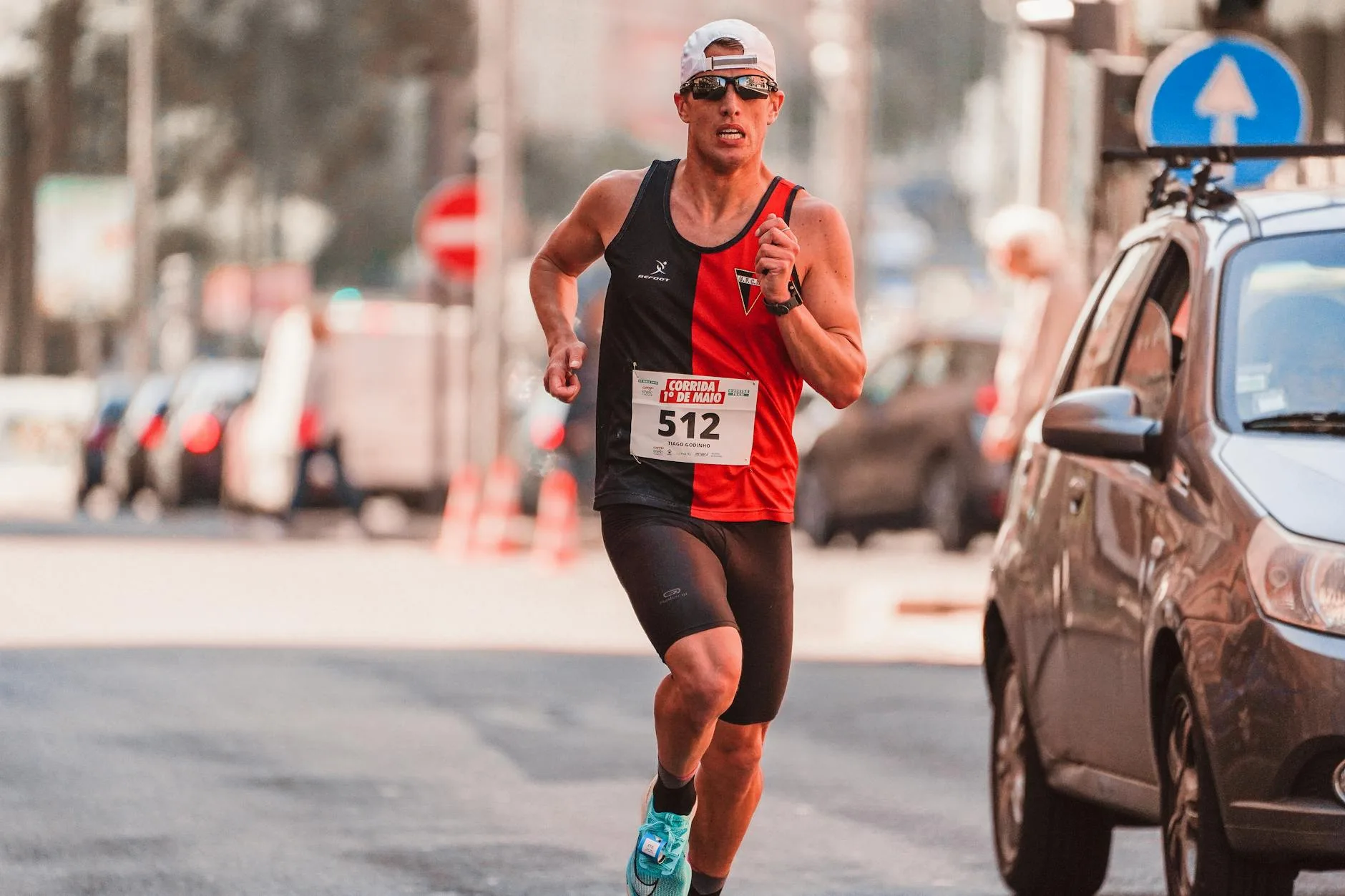
Photo by RUN 4 FFWPU on Pexels
How to run a 5k personal best: race tactics that work
You’ve done the training. You’ve ticked off your interval sessions, suffered through a few tempo runs, and told yourself this is the race where it all comes together. But on the start line, with 200 other runners jostling around you, a plan that seemed clear in your kitchen suddenly feels a lot less certain.
Race tactics matter at every level — not just for elites chasing Olympic qualifying times. Whether you’re trying to crack 20 minutes, 25 minutes, or just beat the time you set two years ago at your local parkrun, how you run those 5 kilometres has as much impact as how you trained for them. Get it right and you find another gear in the final kilometre. Get it wrong and you’re hanging on for dear life by the 3km mark, watching your PB disappear.
This article is about the tactical side of the 5k: pacing strategy, positioning, managing effort, and finishing well. Not what to eat the night before or how many weeks to train — just the sharp end of race day, from start gun to finish line.
Understanding what a 5k actually demands
The 5k is a brutal event in a specific way. It’s long enough that you can’t simply sprint it, but short enough that there’s nowhere to hide. You’re running at roughly 95–100% of your VO2 max — an intensity where your legs are burning, your breathing is ragged, and every second of the final kilometre is a negotiation with yourself.
This matters tactically because the 5k punishes pace errors more than longer distances. Go out 10 seconds per kilometre too fast and you’ll pay for it between 3km and 4km in a way that can cost you 30–60 seconds overall. The margin for error is thin.
Set a realistic target pace before you arrive
The biggest tactical mistake runners make at a 5k is having no specific pace target. “Run as fast as I can” is not a strategy — it’s how you blow up at 2.5km.
Work backwards from your goal time. If you want to run 24:00, that’s 4:48 per kilometre. Write that number on your wrist if you need to. Your GPS watch is useful here, but research published in the International Journal of Sports Physiology and Performance consistently shows that athletes who race with a pre-set pacing strategy outperform those who rely on perceived effort alone — particularly in shorter events where early excitement distorts effort perception.
Use a recent race result or time trial to calibrate. A reliable rule of thumb: your 5k pace should feel genuinely hard by 2km, very uncomfortable by 3.5km, and like you’re barely holding on at 4.5km. If it feels comfortable at 2km, you’ve gone out too slowly.
| Goal time | Target pace/km | Equivalent parkrun finish |
|---|---|---|
| 20:00 | 4:00/km | Top ~5% nationally (UK) |
| 22:30 | 4:30/km | Solid club-level result |
| 25:00 | 5:00/km | Strong recreational runner |
| 27:30 | 5:30/km | A very respectable PB |
| 30:00 | 6:00/km | Common first-time target |
Position yourself properly at the start
Mass-start 5ks — especially parkruns — create a specific problem: everyone goes out too fast together. The adrenaline, the crowd, the downhill first 200 metres. It’s almost designed to make you blow up.
Position yourself honestly. If your goal pace is 5:30/km, don’t line up at the front. You’ll spend the first minute weaving around faster runners or — more likely — being swept along at 4:45/km and wondering why your legs feel terrible at 1.5km. Seed yourself roughly where you belong: look for runners who look like they’ll run a similar time, ask a parkrun regular if you’re unsure.
That said, don’t start too far back either. Starting in a pack that’s significantly slower than you means wasted energy weaving through people in the first kilometre — and unnecessary frustration.
The first kilometre: the most expensive one to get wrong
Run the first kilometre 5–8 seconds per kilometre slower than your target pace. Not a lot slower — you don’t need a slow jog. But a small, deliberate buffer protects you for the second half.
Your body takes 60–90 seconds to hit its aerobic stride. Start at full effort immediately and you’re running on anaerobic energy that you’ll need later. A slightly conservative first km also keeps you relaxed — your form is better, your breathing is steadier, and you don’t trigger the panic spiral that comes from going out too hard.
If you’re targeting 5:00/km, aim for 5:05–5:08 for kilometre one. It feels almost annoyingly slow. That’s correct.
Kilometres 2 and 3: find your race rhythm
This is where the race actually starts. By now the initial scramble has settled, you’ve found some space, and you should be able to lock into your target pace. Focus on:
- Breathing: steady and rhythmic. If you’re gasping, you’ve gone out too hard. See the NHS guidance on breathing during exercise for context on effort levels — sustained hard effort should allow short sentences, not full conversation.
- Form: keep your arms relaxed, shoulders down. The tension you carry in your shoulders at kilometre 2 will cost you at kilometre 4.
- Consistency: check your watch at each kilometre marker. You want the numbers to be remarkably similar — 5:01, 4:58, 5:02. Huge swings in pace mean you’re reacting rather than racing.
If you’re running with a GPS watch, a good budget GPS watch can give you real-time feedback on pace and heart rate — useful for keeping you honest in these middle kilometres.
Kilometre 4: the grind kilometre — and how to survive it
Kilometre 4 is where most PB attempts fall apart. The novelty of the race has worn off, the finish line isn’t yet in sight, and your legs are starting to send unpleasant signals. This is completely normal. Everyone around you is feeling it too.
A few tactics that help:
- Break it down: focus on getting to the next lamp post, the next turn, the next 200 metres. “One kilometre to go” feels enormous at this point. “200 metres to the bend” is manageable.
- Don’t slow down before you have to: many runners unconsciously ease off at 4km, banking energy for the finish. The problem is they don’t spend that energy — they lose it. Try to hold your pace through to 4.5km before thinking about lifting.
- Use runners around you: find someone just ahead running a similar pace and run with them. You don’t need to talk to them. Having a target 10 metres ahead of you is genuinely useful.
The final kilometre: leave nothing behind
If you’ve paced correctly, you should have something left for the last kilometre. Not a lot — but enough to run it a few seconds per km faster than your race pace.
Start your finishing effort at 4.7–4.8km, not at 5km. Many runners leave their kick too late and end up finishing in a sprint over only 100 metres — impressive to watch, but it means they left time on the table in the preceding 200 metres.
A genuine negative split — running the second half faster than the first — is the hallmark of good 5k pacing. It doesn’t have to be dramatic: running the second 2.5km even 10–15 seconds faster than the first is a well-executed race. The negative split running strategy explained piece goes into more detail on why this approach works across distances.
Race tactics by ability level
Different runners need slightly different approaches. Here’s a quick reference:
| Runner profile | Key tactical priority | Common mistake to avoid |
|---|---|---|
| Sub-20 min target | Precise kilometre splits, controlled first 800m | Going with faster runners early |
| 22–25 min target | Consistent middle km, strong final 800m | Losing focus at km 3–4 |
| 25–30 min target | Even pacing, resist the crowd start | Going out with the pack |
| 30+ min / first PB attempt | Finish the race feeling like you could have gone slightly harder | Walking unnecessarily in final km |
The morning of the race: the tactical stuff people forget
Race tactics don’t start at the start gun. A few specifics:
- Warm up: for a 5k, a 10-minute easy jog before the race makes a real difference. You’ll hit your race pace in the first kilometre rather than the second. Skip this if you’re aiming for 30+ minutes — a brisk walk and some dynamic stretching is enough.
- Know the course: one hill or a tight corner can change your pacing plan. Walk or jog the first 400 metres if it’s a new course.
- Wear your race shoes: not the day to test anything new. Whatever you’ve trained in.
The Honest Takeaway
- Pick a specific target pace per kilometre before you race — write it on your hand if you need to. “Run hard” is not a strategy.
- Start 5–8 seconds per km slower than target pace in kilometre one. It feels wrong. It works.
- Kilometre 4 will be uncomfortable for everyone — that’s not a sign you’ve gone wrong, it’s the race. Hold your pace.
- Begin your finishing effort at 4.7km, not 5km. A 300-metre finish is better than a 100-metre sprint.
- The best tactical investment you can make is structured training before race day — if you want to put the right fitness under these tactics, the 5k personal best training plan on this site is a good place to start.
Next read: 5k personal best training plan: 4 weeks to a faster time