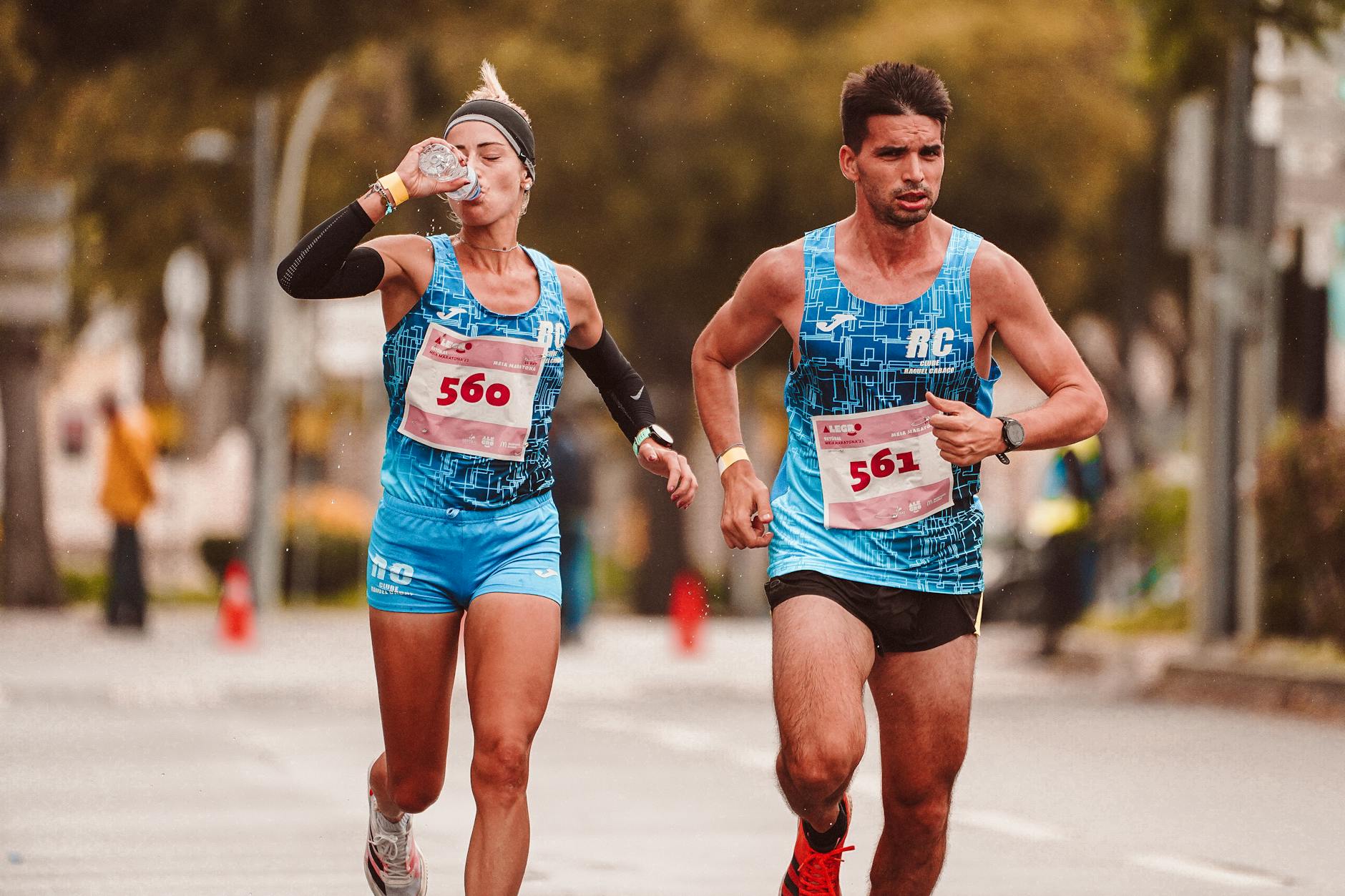
Nutrition during marathon training has one job: fuel the work and recover between sessions. Most runners get this wrong. They either under-fuel and bonk, or over-fuel and gain weight.
This is the actual strategy: eat enough to support your training, eat the right nutrients at the right time, and don’t overthink it.
Daily Calorie Needs During Marathon Training
You’re running 50–70 km per week for 16 weeks. That takes energy.
Baseline maintenance calories (non-running): Use this estimate:
– Multiply your body weight (kg) by 24 = daily maintenance
Example: 70 kg person = 1,680 calories/day baseline
Add running calories:
– Easy runs: 75 calories per km
– Long runs: 80 calories per km (harder effort, more stress)
– Speed work: 85 calories per km (high intensity)
Example week:
– Monday 8K easy: 8 × 75 = 600 cal
– Wednesday 10K (including speed work): 10 × 85 = 850 cal
– Friday 6K easy: 6 × 75 = 450 cal
– Sunday 20K long run: 20 × 80 = 1,600 cal
Total running calories: ~3,500 for the week
Daily average: 3,500 ÷ 7 = 500 cal/day from running
Total daily need: 1,680 + 500 = ~2,180 calories/day
This is an estimate. Real needs vary by metabolism, but it’s a useful starting point.
Macronutrient Targets
During marathon training, aim for:
– Carbs: 50–55% of calories — fuel for running
– Protein: 20–25% of calories — muscle repair and adaptation
– Fat: 20–25% of calories — hormone production, energy
For a 2,180 calorie day:
– Carbs: 1,090–1,199 calories = 272–300g
– Protein: 436–545 calories = 109–136g
– Fat: 436–545 calories = 48–61g
These aren’t strict rules. Most runners do fine with:
– 250–350g carbs per day
– 100–130g protein per day
– 50–70g fat per day
The point: carbs fuel training, protein repairs muscle, fat handles hormone production. All three matter.
Timing: When to Eat
Pre-Run (2–3 hours before easy run):
Light meal: oatmeal with banana, toast with peanut butter, or cereal. Nothing that sits heavy.
– Carbs: 30–50g
– Protein: 10–15g
– Fat: minimal
Pre-Long Run (3–4 hours before):
Substantial meal:
– Eggs on toast with orange juice
– Pasta with chicken and veggies
– Pancakes with berries and yogurt
Aim for 50–100g carbs, 20–30g protein, not too much fat (slows digestion).
During Long Run (every 45 minutes after first 30 min):
Energy gel or sports drink:
– 25–30g carbs per serving
– Minimal protein/fat (quick absorption)
Examples: energy gel, energy bar, banana, sports drink
Post-Run (within 30 min of finishing):
Recovery meal:
– 30–50g carbs (refuel glycogen)
– 20–30g protein (muscle repair)
Examples:
– Chocolate milk (surprisingly good: carbs + protein + hydration)
– Sandwich (bread + meat + cheese)
– Greek yogurt + berries + granola
– Protein shake + fruit
Eat something. Don’t wait until dinner. The 30-minute window is when your muscle uptake of carbs and protein is highest.
Dinner (3–4 hours after long run):
Full meal, whatever you normally eat. Make sure it has carbs for glycogen replenishment, protein for muscle repair.
Hydration: The Overlooked Factor
Dehydration kills marathon performance more than any nutrition mistake.
Daily (non-running):
8–10 glasses of water, or 2–2.5 liters per day. Drink consistently throughout the day, not all at once.
During easy runs (under 60 min):
Water only. 150–250 mL every 15–20 minutes if you carry a bottle.
During long runs (60+ min):
Water + electrolytes/carbs:
– 500 mL sports drink per hour, OR
– Water + one energy gel per 45 min, OR
– Mix: half water, half sports drink
Aim for 600–800 mL fluid per hour total.
Post-run:
Drink 500–750 mL per hour after running (extra if you lost sweat).
Research shows that runners who maintain hydration perform 5–10% better in the final kilometers. Dehydration is a silent performance killer.
What to Actually Eat (Real Foods)
Don’t overthink macros. Eat normally and focus on adequate total calories and basic structure:
Breakfast:
– Oatmeal with berries and yogurt
– Eggs + toast + juice
– Granola + milk + banana
– Pancakes + fruit
Lunch:
– Sandwich + apple + cheese
– Pasta + chicken + veggies
– Rice bowl with protein and veggies
– Burrito with beans and rice
Dinner:
– Pasta with meat sauce
– Grilled chicken with potatoes and broccoli
– Salmon with rice and salad
– Curry with rice
Snacks:
– Banana
– Nuts and fruit
– Cheese and crackers
– Yogurt
– Energy bars (real food, not processed bars)
Eat normal food. Pizza, tacos, burgers, whatever. Just make sure you’re eating enough total calories and you have adequate carbs + protein + fat across the day.
What NOT to Do
1. Underfuel
Trying to “stay lean” while training 60+ km per week. You’ll bonk on runs, recover poorly, and miss workouts.
2. Overfuel
Eating 500+ extra calories from running. You gain weight despite training hard. Run 20K? Don’t eat 1,600 extra calories. Your body doesn’t need that much.
3. Experiment on race day
New energy drink? New gel? Save it for training. Race day is execution day, not experimentation day.
4. Skip post-run nutrition
Finishing a 20K run and having coffee, nothing else. You miss the recovery window. Muscle repair is delayed.
5. Rely entirely on supplements
Fancy sports drinks and gels are fine, but whole food is better. A banana + peanut butter post-run beats a £5 protein bar.
Fueling for Your Longest Long Run
Your 30+ km long run is the nutritional test case.
Before (3–4 hours): normal breakfast or substantial meal
During:
– Km 0–30: water only
– Km 30+: energy gel every 45 min (or equivalent carbs) + water at every aid station
– Aim for 30–60g carbs per hour total
After (within 30 min): recovery meal (carbs + protein)
This teaches your gut what you can tolerate at race pace. Never do anything new on race day.
Race Day Nutrition
Pre-race (3–4 hours before):
Breakfast you’ve eaten 10+ times: toast, oatmeal, bagel, whatever doesn’t upset your stomach.
During race (start at km 5):
– Every 45 min: 1 energy gel + water
– Every aid station: 250 mL fluid (water or sports drink)
– Total target: 30–60g carbs per hour, 500–750 mL fluid per hour
Post-race (within 30 min):
Recovery meal: whatever they provide, plus anything you bring (chocolate milk, banana, energy bar).
The Honest Takeaway
Marathon nutrition is simple: eat enough to fuel your training, eat carbs + protein + fat daily, and practice race nutrition on long runs.
- Eat 2,000–2,500 calories per day during training — adjust based on weight change
- Carbs fuel running, protein repairs muscle — both matter
- Post-run meal within 30 min — carbs + protein for recovery
- Stay hydrated during long runs — 600–800 mL per hour
- Practice everything in training, not on race day — no new foods or drinks on race day
The runners who finish marathons strong aren’t the ones with perfect nutrition. They’re the ones who ate enough to support their training and had a plan that worked for their gut. Follow these basics and you’ll be one of them.
Sources:
– Journal of the International Society of Sports Nutrition: Carb and Protein Timing
– American College of Sports Medicine: Hydration and Performance