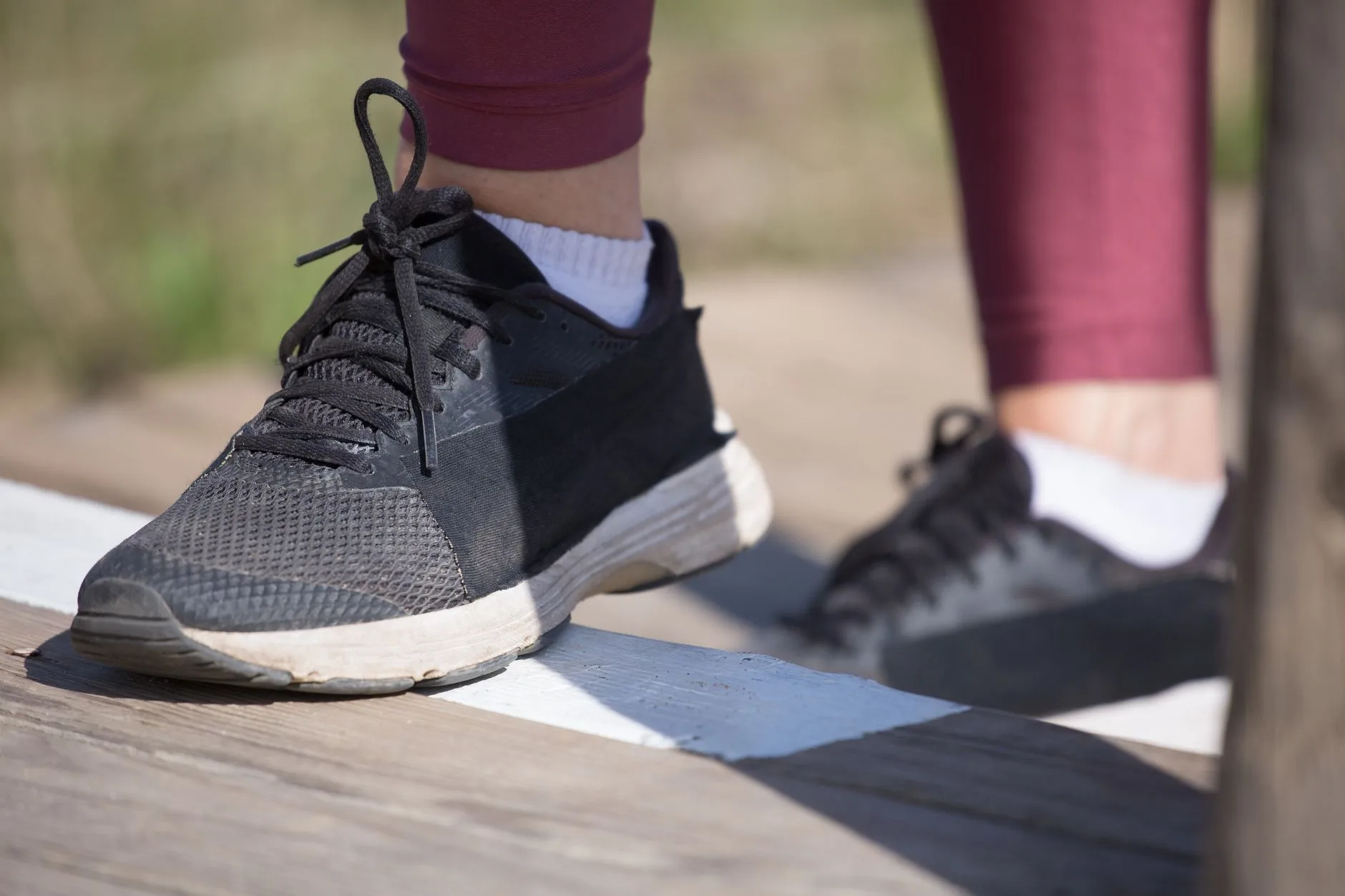
Photo by Kampus Production on Pexels
You’ve done the hard part. You rested when you didn’t want to, maybe saw a physio, maybe googled your symptoms far too many times at 2am. Now the pain’s gone, or mostly gone, and you’re staring at your trainers wondering how on earth you get back to where you were — without ending up right back where you started.
This is the part nobody warns you about. The injury itself feels like the crisis, but the return is where most runners actually go wrong. Studies on running injuries consistently point to one thing: the biggest predictor of a repeat injury isn’t the original problem, it’s how quickly someone ramps back up afterwards. Not the injury. The comeback.
This isn’t a plan built for someone chasing a marathon PB in six weeks. It’s built for the runner who wants to get back to running three or four times a week, feel normal again, and not be back in the physio’s office by March. Slower than you’d like. Faster than you fear.
Step 1: Confirm you’re actually ready
Before any plan means anything, you need an honest checkpoint. Not “does it hurt when I press it” — “does it hurt when I do the things running demands of it.”
A reasonable readiness test:
– Can you walk briskly for 30 minutes pain-free?
– Can you hop on the affected leg 10 times without pain during or the next day?
– Can you do a single-leg calf raise (for Achilles/calf issues) or a step-down (for knee issues) with no sharp pain, only mild fatigue?
– Has it been at least 48 hours since you last felt symptoms at rest?
If you’re unsure whether a specific injury is fully settled — particularly Achilles issues, which are notoriously slow and easy to reaggravate — it’s worth reading something specific to that injury rather than applying a generic timeline. Our piece on Achilles tendinopathy and whether you can keep running covers exactly this kind of judgement call.
If you failed any of the above, you’re not ready. That’s fine. Go back a stage, not forward one.
Step 2: Accept the 10% rule doesn’t apply here
Most runners have heard “don’t increase mileage by more than 10% a week.” That’s a maintenance rule for uninjured runners. It’s too aggressive for a comeback.
After two or more weeks off, your tendons and ligaments have detrained faster than your cardiovascular fitness. Your lungs will feel ready before your connective tissue is. This mismatch is exactly what causes reinjury — you feel good, so you push, and the tissue that hasn’t caught up gives way.
A safer rule for returning: run every other day for the first two weeks, and don’t increase total weekly time by more than 20-30 minutes week to week.
The step by step return plan
Here’s a structure that works for most soft tissue injuries (Achilles, hamstring, calf, shin, IT band, runner’s knee) once you’ve been cleared or symptom-free for 48+ hours. Adjust the exact days based on your specific injury and how long you were out.
| Week | Structure | Pace/Effort | Notes |
|---|---|---|---|
| 1 | Walk/run intervals: 1 min run, 2 min walk x 8, every other day | Easy, conversational | Stop immediately if sharp pain returns |
| 2 | 2 min run, 1 min walk x 8, every other day | Easy | Add a rest day if any soreness lasts >24hrs |
| 3 | Continuous 15-20 min run, 3x per week | Easy, +10% slower than old easy pace | Introduce one cross-training day |
| 4 | Continuous 25-30 min run, 3x per week | Easy | Reassess: any pain during/after? |
| 5-6 | Build to 35-40 min, 3-4x per week | Easy, one slightly faster “strides” session | Still no intervals or hills yet |
| 7-8 | Reintroduce one structured session (hills or gentle fartlek) | Mixed | Only if weeks 1-6 were pain-free |
This isn’t gospel — a stress fracture needs a much longer, more conservative timeline than a mild calf strain. But the shape of the plan (run/walk, then continuous easy, then structure) applies almost universally.
Cross-training isn’t a consolation prize
Runners tend to treat cross-training as what you do when you can’t run. Reframe it: during a comeback, it’s what lets you keep your fitness while your tissue catches up to your ambition.
Swimming, cycling, the elliptical, even brisk incline walking on a treadmill — these keep your cardiovascular system ticking over without the repetitive impact loading that caused the problem in the first place. If you’re not sure what actually transfers to running fitness versus what’s just movement for the sake of it, our guide on cross training for runners breaks down what’s worth your time.
Warning signs to stop, not push through
There’s a difference between the dull ache of tissue adapting and a signal that something’s wrong. Learn to tell them apart:
- Keep going, monitor: mild, general soreness that eases within the first 10 minutes and doesn’t worsen during the run.
- Stop for the day: sharp, localised pain that changes how you’re moving (limping, favouring a side).
- Stop and reassess with a professional: pain that wakes you at night, swelling that appears within hours, or pain that’s worse the next morning than it was during the run.
The NHS’s guidance on managing sports injuries is a sensible, non-alarmist reference point if you’re unsure whether something needs medical attention rather than just patience.
Rebuilding structure without rebuilding the injury
Once you’re through 6-8 weeks of pain-free running, you’ll want to get back to “real” training — a race plan, structured sessions, proper long runs. Resist doing this all at once.
The safest re-entry point is base building: unstructured, easy mileage that rebuilds aerobic capacity and tissue tolerance before you add speed or distance targets. If you’ve forgotten what that looks like, our article on base building for runners is a good refresher before you jump into a specific race plan.
When you do return to a training plan — whether that’s a 10K plan for intermediate runners or a half marathon build — start at least two weeks earlier in the plan than your fitness “feels” like it should allow. Your motivation will recover faster than your tissue does. Plan for that gap.
Rest days matter more now than they did before
It’s tempting, once you’re back, to make up for lost time by training every day. Don’t. Recovery days aren’t wasted days — for a returning runner, they’re doing more physiological work than the run itself, giving tendons and muscles time to adapt to the new load before the next stress arrives.
If you’re unsure how much rest is enough during a comeback specifically, it’s worth reading how many rest days do runners need generally, then erring on the higher end of that range while you rebuild.
The Honest Takeaway
- Don’t trust how you feel cardiovascularly — your lungs recover faster than your tendons and muscles, and that mismatch is what causes most reinjuries.
- Use a run/walk structure for at least the first two weeks back, even if it feels embarrassingly easy.
- Build for 6-8 weeks of pain-free, unstructured running before you touch intervals, hills, or a race-specific plan.
- Sharp, localised pain or pain that’s worse the next morning means stop and reassess — don’t run through it hoping it settles.
- When you rejoin a training plan, start further back than your current fitness suggests. The extra two weeks of patience is cheaper than another two months off.