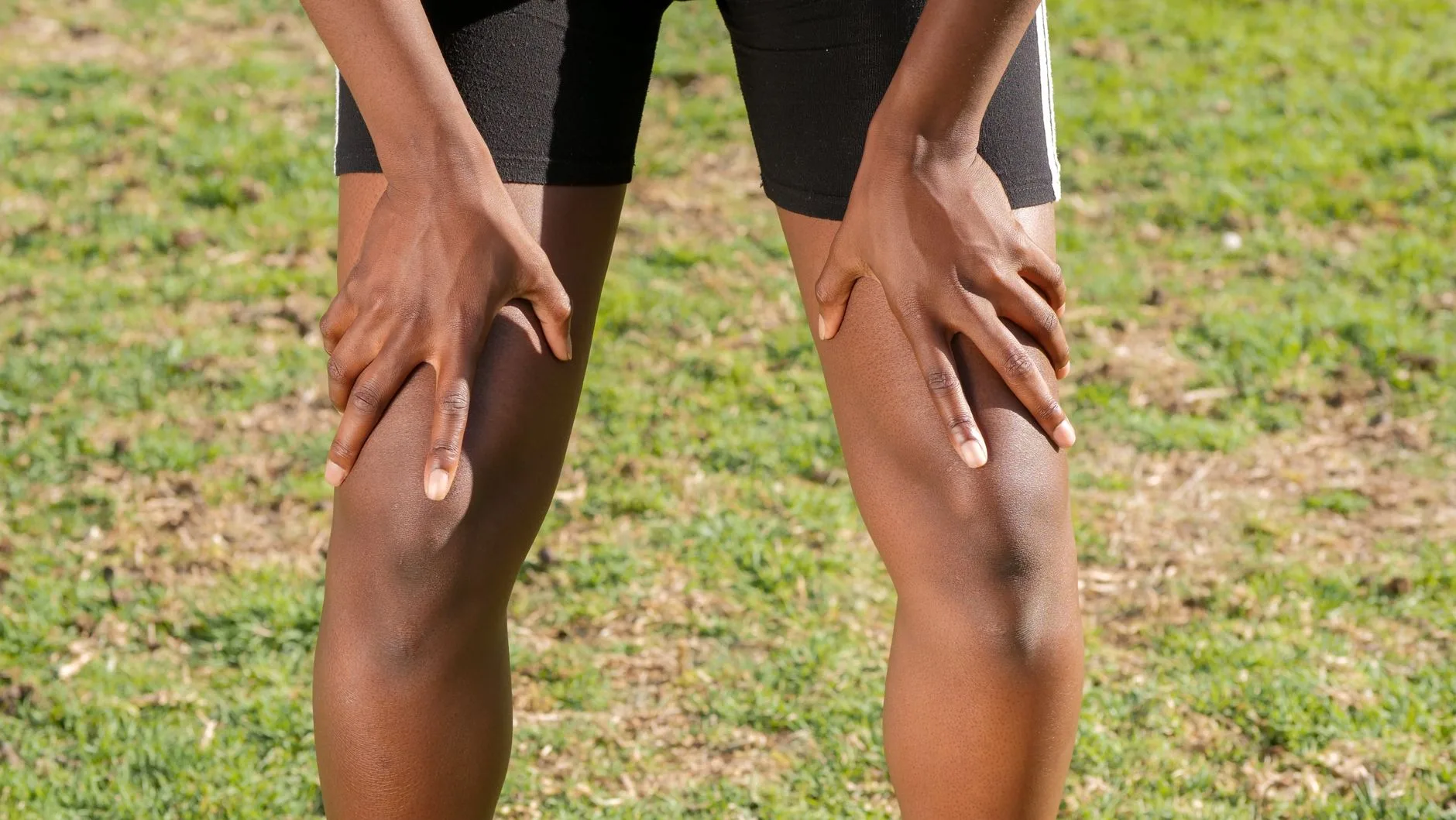
Photo by Kindel Media on Pexels
Someone told you to stop running. Maybe it was a well-meaning friend, a physio you saw once, or just your own knee talking to you at mile 3 of every run. And you’re not sure whether to listen, because running is the thing that keeps you sane, fit, and out of your own head — and “just stop” isn’t really an answer you want to accept.
Here’s the good news: for most runners with knee pain, the evidence doesn’t say stop. It says change something. Bad knees and running aren’t automatically incompatible — but running the same way, at the same volume, with the same weaknesses that caused the pain in the first place, usually is.
This article isn’t about vague reassurance. It’s about what actually moves the needle for knee pain in runners — the boring, unglamorous stuff that works, and the popular fixes that mostly don’t.
First, work out what kind of knee pain you actually have
“Bad knees” covers a lot of ground, and the fix depends on the diagnosis. Broadly:
- Patellofemoral pain (runner’s knee) — dull ache around or behind the kneecap, worse on stairs, hills, or after sitting a long time. This is the most common one by far, especially in runners who’ve recently increased mileage.
- Iliotibial band (ITB) syndrome — sharp pain on the outside of the knee, often appearing at a predictable distance into a run.
- Osteoarthritis-related pain — stiffness, especially in the morning, that eases with movement but can flare after long runs. More common in runners over 45, but not exclusive to them.
- Meniscus or ligament issues — swelling, locking, or instability. This category needs a proper assessment, not a blog post.
If you’ve got swelling, locking, or your knee gives way, see a physio or GP before you do anything else. For the first three categories — which cover the vast majority of “my knees hurt when I run” complaints — the approach below applies.
The single biggest factor: how much load you’re asking your knees to handle
Most runner’s knee pain isn’t really a knee problem. It’s a “you increased your training load faster than your tissues could adapt” problem. The knee is just where it showed up.
A useful rule most physios use: don’t increase your weekly mileage by more than 10% week to week, and don’t add a new type of session (hills, speed work, longer long runs) in the same week you’re also increasing volume. If you’ve gone from running twice a week to four times a week in the space of a month, your knees are not overreacting — they’re responding exactly as expected.
This is also why so many runners’ knee pain “mysteriously” appears during marathon or half marathon training. If you’re following a structured plan like a 16-week marathon training plan or a 12-week half marathon plan, the long run increases are often the trigger — not because the plan is wrong, but because your body needed more recovery than the calendar gave it.
Strength training helps more than any stretch, tape, or gadget
If you take one thing from this article, take this: the research on patellofemoral pain consistently points to hip and quad strengthening as the most effective non-drug intervention — more effective than stretching, taping, or rest alone. A 2018 systematic review published in the British Journal of Sports Medicine found that exercise therapy focused on the hips and quads produced meaningfully better outcomes than knee-focused exercises alone.
Why the hips? Weak glutes and hip abductors let your knee collapse inward slightly on every stride (you’ll sometimes hear this called “dynamic knee valgus”). Over thousands of strides in a run, that small inward drift adds up to real stress on the kneecap’s tracking.
A simple, realistic strength routine — 2 sessions a week, 20–25 minutes:
| Exercise | Sets x reps | Targets |
|---|---|---|
| Single-leg glute bridge | 3 x 12 per side | Glute max |
| Side-lying leg raise or clamshell | 3 x 15 per side | Glute medius |
| Step-ups (low step) | 3 x 10 per side | Quads, hip stability |
| Wall sit | 3 x 30–45 sec | Quad endurance |
| Calf raises | 3 x 15 | Lower leg support |
You don’t need a gym. A resistance band and your own bodyweight cover this entirely. If strength work is new territory for you, our guide to cross-training for runners has more on how to fit it around your running schedule without it eating into recovery time.
Your warm-up matters more than you think
Cold, stiff knees under sudden load is a recipe for irritation. A proper warm-up — leg swings, walking lunges, high knees, a few minutes of easy jogging before any pace work — primes the joint and surrounding muscles before you ask them to do real work. Our warm-up exercises guide has a full routine that takes under 8 minutes and works well as a pre-run habit, not an optional extra.
Cadence and stride: small adjustments, real effects
You don’t need to overhaul your running form. But one specific change has decent evidence behind it: increasing your cadence (steps per minute) by around 5–10% can reduce the load on your knees per stride, because it typically shortens your stride length and reduces overstriding — landing with your foot too far ahead of your body.
If your current cadence is 155 steps per minute, aim for 163–170, not 190. Most GPS running watches display cadence live, which makes this easy to monitor without overthinking it. Don’t force a big jump overnight — nudge it up over a few weeks.
Shoes, surfaces, and the downhill problem
Your shoes won’t fix a strength deficit, but the wrong shoes can make things worse. If your current shoes are past 500–600km, the cushioning has likely degraded enough to change how force reaches your knees. If you’re not sure where to start, our beginner running shoe guide covers what actually matters when choosing a pair versus what’s marketing noise.
Downhill running deserves a specific mention — it loads the knee eccentrically far more than flat or uphill running. If your knee flares specifically on downhills, that’s useful diagnostic information, not just bad luck. Consider running hillier routes in the opposite direction, or walking steep downhill sections during a flare-up.
What doesn’t help as much as people think
| Popular fix | What the evidence actually says |
|---|---|
| Knee taping/braces | Can reduce pain short-term for some, but doesn’t fix the underlying cause. Fine as a bridge, not a solution. |
| Stretching alone | Rarely resolves patellofemoral pain on its own — needs strength work alongside it |
| Total rest | Often reduces pain temporarily, then it returns once you resume running, because the weakness that caused it wasn’t addressed |
| Foam rolling | Feels good, helps with general tightness and recovery, but won’t correct strength imbalances — pair it with strength work, not instead of it |
| New “better” shoes alone | Helps if old shoes were the issue; won’t fix a hip strength deficit |
Foam rolling still has a place in a sensible recovery routine — our foam roller guide covers how to use one properly — but treat it as maintenance, not treatment.
When to actually back off — and how much
If pain is above a 3 out of 10 during a run, or it’s getting worse as the run continues rather than settling after a warm-up, that’s your cue to shorten the run or drop to walking, not push through. The NHS’s guidance on managing knee pain is a sensible baseline for knowing when self-management is appropriate and when it’s time to get a professional opinion.
A rough, realistic guide for managing a flare-up:
- Days 1–3: reduce volume by 50%, cut hills and speed work, add ice after runs if swelling is present.
- Days 4–10: resume easy running only, begin the strength routine above, monitor pain.
- Week 2 onward: reintroduce normal training gradually, following the 10% rule, adding one variable at a time (distance, then pace, then hills).
If pain hasn’t improved noticeably after 2–3 weeks of this, that’s the point to see a physio rather than keep guessing.
The Honest Takeaway
- Knee pain in runners is usually a symptom of load or strength imbalance, not a sign you’re “not built” for running.
- Hip and quad strengthening, done consistently twice a week, has better evidence behind it than any stretch, brace, or gadget.
- Respect the 10% rule when increasing mileage, and don’t add intensity and volume in the same week.
- Shoes, cadence, and warm-ups all matter at the margins — but they support the fix, they aren’t the fix itself.
- If pain is sharp, causes swelling, or your knee locks or gives way, get it properly assessed before training through it. Everything else here assumes it’s manageable, mechanical pain — not a structural injury.