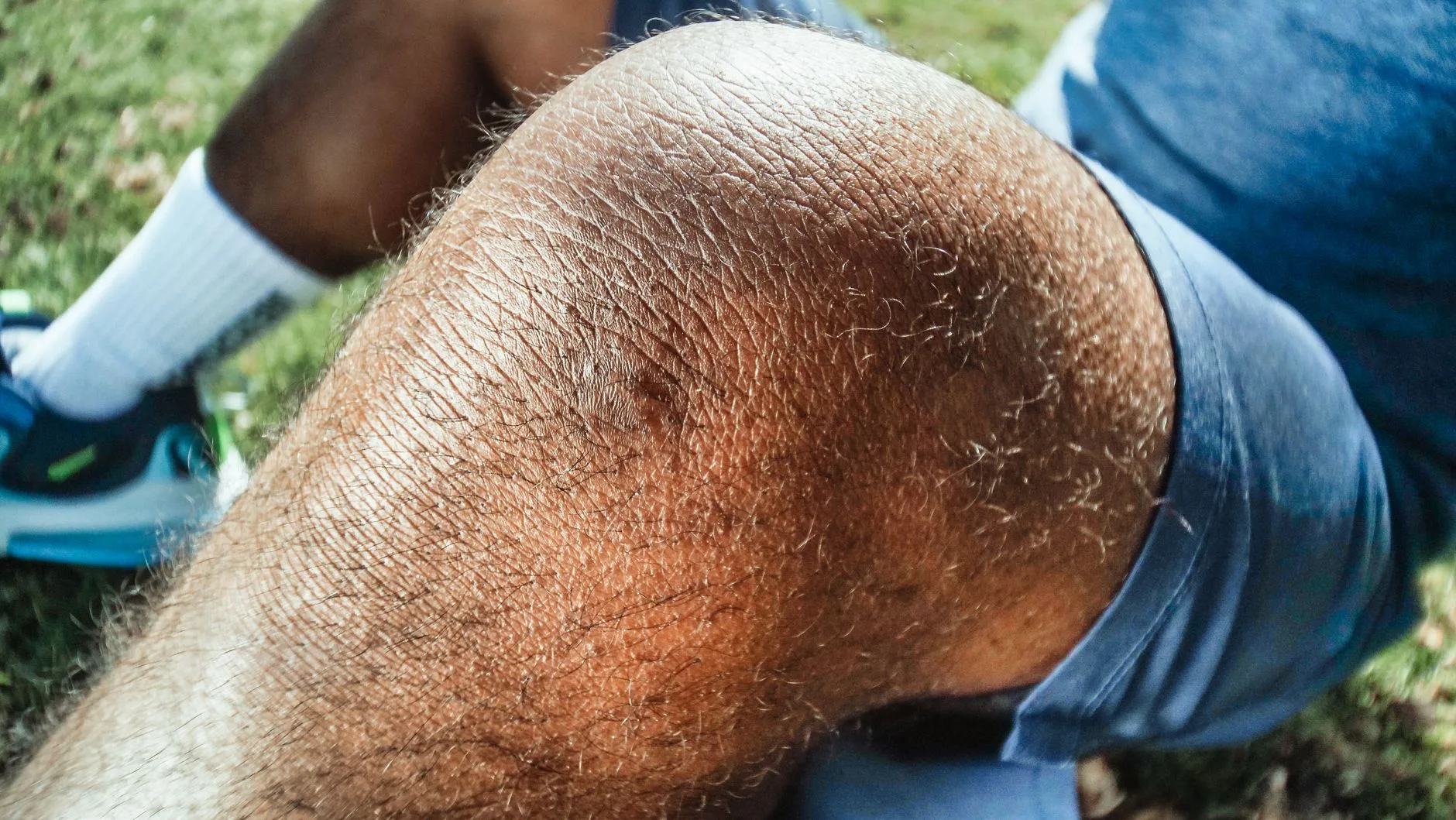
Photo by Kindel Media on Pexels
Knee pain is the most frequently reported injury among recreational runners, accounting for approximately 25–30% of all running injuries. The good news is that most running knee problems are overuse injuries — they develop gradually, have identifiable causes, and respond well to conservative management.
The key to resolving them is correctly identifying which condition you’re dealing with.
The Main Types of Running Knee Pain
Runner’s Knee (Patellofemoral Pain Syndrome / PFPS)
Where it hurts: Around or behind the kneecap, often worse when running downhill, descending stairs, or after sitting for a long time.
What it is: Pain from the kneecap (patella) not tracking correctly in its groove on the femur. This creates friction and irritation between the patella and the underlying cartilage.
Causes: Weak glutes/hip abductors (causing the knee to track inward), tight IT band, overpronation of the foot, sudden mileage increases.
Management: Reduce mileage. Strengthen glutes (clamshells, side-lying hip abductions, glute bridges). Stretch the hip flexors and quads. Gait assessment if pronation is suspected. Most cases resolve within 6–12 weeks of targeted strengthening.
IT Band Syndrome (ITBS)
Where it hurts: Sharp or burning pain on the outside of the knee, typically starting after a consistent distance into a run (often at the same point each run).
What it is: The iliotibial band (a thick fascial band running from the hip to the shin) becoming irritated where it crosses over the lateral femoral condyle (the bony prominence on the outside of the knee).
Causes: Hip weakness (particularly hip abductors and glutes), excessive downhill running, rapid mileage increase, poor running shoes.
Management: Rest from activities that aggravate it. Strengthen the hip abductors and gluteus medius. Address any factors in training that contributed (excessive hills, sudden mileage jump). Foam rolling the IT band may help with secondary symptoms but doesn’t address the root cause.
Patellar Tendinopathy
Where it hurts: Just below the kneecap, at the top of the patellar tendon. Pain is often described as sharp and point-specific.
What it is: Degeneration of the patellar tendon, typically from repetitive load exceeding the tendon’s capacity to recover.
Causes: Rapid mileage increase, high training volume, jumping activities, insufficient recovery.
Management: Tendons respond to load management and progressive loading exercises rather than rest alone. Heavy slow resistance training (e.g., slow eccentric single-leg squats) is the most evidence-based rehabilitation approach. Total rest often doesn’t help — graduated loading does.
Medial Knee Pain (Pes Anserine Bursitis)
Where it hurts: Inner side of the knee, below the joint line.
What it is: Inflammation of the bursa (fluid-filled sac) where three tendons meet on the inner knee. Less common in runners than PFPS or ITBS but worth recognising.
Causes: Overpronation, tight hamstrings, sudden increases in hill training.
General Principles for Running Knee Pain
If pain is present while running: Reduce mileage significantly or stop running. Running through knee pain that worsens during a session risks converting an overuse injury into a more serious structural problem.
The 10% rule: The majority of running knee injuries develop after rapid mileage increases. Increasing weekly mileage by no more than 10% per week is the most effective prevention strategy.
Strengthening is more effective than stretching: The evidence consistently shows that strengthening the hip, glute, and quadriceps muscles reduces the recurrence of running knee pain more than stretching or foam rolling alone.
Running surface: Soft surfaces (grass, trail) reduce impact loading compared to tarmac. Reducing road running temporarily during recovery can help.
Strengthening Exercises for Running Knee Pain
These address the most common underlying cause (hip and glute weakness) for both PFPS and ITBS:
Clamshells: Lie on your side, knees bent. Keeping feet together, rotate the top knee upward. 3 × 15 each side.
Glute bridges: Lie on your back, feet flat, hip-width apart. Push hips up, squeeze glutes at the top. 3 × 15–20.
Side-lying hip abductions: Lie on your side. Raise the top leg 30–40cm, toes pointed slightly down. 3 × 15 each side.
Single-leg squats (slow): Stand on one leg. Lower slowly for a count of 5, return in 2 seconds. Keep the knee tracking over the second toe. 3 × 8–10 each side.
When to See a Physiotherapist
See a physiotherapist if:
– Pain persists for more than 2–3 weeks of reduced activity
– Pain worsens during normal daily activities (not just running)
– You have swelling, locking, or giving way of the knee
– Pain came on suddenly rather than gradually
Physiotherapy for running knee injuries typically involves gait assessment, targeted strengthening, and a return-to-running programme — all of which are significantly more effective than self-managed rest alone for persistent cases.
Summary
Most running knee pain is manageable and preventable:
- Identify the type of pain — location, when it hurts, and aggravating factors distinguish PFPS, ITBS, and patellar tendinopathy
- Strengthen the glutes and hips — weakness here drives most running knee problems
- Don’t increase mileage by more than 10% per week — the most effective prevention strategy
- Tendons need load, not rest — patellar tendinopathy responds better to graduated loading than to complete rest
- See a physiotherapist if pain persists beyond 2–3 weeks or affects daily activities
Next read: IT band syndrome: runners’ guide to causes and treatment