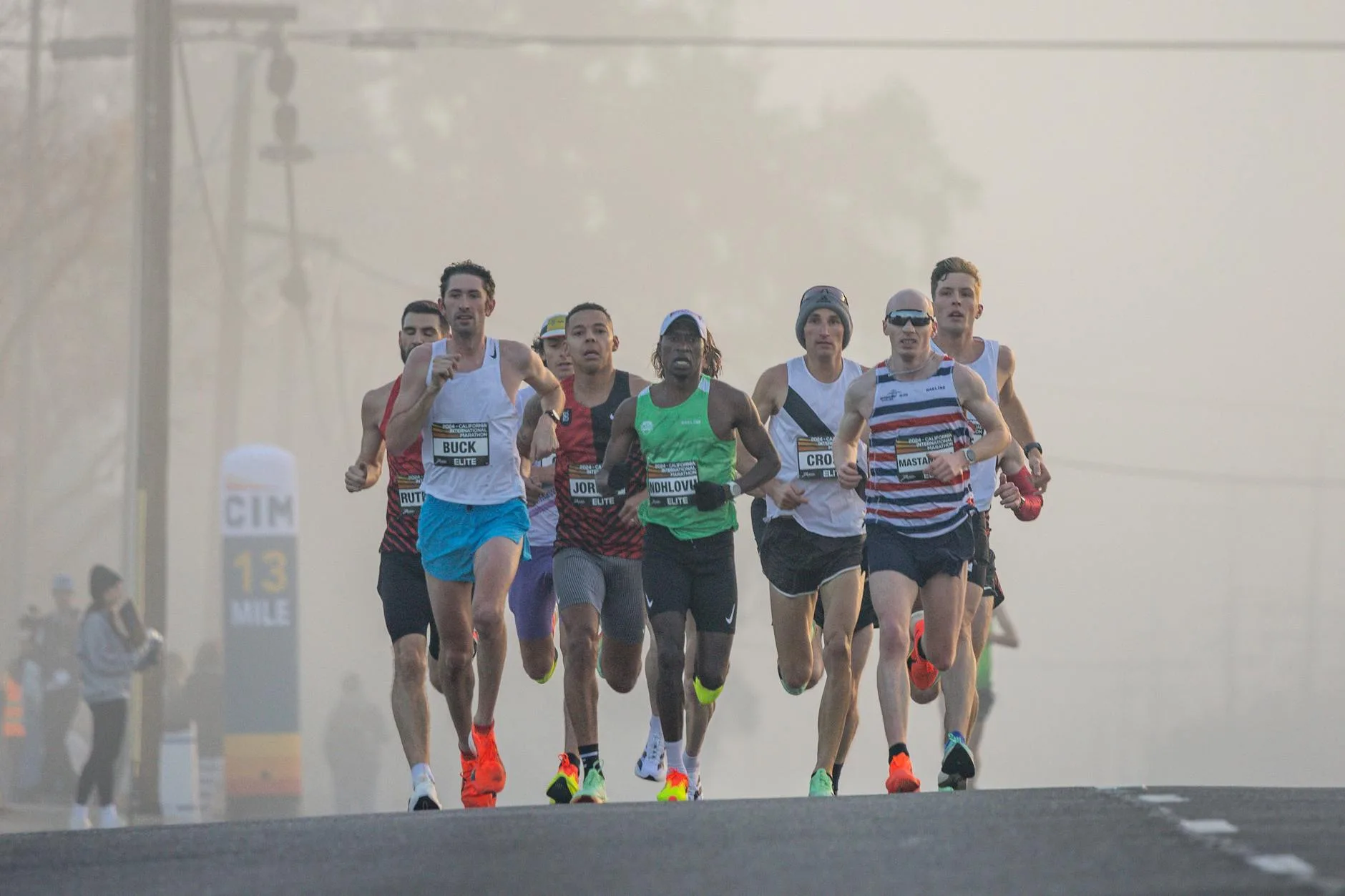
Photo by Stephen Leonardi on Pexels
You’ve signed up for a half marathon — or you’re thinking about it — and now you want to know whether a certain finish time is realistic, impressive, embarrassing, or somewhere in between. The honest answer is that “good” depends almost entirely on where you’re starting from. But that’s not particularly useful when you’re trying to set a goal, so let’s get specific.
The half marathon is 21.1km (13.1 miles). It takes most beginner runners somewhere between 2 hours and 2 hours 45 minutes to complete. That’s a big range, and both ends of it represent a genuine achievement for someone who started training a few months ago. What matters more than the number on the clock is whether you trained consistently, ran your own race, and crossed the finish line feeling like you gave it what you had on the day.
This article gives you honest time benchmarks, the paces behind them, and how to figure out which bracket to aim for based on your current fitness — not some ideal version of you who sleeps eight hours a night and never misses a session.
What counts as a “good” time for a first half marathon?
For a first-timer, finishing is genuinely the goal — but that doesn’t mean you can’t have a time in mind. Here’s a straightforward breakdown of what different finish times mean in practice:
| Finish Time | Avg Pace (per km) | Avg Pace (per mile) | What it represents |
|---|---|---|---|
| Under 1:45 | ~4:59/km | ~8:02/mile | Strong — likely not a true beginner |
| 1:45–2:00 | 5:00–5:41/km | 8:03–9:09/mile | Solid first effort, good base fitness |
| 2:00–2:20 | 5:41–6:38/km | 9:10–10:41/mile | Very respectable beginner time |
| 2:20–2:45 | 6:38–7:48/km | 10:42–12:33/mile | Common and completely valid for first-timers |
| 2:45–3:00 | 7:48–8:31/km | 12:34–13:43/mile | Run/walk strategy — still an achievement |
| Over 3:00 | 8:32/km+ | 13:44/mile+ | Slower pace or significant walking — still a finish |
The 2:00–2:30 range is probably the most common landing zone for first-time half marathoners who’ve done 10–14 weeks of structured training. If you’re aiming for sub-2 hours as a beginner, that requires a decent aerobic base already — it’s achievable, but you’ll need to run at around 5:41/km consistently for the whole race, which isn’t easy when fatigue sets in at mile 10.
Average half marathon times: how do you compare?
According to data from RunRepeat, the global average half marathon finish time is approximately 2:10 for men and 2:24 for women. These figures include all ability levels — recreational runners, beginners, and people returning after injury. They’re not elite benchmarks.
So if you’re targeting 2:15–2:30 for your first race, you’re right in the middle of what most adult runners across the world actually do. That should feel reassuring rather than deflating.
Where you personally land will depend on:
– Your current weekly mileage and how long you’ve been running
– Whether you can already run 10km without stopping
– Your age, recent fitness history, and how consistently you’ve trained
– Race conditions — hills, heat, and wind all add minutes
How your current 10K time predicts your half marathon finish
The most reliable starting point for setting a target is your current 10K time. You can use a rough multiplier of 2.2–2.3 to get an estimated half marathon time. So if you run 10km in 60 minutes, a realistic first half marathon goal might be around 2:12–2:18.
That’s not a guarantee — it assumes reasonable pacing discipline and no major blowups in the second half. First-timers often go out too fast and lose significant time in the final 5km. A well-paced effort where you run the second half slightly faster than the first (a negative split) will almost always beat an enthusiastic start that falls apart.
Here’s a quick reference:
| 10K time | Predicted HM range |
|---|---|
| 45 min | 1:40–1:45 |
| 50 min | 1:51–1:55 |
| 55 min | 2:01–2:07 |
| 60 min | 2:12–2:18 |
| 65 min | 2:23–2:29 |
| 70 min | 2:33–2:41 |
| 75 min | 2:45–2:55 |
These are estimates, not certainties. Factors like race terrain, your long-run experience, and how well you fuel on the day all play a role. Still, they give you something concrete to work with when you’re choosing a goal.
Why “just finish” is a legitimate target — and when to aim higher
There is nothing wrong with going into your first half marathon with the single goal of finishing. The distance is hard. A lot of things can go sideways — blisters, a dodgy stomach, legs that die at mile 11. Removing the time pressure and committing to running steadily and enjoying the experience is a smart strategy.
That said, having a loose time goal does help with pacing. Without one, it’s easy to start too fast because race-day adrenaline makes everything feel effortless for the first 5km. Then the second half becomes a slog. Even a broad target — “I’d like to finish between 2:15 and 2:30” — gives you a pace band to run within.
If your training has gone reasonably well — you’ve completed your long runs, you’ve run 16–18km at least once, and you can hold a conversation at your easy pace — a time goal in the 2:15–2:30 range is realistic for most beginners.
Training consistency matters more than your goal time
The runners who finish closest to their target time are almost always the ones who trained consistently, not the ones who set the most ambitious goal. Three runs a week for 12 weeks beats four runs a week for five weeks followed by two weeks of skipped sessions and a last-minute panic.
Real life interrupts training. You get a cold. Work explodes. The kids are ill. A long run gets cancelled. That’s normal. What matters is getting back on the plan rather than scrapping it entirely because one week went badly.
If you’re worried about the training required, the research is reassuring: a study published in the Journal of Strength and Conditioning Research consistently shows that 10–14 weeks of structured training is sufficient for most recreational runners to complete a half marathon. You don’t need six months of perfect preparation.
For context, if you’re already running 3–4 times a week and comfortable at 8–10km, you could be half-marathon ready in 10–12 weeks. If you’re starting from very little base, 16 weeks gives you more room to build safely. Knowing how long it takes to train for a half marathon is worth understanding before you pick your race date.
Pacing your race: the mistake most beginners make
The most common mistake in a first half marathon isn’t going out too slow — it’s going out too fast. Race atmosphere, fresh legs, and nervous energy combine to make your goal pace feel easy for the first 3–5km. You run 30 seconds per kilometre faster than planned. It feels great. By kilometre 16, you’re suffering.
A safer approach: run the first 5km around 10–15 seconds per kilometre slower than your goal pace. Let your body warm up. Then settle into target pace. If you still feel good at 15km, you can push a little. This approach consistently produces better results than going out hard and hanging on.
For a 2:20 goal, your average pace is around 6:38/km. Your opening 5km should feel like about 6:50/km — almost irritatingly easy. That discipline pays off later.
The NHS physical activity guidelines also note that building up distance gradually reduces injury risk — pacing applies to training, not just race day.
What to aim for next time
Once you’ve got your first half marathon finish, you have a real benchmark. Most runners improve significantly in their second half marathon — often by 10–20 minutes — simply because they now know what the distance actually feels like and can pace it intelligently.
If your first half was around 2:30, a realistic second-time goal might be 2:15–2:20. If you finished in 2:10, a sub-2 hour half marathon becomes a very achievable target with structured training. Progress at this stage of running tends to come quickly because the aerobic adaptations from your first training block are still in place and building.
The honest takeaway
- A good beginner half marathon time is 2:00–2:45. Both ends of that range represent real effort and real achievement. Don’t let anyone tell you otherwise.
- Your current 10K time is your best predictor. Multiply it by roughly 2.2–2.3 and you have a realistic first-race target.
- Pacing conservatively in the first 5km is the single biggest factor in how you feel at kilometre 18. Go out 10–15 seconds per kilometre slower than goal pace.
- Consistency in training beats ambition on the startline. A modest goal with solid preparation beats an aggressive target built on spotty training.
- Your second half marathon will almost certainly be faster. The first one is about learning the distance — use it for exactly that.
Next read: How long does it take to train for a half marathon?