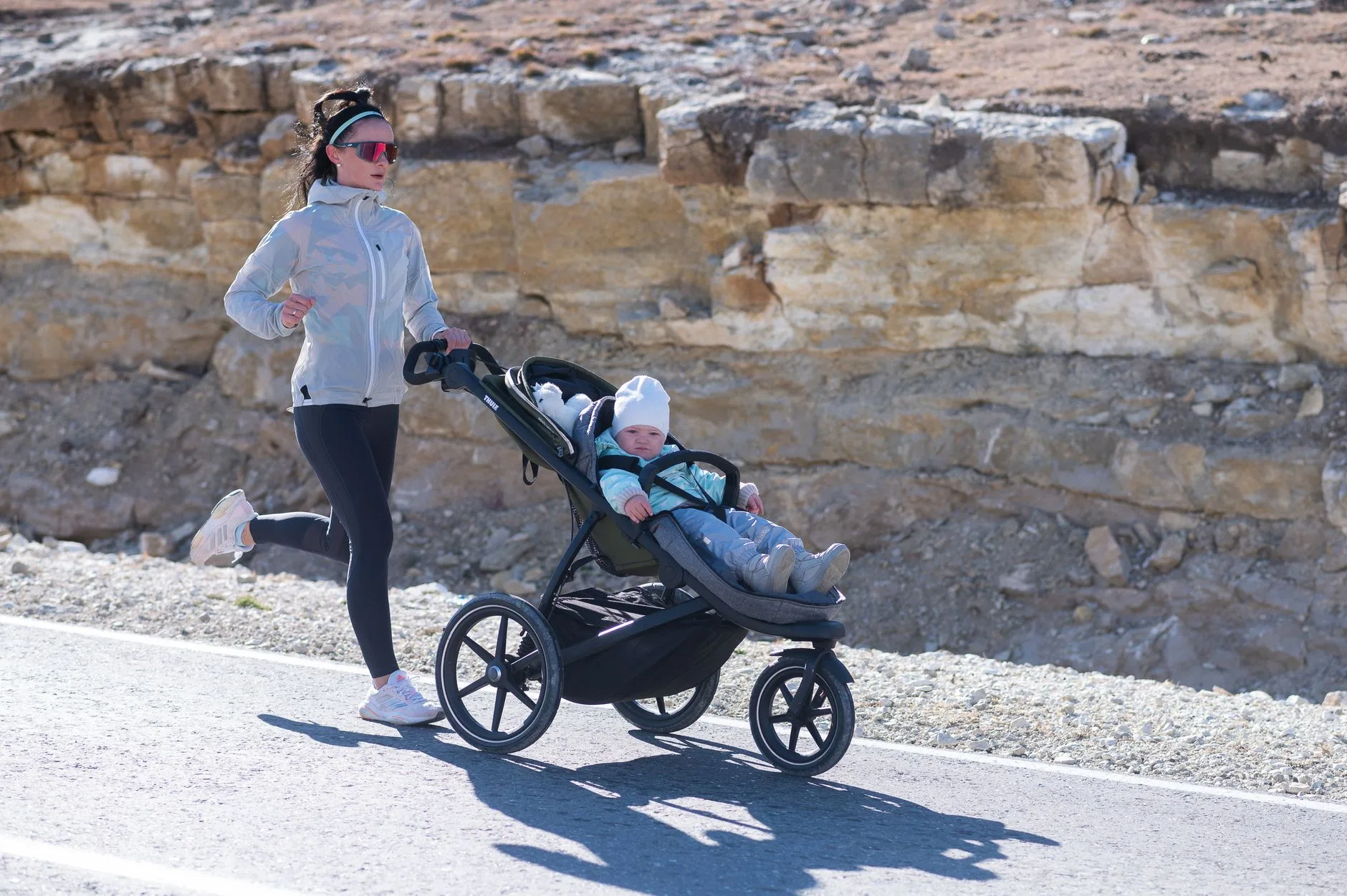
Photo by Dmitrii Eremin on Pexels
It’s 7:40am, the baby’s finally stopped grizzling, and you’ve got maybe 35 minutes before nap time collapses or the next feed window opens. This is what running with a buggy actually looks like — not a leisurely stroll with a jogging pram as a lifestyle accessory, but a tightly timed operation squeezed between naps, feeds, and whatever chaos the day throws at you. If you’re trying to work out how to run with a pram without it feeling like a logistical nightmare, you’re not alone, and it’s entirely doable.
Buggy running isn’t a lesser version of “real” running. Plenty of parents run faster with a pram than they ever expected to, once they’ve sorted the gear and pacing. But it does change things — your stride, your effort, your route choices, and frankly your patience. This article covers what actually matters: the right equipment, how to adjust your training, safety basics, and how to keep this going without burning out in month two.
Get the right buggy (this is not optional)
A standard pushchair will wreck your wrists and your shoulders inside two runs. You need a purpose-built running buggy, and the differences aren’t cosmetic.
- Fixed front wheel — a swivel wheel will wobble at anything above a brisk walk. Running buggies either lock the front wheel in place or don’t swivel at all.
- Hand brake — essential for any route with hills, even gentle ones. You need to be able to control speed without death-gripping the handlebar.
- Large pneumatic tyres (typically 16–20 inch rear wheels) — these absorb road and trail vibration far better than small plastic wheels, which matters for your baby’s comfort and your joints.
- Adjustable handlebar height — you shouldn’t be hunching or reaching. Set it so your elbows sit at roughly 90 degrees with a relaxed grip.
- Five-point harness — non-negotiable, every single run.
Most manufacturers state a minimum age for running with a buggy — commonly 6–8 months, because younger babies need proper head and neck support that a running stride (with its bounce and vibration) can compromise. Check your specific model’s guidance rather than assuming; the NHS also recommends waiting until your baby has good head control before any jogging-style movement in a pushchair.
Expect your pace to change — and that’s fine
Pushing 10–15kg of baby plus buggy (which can weigh 8–10kg itself) changes your effort levels significantly. Most parents find their pace drops by 30–60 seconds per km compared to running unloaded, even on flat terrain. That’s not you getting unfit. That’s physics.
Here’s a rough guide for adjusting effort, not just pace:
| Unloaded effort | Typical buggy pace adjustment | What it should feel like |
|---|---|---|
| Easy/conversational | +30–45 sec/km | Still able to talk in short sentences, slightly more laboured |
| Steady/moderate | +45–60 sec/km | Breathing audibly harder, legs working the whole route |
| Hills (any gradient) | +60–90 sec/km | Short, controlled steps; resist the urge to sprint it |
| Downhill | Use the brake, don’t “free-run” | Control matters more than speed — a buggy with momentum is hard to stop |
Train by effort rather than chasing a specific pace on your watch. If you’re used to easy-run pace guidance, the same principles apply here — just shift the whole scale slower. It’s worth re-reading how effort-based pacing works if you’ve been pace-obsessed before having a baby, because buggy running is where that skill really pays off.
Technique: how to actually push without wrecking your body
Buggy running technique is different enough from normal running that it’s worth a few deliberate changes:
- One hand, not two, once you’re confident. Two hands on the bar the whole time locks your torso and kills your natural arm swing, which changes your running mechanics more than people expect. Once you trust the buggy’s stability, alternate hands every few minutes.
- Push from your core, not your shoulders. Lean slightly forward from the hips (not the upper back) and let your legs do the driving.
- Widen your stance very slightly. The buggy sits between your natural arm swing path, so a marginally wider gait avoids clipping the wheels with your feet.
- Keep the buggy at arm’s length, not tucked in close. Tucking it in forces you to shorten your stride.
Expect shoulder and forearm fatigue in your first few weeks — this is normal adaptation, not injury, provided it settles within a day or two.
Building a routine you can actually sustain
The single biggest mistake new buggy runners make is planning sessions that assume a cooperative baby. Build flexibility into the plan instead of fighting it.
- Run straight after a feed, not before — a hungry baby mid-run is a run that’s ending early.
- Time it to nap transitions. Many parents find the buggy’s motion helps babies fall asleep, so running at the start of a nap window can buy you 40–60 minutes of genuinely focused time.
- Have a backup 15-minute route for the days when 35 minutes becomes 15. A shorter run you actually complete beats a longer one you abandon at the 10-minute mark.
- Accept inconsistent weeks. Illness, teething, and growth spurts will blow up your schedule regularly in the first year. This is exactly the situation that proper base building is designed for — low, steady, forgiving volume rather than rigid weekly targets you’ll inevitably miss.
If you’re coming back to running after birth specifically, go easier and slower than you think you need to for the first 6–8 weeks, and get clearance from your GP or physio first, particularly if you had a C-section or any pelvic floor concerns — the NHS has clear guidance on safe return-to-exercise timelines postpartum.
Weather, routes, and safety basics
- Avoid narrow, uneven pavements where you can’t see your buggy wheels clearly — kerb edges and potholes are the main cause of buggy-running falls.
- Check local weather before cold or wet runs — babies lose heat faster than adults and can’t tell you they’re cold. Layer them more than you’d layer yourself, and check extremities (hands, face) regularly during the run.
- Rain and wind change your buggy’s handling noticeably — a crosswind can push a lightweight running buggy sideways more than you’d expect. If you need weatherproofing for yourself too, proper wet-weather kit makes a bigger difference than people assume.
- Sun protection matters even on overcast days — buggy canopies don’t block UV as well as people think, so a hat and sun cream for both of you is worth the 90 seconds it takes.
- Always use the wrist strap, even on flat routes. A buggy rolling away from you, even briefly, is the scenario this exists to prevent.
Finding support (because solo buggy running gets old)
Buggy running can feel isolating, especially if your pre-baby running life involved a club or regular running partners. Many areas now have dedicated buggy-running groups — sometimes informal WhatsApp meetups, sometimes structured sessions through local running communities. It’s worth actively looking for one rather than assuming it doesn’t exist near you; parent-runner groups tend to be some of the most welcoming spaces in the sport, precisely because everyone there understands a session getting cut short by a meltdown at the 2km mark.
The Honest Takeaway
- Don’t run with a buggy until your baby meets the manufacturer’s minimum age guidance (usually 6–8 months) and has solid head control — this one’s not flexible.
- Expect your pace to drop 30–60 seconds per km versus unloaded running, and train by effort, not by chasing old pace numbers.
- Build a flexible routine: a main route and a 15-minute backup, timed around feeds and naps rather than a fixed schedule.
- Alternate hands on the handlebar once you’re confident, and lean from the hips to protect your shoulders and restore some natural arm swing.
- Find a buggy-running group if you can — it solves the isolation problem and usually means someone else has already scouted the pram-friendly routes nearby.
Next read: Read our guide to base building for runners