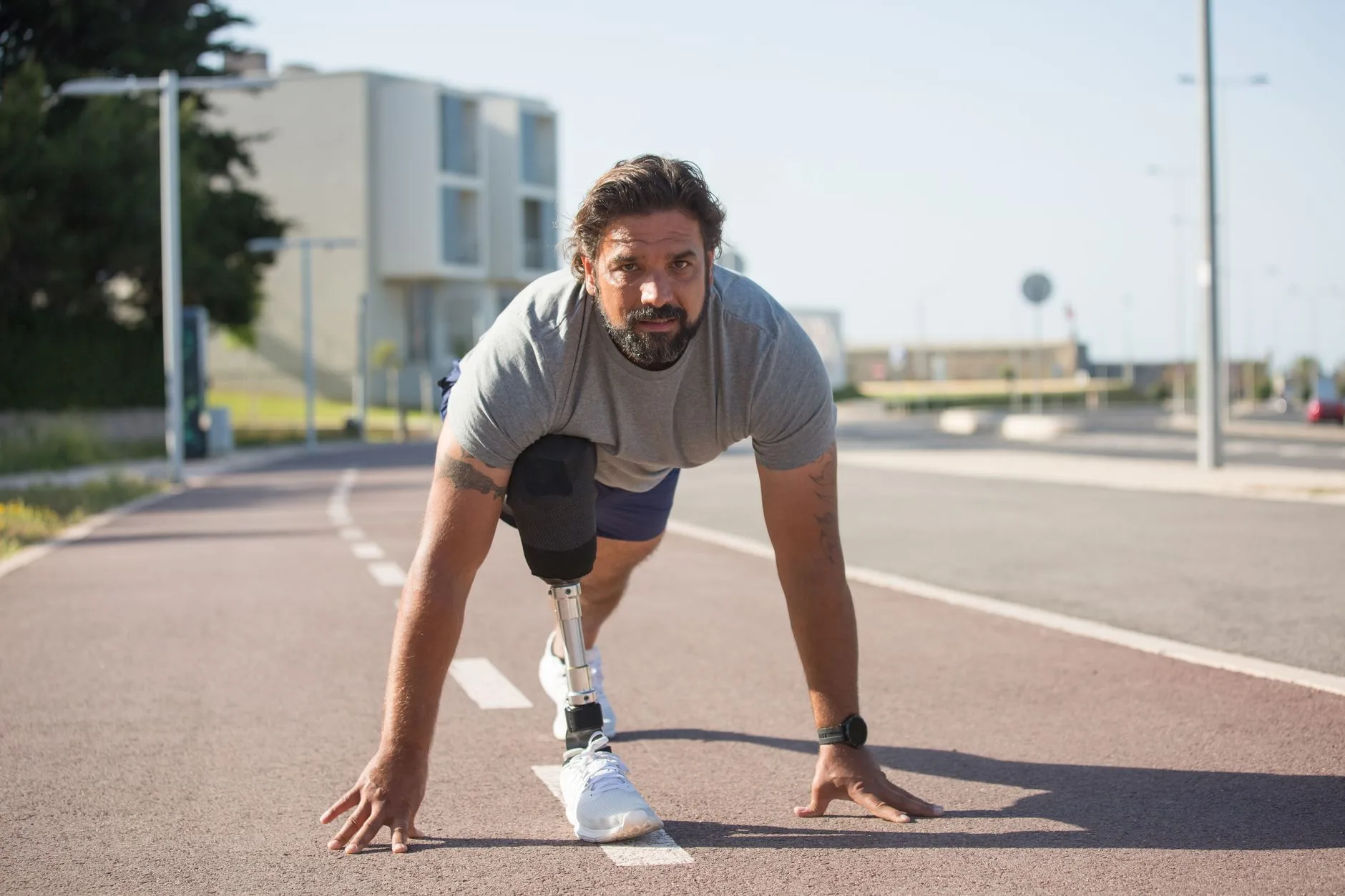
Photo by Kampus Production on Pexels
You used to run 10k on tired legs after a bad night’s sleep and feel fine by mile 2. Now you wake up stiff from a run two days ago, your Achilles grumbles on the first kilometre, and that pace you used to hold without thinking now needs a proper warm-up and a bit of negotiation with your hamstrings. If you’re 40-something and wondering whether something is actually wrong with you, or whether running is just different now — the answer is: it’s different, and mostly that’s normal.
This isn’t a decline story. Plenty of runners set PBs in their 40s and 50s, run their first marathon at 52, or come back stronger after years off. But the training that worked at 28 doesn’t automatically work at 44, and pretending otherwise is how people pick up injuries that take three times longer to heal than they used to. The physiology has shifted. The fix isn’t to run less out of fear — it’s to run smarter with the body you actually have.
Here’s what’s genuinely changing, and what to do about each piece of it.
What’s actually happening in your body
A few things shift gradually from your late 30s onward, and they compound:
Recovery slows down. Muscle protein synthesis — the process that repairs training damage — becomes less efficient with age, meaning the same hard session takes longer to recover from. This is well established in exercise physiology and it’s the single biggest reason your “easy week” now needs to be genuinely easy.
You lose muscle mass if you don’t actively work against it. Sarcopenia — age-related muscle loss — typically starts in the late 30s and accelerates without resistance training. For runners this shows up as weaker glutes and calves, which means less power per stride and more load passed up to joints and tendons that weren’t built to absorb it.
Tendons get stiffer and less elastic. This is why Achilles and patellar tendon issues become more common with age — not because you’re “past it,” but because tendon tissue adapts more slowly to training stress than it did a decade ago.
Aerobic capacity (VO2 max) declines roughly 0.5–1% per year from your mid-30s if training stays static. The good news: consistent training slows this dramatically — trained 50-year-olds often have the VO2 max of untrained 25-year-olds.
None of this means slow down and accept decline. It means train with more intention and less ego.
Pace: adjust the expectation, not the ambition
The pace you ran at 30 might genuinely be 15–30 seconds per km slower to hold comfortably now, especially if you’ve had a gap in training. That’s not failure — it’s a different starting point.
| Training zone | What it should feel like at 40+ | Common mistake |
|---|---|---|
| Easy/recovery runs | Fully conversational, could hold a phone call | Running these 30–60 sec/km too fast “because it felt easy” |
| Steady/aerobic runs | Comfortably hard, could speak in short sentences | Skipping these and only doing easy + hard |
| Tempo/threshold | Hard but sustainable for 20–40 min | Doing this pace on tired legs from a missed rest day |
| Interval/speed work | Genuinely hard, 1–2x per week max | Doing 3+ hard sessions because that’s what used to work |
The biggest practical change for most 40+ runners: more of your weekly mileage should sit in the genuinely easy zone, and fewer sessions should be “medium-hard” — the pace that’s too fast to recover from and too slow to build real fitness. Understanding your actual heart rate training zones is more useful now than it was at 25, because perceived effort gets less reliable as a guide — you can feel “fine” at a pace that’s quietly accumulating fatigue.
Recovery isn’t optional anymore — it’s structural
At 25, you could get away with running hard three days in a row. At 42, that same pattern is how you end up with a nagging hip flexor or a hamstring strain that lingers for six weeks instead of two.
Practical changes that actually move the needle:
- 48 hours minimum between hard sessions. Not “I’ll see how I feel” — schedule it in.
- One full rest day per week, non-negotiable, even in peak training blocks.
- Sleep is now a training variable, not a nice-to-have. Under 6.5–7 hours consistently and your recovery capacity drops measurably — this is one of the most consistent findings in exercise recovery research.
- Protein intake matters more. Aim for roughly 1.6–2.0g per kg of bodyweight per day, spread across meals, to offset the natural decline in muscle protein synthesis efficiency. Knowing which protein foods actually help with recovery and timing is worth five minutes of reading.
The difference between a recovery run and an easy run also matters more now than it did a decade ago — understanding the distinction helps you avoid accidentally turning every “easy” day into moderate training stress.
Strength training stops being optional
This is the change most 40+ runners resist and most need. If you’re not doing resistance training twice a week, you’re actively losing the muscle that protects your joints and powers your stride.
You don’t need a gym membership or an hour-long programme. Twice weekly, 20–30 minutes:
- Squats or split squats: 3 sets of 10–12
- Single-leg deadlifts: 3 sets of 8 per leg
- Calf raises (straight and bent knee): 3 sets of 15
- Glute bridges: 3 sets of 15
- Plank variations: 3 sets of 30–45 seconds
Calf raises specifically matter for Achilles health — if you’re already dealing with tendon pain, it’s worth knowing whether you can keep running through Achilles tendinopathy and how strength work fits into managing it rather than ignoring it.
Warm-ups are no longer skippable
At 25 you could roll out of bed and run. At 45, cold tendons and stiff hips mean the first kilometre or two carries real injury risk if you skip preparation. A proper dynamic warm-up — leg swings, walking lunges, a few strides — takes five minutes and meaningfully reduces strain-type injuries. If you’ve been skipping this step, it’s genuinely one of the highest-return changes you can make, and there are specific warm-up exercises worth building into your routine rather than improvising.
Cross-training earns its place
Running-only training becomes harder to sustain as joint tolerance changes. Swapping one running day per week for cycling, swimming, or rowing maintains aerobic fitness while giving tendons and joints a genuine break from impact loading. This isn’t a concession to age — it’s smart load management that plenty of competitive masters runners use deliberately. If you’re unsure what actually transfers to running fitness versus what’s just “exercise,” it’s worth looking at what cross-training genuinely helps rather than guessing.
Niggles get investigated, not ignored
At 25, a tight hamstring usually resolved itself in a week of light jogging. At 40+, the same niggle is more likely to be something that needs addressing directly — because tissue recovers more slowly and small issues compound into bigger ones faster. If something’s been nagging for more than two weeks, that’s your cue to actually deal with it rather than running through it on hope. Hamstring strains in particular respond well to early, specific management — here’s what to actually do rather than just resting and waiting.
The Honest Takeaway
- Slow your easy runs down by 20–30 seconds per km if you haven’t recalibrated in years — it will make your hard sessions actually hard and your easy days actually recover you.
- Add two 20–30 minute strength sessions per week, focused on glutes, calves, and single-leg stability. This isn’t optional maintenance anymore — it’s the thing protecting your knees and Achilles.
- Treat 48 hours between hard efforts as a rule, not a suggestion, and protect one full rest day weekly even when training feels good.
- Address niggles within two weeks rather than running through them — recovery windows are longer now, and early action saves you months down the line.
- None of this means you’re in decline. It means the inputs that produce progress have shifted, and runners who adjust them keep improving well into their 50s and beyond.
Next read: Start building the aerobic base that makes everything else easier