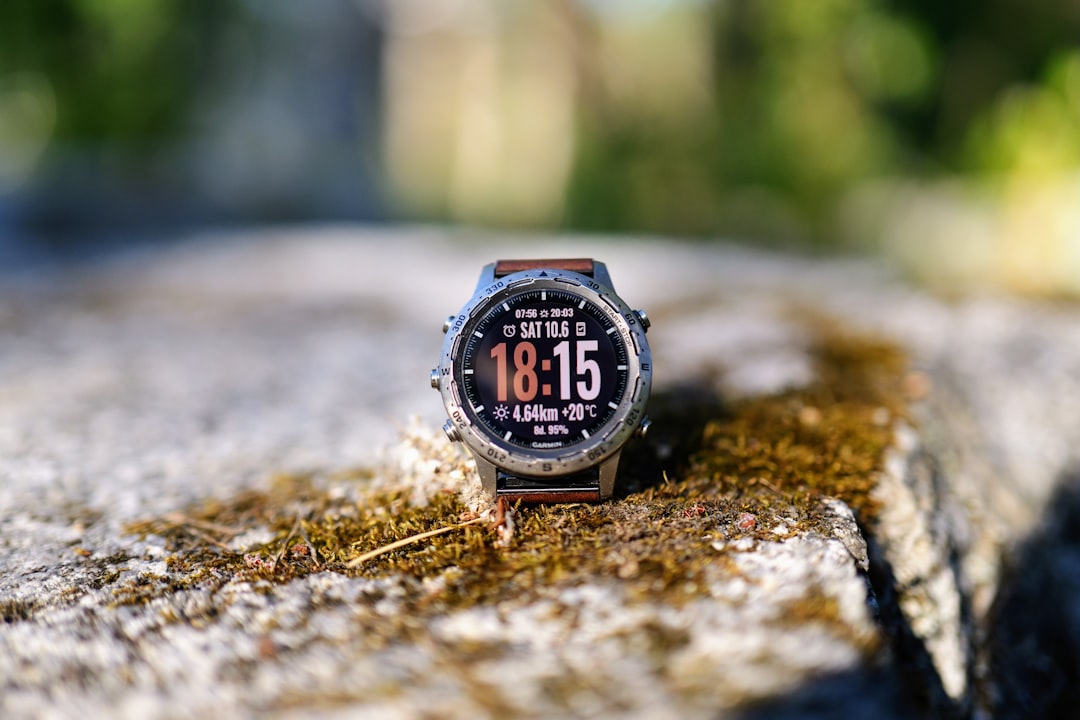
Photo by Alex Skobe on Unsplash
Garmin Forerunner watches are the standard for recreational runners. They’re not cheap (£200–400), but most serious amateur runners end up owning one. Here’s what they actually do well, what’s honestly unnecessary, and whether a premium price tag is genuinely worth it.
What You Actually Get
A Garmin Forerunner (any recent model: 165, 265, 955) gives you:
- GPS tracking — accurate distance and pace data for every run
- Training metrics — cadence, stride length, ground contact time, VO2 max estimates
- Structured training plans — the watch can guide you through intervals or tempo work
- Training load tracking — tells you how much stress you’re putting on your body
- Sleep tracking — monitor sleep quality and recovery
- Heart rate monitoring — built-in optical sensor (chest strap optional)
That sounds like a lot. In reality, most recreational runners use about 20% of these features.
The Features You’ll Actually Use (20% of It)
GPS and Distance
This is the core feature. You run, the watch tracks your route, distance, and pace in real time. Any Forerunner does this. Accuracy is solid (within 1–2% of actual distance on a known route).
Pace and Cadence
Your watch shows current pace and cadence (steps per minute). Cadence is useful if you want to increase turnover (higher cadence = less impact). Most runners check these once, then ignore them.
Training Status
The watch estimates your fitness level based on training history and recovery. It tells you “Productive,” “Unproductive,” or “Recovery Needed.” This is useful if you tend to overtrain. Most runners should train harder and recover better anyway, so this is nice feedback.
Structured Workouts
Build a tempo run (10 min easy, 15 min at pace, 5 min cool-down) and the watch guides you through it with audio cues. This is genuinely helpful during speed work.
Race Day Pacing
The watch can hold your goal pace and alert you if you drift faster or slower. For marathon or half-marathon racing, this is incredibly helpful for not going out too fast.
That’s it. Those five features are what you use. The rest are nice but optional.
The Features That Sound Good But You Won’t Use
Sleep tracking — estimates how much deep vs. light sleep you got. Accuracy is poor and it doesn’t change what you do about sleep.
Training load analytics — shows whether your training is balanced. Most amateur runners don’t have the consistency or complexity to need this.
Body Battery — combines sleep, stress, and training load to estimate your readiness. Useful for elite athletes managing daily workload. Not necessary for 4× per week runners.
Training Peaks sync — if you’re using external training software. Most recreational runners don’t.
Which Forerunner Should You Buy?
Garmin Forerunner 165 (£180–220)
Solid entry-level. GPS, heart rate, training plans, that’s it. No fancy metrics. Lasts 11 days on battery.
Best for: runners who want the basics without paying for features they won’t use.
Garmin Forerunner 265 (£280–320)
The middle ground. All the basics, plus AMOLED display (much brighter outdoors), Training Load analytics, slightly better battery (11 days).
Best for: runners training seriously for a goal race (marathon, half-marathon).
Garmin Forerunner 955 (£400–500)
The premium model. Multi-GNSS for better accuracy in dense areas, longer battery (14 days), advanced training metrics, music storage, weather routing. Overkill for most amateur runners.
Best for: ultra-runners, very serious competitors, or if you have money to burn.
For 80% of recreational runners, the 265 is the sweet spot. The 165 is genuinely good if you want to save money.
Don’t buy the 955 expecting it to make you a better runner. The watch doesn’t run for you.
Honest Accuracy Testing
GPS accuracy on recent Forerunners is excellent. In testing on a measured track (400m loop), a Forerunner 265 tracked 10 km runs within 0.1–0.3 km error (typically showing 10.05–10.15 km for actual 10.00 km). That’s accurate enough for training.
Heart rate monitoring is accurate for steady-state running (within 5 bpm of a chest strap). It’s less accurate during intervals or sprint finishes when your HR is jumping around.
VO2 max estimates are rough guesses. The watch estimates your aerobic capacity from pace and HR data. Take it as directional (are you improving?) rather than absolute (you’re exactly 48 ml/kg/min).
The Real Competition: Cheaper Options
Before buying a £300 watch, consider:
Apple Watch (£250–400)
Excellent for casual runners. GPS tracking, training plans, good display. Less detail on running metrics, but sufficient.
Coros Pace 3 (£150–180)
Smaller brand, excellent accuracy, lightweight, good battery. Missing some training features but solid for basic runners.
Garmin Epix (£400–550)
Garmin’s other premium line. Honestly, very similar to the Forerunner 955. Don’t get this if you’re looking at Forerunners.
No watch at all
Use your phone for GPS (Maps, Strava) and track manually. You’ll lose training metrics and real-time pace data, but you’ll still get accurate distance. Works fine for casual runners.
Real Talk: Do You Need a Watch?
If you’re training for a specific race (marathon, half-marathon, 10K), a Forerunner is genuinely useful. Real-time pacing feedback prevents you from going out too fast.
If you’re just running for fitness 3–4 times per week with no particular goal, your phone works fine.
The watch costs £200+. That’s equivalent to 20–30 pairs of running shoes or 50 massage sessions. Use it to train smarter (pacing, structured workouts, pace awareness). If you’re not going to use those features, save your money.
The Honest Takeaway
Garmin Forerunner watches work well for amateur runners training toward races. They’re not essential, but they provide real training benefit if you use them.
- Forerunner 165 or 265 are the right models — 955 is overkill for most.
- GPS and pacing features are the main value — use the training guidance and pace feedback.
- Don’t chase fancy metrics — sleep tracking and body battery are noise for most runners.
- A phone works for casual running — only get a watch if you’re training seriously.
- Accuracy is good but not perfect — GPS error is 1–2%, HR estimates are directional.
The best watch is the one you’ll actually use. A £150 watch you check every run beats a £400 watch gathering dust on your nightstand. That said, Garmin’s interface is intuitive, the ecosystem is solid, and most serious runners eventually own one because it genuinely helps pacing discipline on race day.
Sources:
– GPS Accuracy in Running Watches: Independent Testing
– Heart Rate Monitoring Accuracy: Optical vs. Chest Strap