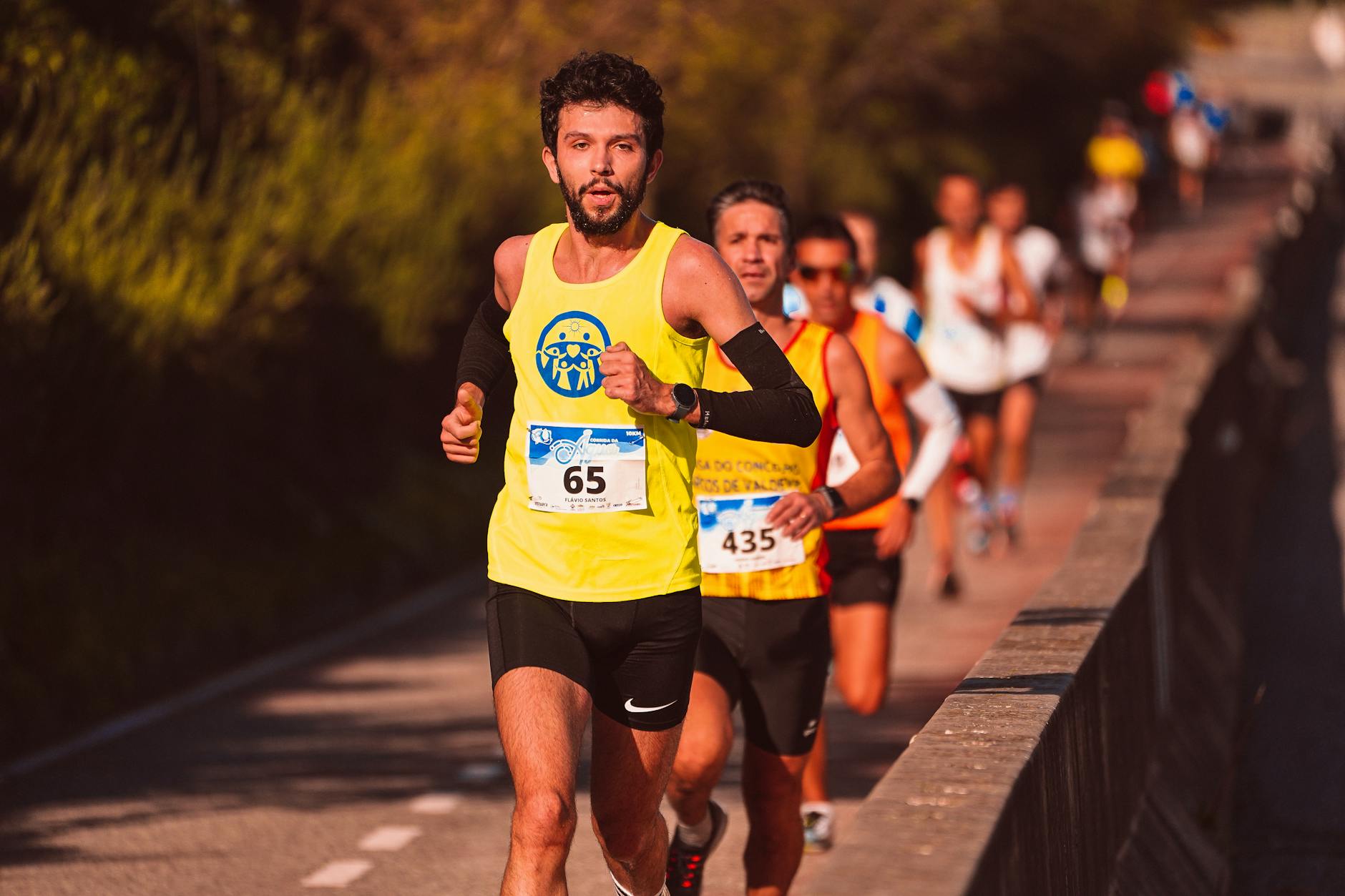
Photo by RUN 4 FFWPU on Pexels
Most runners run their long runs too fast. Not by a little — by a lot. If you finish your long run feeling like you just raced it, you’re probably in that group. And the frustrating thing is, running it faster doesn’t make it more effective. It actually makes it worse.
The long run is the cornerstone of almost every endurance training plan, whether you’re building toward a 5K, a half marathon, or your first full marathon. But “run it slow” is advice that gets thrown around without anyone ever telling you what slow actually means for you, with your current fitness, running your goal race. That’s what this article is for — specific numbers, a method for finding your pace, and an honest look at what happens when you get it wrong.
Why long run pace matters more than you think
The long run isn’t just about covering distance. At the right pace, it triggers a specific set of physiological adaptations: it builds mitochondrial density in your muscle cells, improves your body’s ability to burn fat as fuel, strengthens tendons and connective tissue, and teaches your legs to keep moving when they’re tired. All of that happens in a particular intensity zone — one that’s lower than most runners naturally gravitate toward.
Run too fast, and you’re not building aerobic base — you’re just doing a medium-effort workout that leaves you trashed for the rest of the week. Run at the right effort, and you build the engine that makes race day possible.
The simplest way to find your long run pace
The most accessible method doesn’t require a GPS watch with advanced metrics. It’s the talk test. Your long run pace should be conversational — you should be able to speak in full sentences without gasping. Not one-word replies. Actual sentences.
If you wear a heart rate monitor, you’re looking for roughly 65–75% of your maximum heart rate. A very rough way to estimate your max HR is 220 minus your age, though this formula has plenty of individual variation — use it as a starting point, not gospel.
If you work in pace, here’s the most useful rule of thumb: your long run should be 60–90 seconds per kilometre slower than your current 5K race pace. Not goal pace — current pace, based on an actual recent race or time trial.
So if you’re currently running 5K in around 30 minutes (6:00/km), your long run pace is probably somewhere between 7:00–7:30/km. If you’re running 5K in 25 minutes (5:00/km), you’re looking at roughly 6:00–6:30/km for your long run.
A pace guide by current 5K time
Here’s how that plays out across a range of realistic finish times. These are approximate ranges — err on the slower side if you’re newer to running or coming back from a break.
| Current 5K time | 5K pace (per km) | Long run pace range (per km) |
|---|---|---|
| 20:00 | 4:00/km | 4:45 – 5:15/km |
| 22:30 | 4:30/km | 5:15 – 5:45/km |
| 25:00 | 5:00/km | 5:45 – 6:15/km |
| 27:30 | 5:30/km | 6:15 – 6:45/km |
| 30:00 | 6:00/km | 6:45 – 7:15/km |
| 35:00 | 7:00/km | 7:45 – 8:15/km |
| 40:00 | 8:00/km | 8:45 – 9:15/km |
If those paces feel almost embarrassingly slow, that’s often a good sign you’ve been running your long runs too hard. Sit with the discomfort of going slower — it pays off.
What about running by feel vs. running by pace?
Both work. Which one is right for you depends on how you train.
Pace-based running is useful if you have a GPS watch and a specific goal race. It keeps you honest on days when you feel good and want to push. The risk is that it ignores variables: heat, humidity, hills, fatigue from earlier in the week. A 7:00/km long run on a flat cool morning is a very different effort to the same pace on a hilly course in July.
Effort-based running (using heart rate or perceived exertion) accounts for those variables automatically. On a hot day, your pace will naturally drop to maintain the same effort — and that’s exactly right. Research consistently shows that training in the appropriate heart rate zones produces better aerobic adaptations than training at fixed paces regardless of conditions.
A practical middle ground: use pace as a ceiling, not a target. Set a pace you won’t go faster than, and then let effort dictate where you actually run within that range.
Why hills, heat and tiredness should change your pace
This is where a lot of training plans fall short — they give you a pace and send you out the door without acknowledging that conditions change everything.
Hills: Running uphill at your target long run pace costs significantly more effort than flat running at the same number. If your long run route involves serious hills, either slow down on the climbs and let the effort govern your pace, or use a flat route for your long runs and save the hills for shorter sessions.
Heat and humidity: Even modest temperature increases — running at 20°C versus 10°C — can add 30–60 seconds per kilometre to what feels like the same effort. Don’t fight it. Adjust your pace and judge the session by how it felt, not what the numbers say.
Accumulated fatigue: If you’ve had a hard week at work, poor sleep, a tempo session two days ago, or you’re mid-training-block rather than fresh — your long run pace should reflect that. Slowing down by 15–30 seconds per kilometre on a fatigued day is smarter than grinding through at target pace and digging a hole you spend the next week climbing out of.
The mistake that trips up most runners: starting too fast
Even runners who know their long run pace should feel easy make this mistake regularly. You set off feeling fresh, the first kilometre ticks by faster than planned, and you tell yourself you’ll slow down in a minute. You don’t. By kilometre 15, you’re hanging on.
The fix is simple but requires discipline: run the first 2–3 kilometres deliberately slower than your target pace. Even 10–15 seconds per kilometre. Let your body warm up, settle into rhythm, and save something for the back half. A long run that finishes strong — even at the same pace — builds more confidence and causes less damage than one that blows up in the final third.
According to guidance from the NHS on physical activity and intensity, moderate intensity exercise — roughly what your long run should feel like — is one where you can still talk but you’re working. If you can’t hold a conversation, you’re working too hard.
When it’s okay to run your long run faster
There are legitimate reasons to increase long run intensity — just not often, and not by default.
Progression long runs: Some plans include the occasional long run where the final 20–30% is run at marathon goal pace. This is a specific workout, not the norm. It works well for runners who have a solid base and are 6–10 weeks out from a target race.
Race-specific prep: If your goal race is hilly or involves variable terrain, mimicking some of that in your long run — even if it pushes your effort up — has value.
Fitness testing: Every few weeks, running a long run on a flat route at the faster end of your pace range can give you useful data on how your fitness is progressing.
But if every long run feels hard? That’s not variety — that’s a pattern worth correcting.
The honest takeaway
- Your long run pace should be 60–90 seconds per kilometre slower than your current 5K race pace. If you don’t know your 5K pace, use the talk test: full sentences, not gasping.
- Conditions change everything. Adjust for heat, hills, and tiredness rather than chasing a number on your watch. Effort is the more reliable guide.
- Start slower than you think you need to. The first few kilometres should feel almost too easy. That’s how it’s supposed to feel.
- Running your long run too fast is one of the most common training mistakes — and one of the most costly, because it compromises the rest of your week and puts you at greater injury risk.
- Slow, consistent long runs build the aerobic base that race day actually runs on. The pace feels unglamorous. The fitness it builds isn’t.