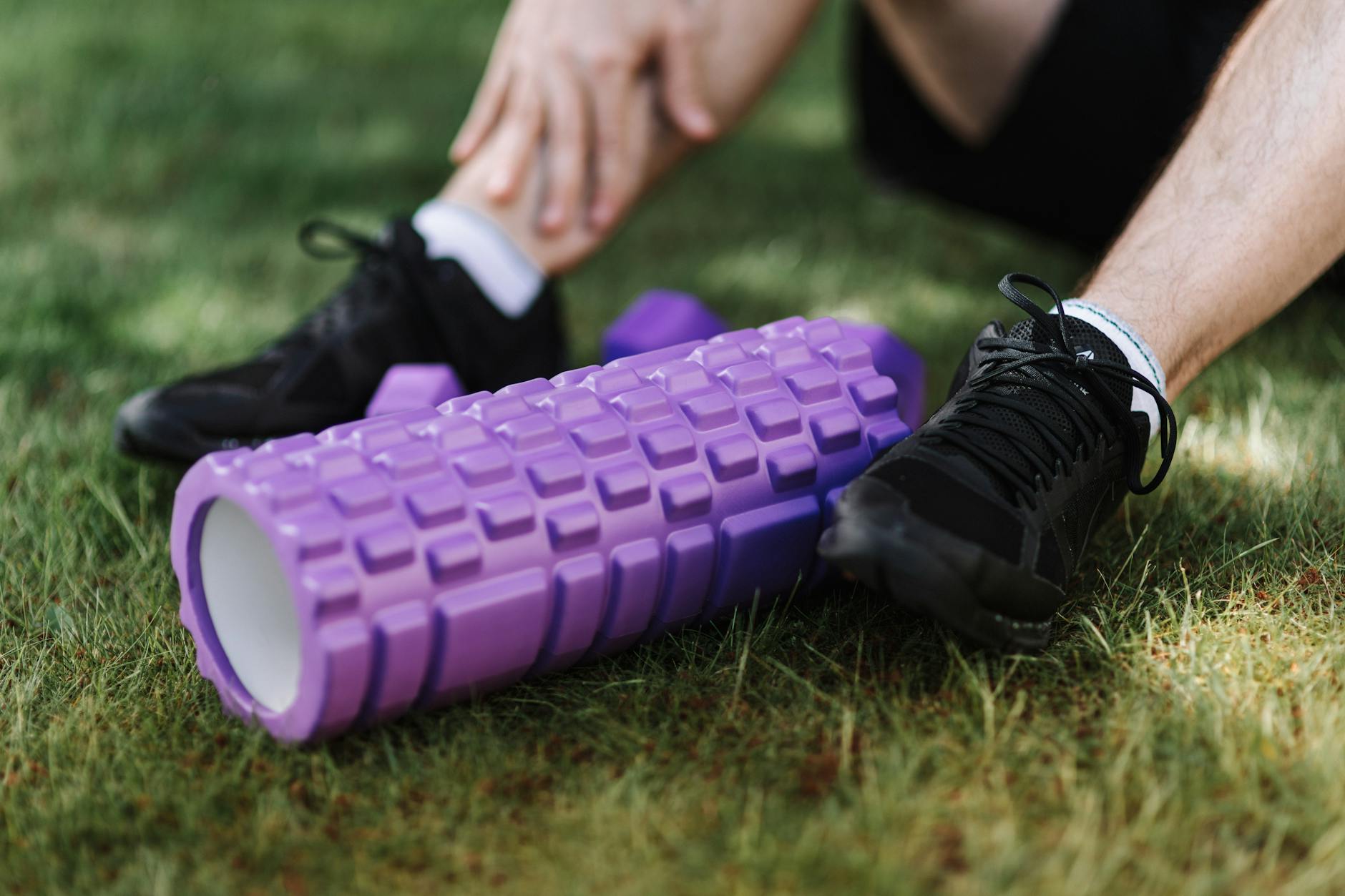
Photo by www.kaboompics.com on Pexels
Your legs are sore. Your ITB is grumbling. You’ve got another run scheduled in 48 hours and you’re not sure you’ll make it. A foam roller has been sitting in the corner of your room for three months, or you’re thinking about buying one and don’t know where to start. Either way, you want to know if these things actually do anything — and if so, which one is worth the money.
The honest answer: foam rolling won’t fix a training error, it won’t replace rest, and it’s not going to turn your 5:45/km legs into 4:30/km legs overnight. But used consistently and correctly, it can meaningfully reduce muscle soreness, improve short-term range of motion before runs, and help you feel less wrecked between sessions. For runners fitting three or four sessions into a busy week, that matters.
This guide is for real runners — people with 20 minutes to spare, not a physio on speed dial. We’ll cover what the research actually says, which rollers are worth buying at different price points, and how to use them without wasting your time.
Does foam rolling actually work?
Before spending money, it’s worth understanding what foam rolling does and doesn’t do. The evidence base is solid but modest. Research published in sports medicine literature suggests that foam rolling consistently reduces delayed onset muscle soreness (DOMS) and improves range of motion temporarily — particularly when done in the 24–48 hours after a hard session.
What it probably doesn’t do is break up fascial adhesions or “release” tight muscles in any lasting structural way. The current thinking is that the effect is largely neurological — you’re essentially calming down the nervous system’s response to muscle tension rather than physically restructuring tissue. That’s still useful. It just means you need to roll regularly, not just once after a race.
For runners specifically, the most commonly cited benefits are: reduced quad and hamstring soreness after long runs, some relief from ITB tightness (rolling the glutes and TFL, not the ITB itself — more on that below), and better ankle and calf mobility before sessions.
What to look for in a foam roller
Not all foam rollers are the same, and the differences matter more than the marketing suggests. Here’s what actually affects how useful a roller is for running recovery:
Density: Softer rollers (white or light-coloured EVA foam) are gentler and better for beginners or people with significant soreness. Firmer rollers (black, high-density EVA or EPP) give deeper pressure and tend to last longer. If you’re new to rolling, start softer — a rock-hard roller when your quads are already shredded is genuinely unpleasant.
Texture: Smooth rollers work fine. Grid or textured rollers are designed to mimic the feel of a sports massage and can be more effective for targeting specific spots — but they’re not essential. Avoid anything with extremely aggressive spikes unless you enjoy mild suffering.
Size: A standard 30cm roller is versatile enough for most uses. Longer rollers (45–90cm) are better for the upper back and thoracic spine. Shorter, handheld rollers and massage sticks are useful for calves and shins where a full roller is awkward.
Vibration: Vibrating foam rollers add an extra layer of muscle relaxation and some runners find them noticeably more effective. They’re also significantly more expensive. Worth it for some, unnecessary for many.
Foam roller comparison: the best options for runners in 2026
| Roller | Type | Best for | Price range | Verdict |
|---|---|---|---|---|
| TriggerPoint GRID | Textured, medium-firm | Most runners, everyday use | £35–£45 | The standard recommendation for good reason — durable, effective, versatile |
| Decathlon Corength High Density | Smooth, firm | Budget-conscious runners | £12–£18 | Surprisingly good for the price. Less durable but gets the job done |
| Hyperice Vyper 3 | Vibrating | Runners with persistent tightness | £150–£180 | Effective but hard to justify unless you’re running 5+ days a week |
| RumbleRoller Original | Textured, firm | Experienced rollers, deep tissue | £55–£70 | Aggressive texture — not for beginners. Excellent for glutes and thoracic spine |
| Blackroll Standard | Smooth, medium | Beginners, sensitive muscles | £25–£35 | Good starter roller. Won’t feel much after 6 months of regular use |
| Pulseroll Mini | Vibrating, compact | Travel, calves, targeted use | £40–£55 | Handy for specific spots. Pairs well with a standard roller |
For most runners — those doing three or four runs a week, managing normal training soreness — the TriggerPoint GRID or Decathlon Corength covers everything you need. The vibrating options are genuinely useful if you’re running high mileage or racing regularly, but they’re a luxury, not a necessity.
The right way to use a foam roller (and the common mistakes)
Most people foam roll too fast and in the wrong places. Here’s a more effective approach:
Slow down. Roll each muscle group for 60–90 seconds at a pace of about 2–3cm per second. If you’re flying up and down your quad in 10 seconds, you’re not giving the nervous system time to respond. Find a tender spot, pause on it for 5–10 seconds, then move on.
Target the right muscles. For runners, prioritise: quads, hip flexors, glutes, hamstrings, calves. The TFL (the muscle just below your hip bone on the outside of your thigh) is often the real culprit in what people think is ITB pain. Roll that rather than grinding the ITB band itself, which contains no muscle and rolling it is mostly just painful.
Timing matters more than you think. Rolling immediately before a run as part of a dynamic warm-up — around 5 minutes on tight areas — can improve mobility. Rolling within 30–60 minutes after a hard session, while your muscles are still warm, tends to be most effective for reducing next-day soreness. A 10-minute rolling session the evening after a long run is one of the best habits you can build.
Don’t roll your lower back directly. Use a roller under your glutes and upper back instead. Rolling directly over lumbar vertebrae can compress the spine uncomfortably and isn’t recommended.
What about massage guns vs foam rollers?
Massage guns (percussive therapy devices) have taken over a large slice of the recovery market. They’re quicker to use on specific spots and many runners prefer them for calves, quads, and shoulders. The NHS’s guidance on muscle recovery doesn’t specifically endorse either tool, but the underlying principle — that mechanical stimulation helps reduce soreness and improve range of motion — applies to both.
In practice: a massage gun wins for targeted, quick relief on specific muscle groups. A foam roller wins for larger areas like the thoracic spine and hip flexors, and for the kind of slow, deliberate rolling that takes time but works well. Many runners end up using both. If you’re choosing one, start with a foam roller — it’s cheaper, more versatile, and you’ll learn your problem areas before spending more.
How often should you actually foam roll?
The honest answer is: more than most people do, and less than the most enthusiastic recovery influencers suggest. Here’s a realistic framework based on your training load:
Running 3 days/week: 10–15 minutes of foam rolling on the evening after your longest run, and a 5-minute pre-run roll before any session where your legs feel heavy. That’s probably 2–3 times per week.
Running 4–5 days/week: Rolling after every harder session (intervals, tempo, long run) becomes worthwhile. You’re asking more of your legs and they need more maintenance. 15–20 minutes three to four times a week.
Racing or peaking for an event: Daily rolling in the two weeks before a goal race can help you arrive at the start line feeling fresher. Keep it gentler in the final 48 hours — you don’t want to over-stimulate fatigued muscles right before race day.
Consistency over intensity. Five minutes every day beats 45 minutes once a week.
When foam rolling isn’t enough
A foam roller is a maintenance tool, not a treatment. If you have persistent pain — particularly sharp pain, pain that worsens with running, or pain that doesn’t shift after a week of rest and rolling — you need a physio or sports doctor, not a denser roller.
ITB syndrome, plantar fasciitis, stress fractures, and tendinopathies all require proper assessment. Rolling over an inflamed tendon or a stress reaction won’t help and can make things worse. Know the difference between normal muscle soreness (dull, diffuse, improves with light movement) and something that needs professional attention (sharp, specific, persistent, or getting worse).
The honest takeaway
- You don’t need to spend £150 to get the benefits of foam rolling. A £15–£45 medium-density roller used consistently will outperform an expensive one used twice and forgotten.
- Roll slowly and stay on tender spots — 60–90 seconds per muscle group, pausing on tight areas. Fast rolling is mostly just noise.
- The best time to roll is after your long run, within an hour of finishing, while your muscles are still warm. Build it into your cool-down and it stops feeling like a chore.
- Target your glutes, TFL, and hip flexors more than you think you should. Most runners over-roll their quads and under-roll the areas that actually cause tightness downstream.
- If something hurts sharply or persistently, stop rolling it and see a physio. Foam rolling is for soreness, not injury. Knowing the difference protects you more than any roller can.