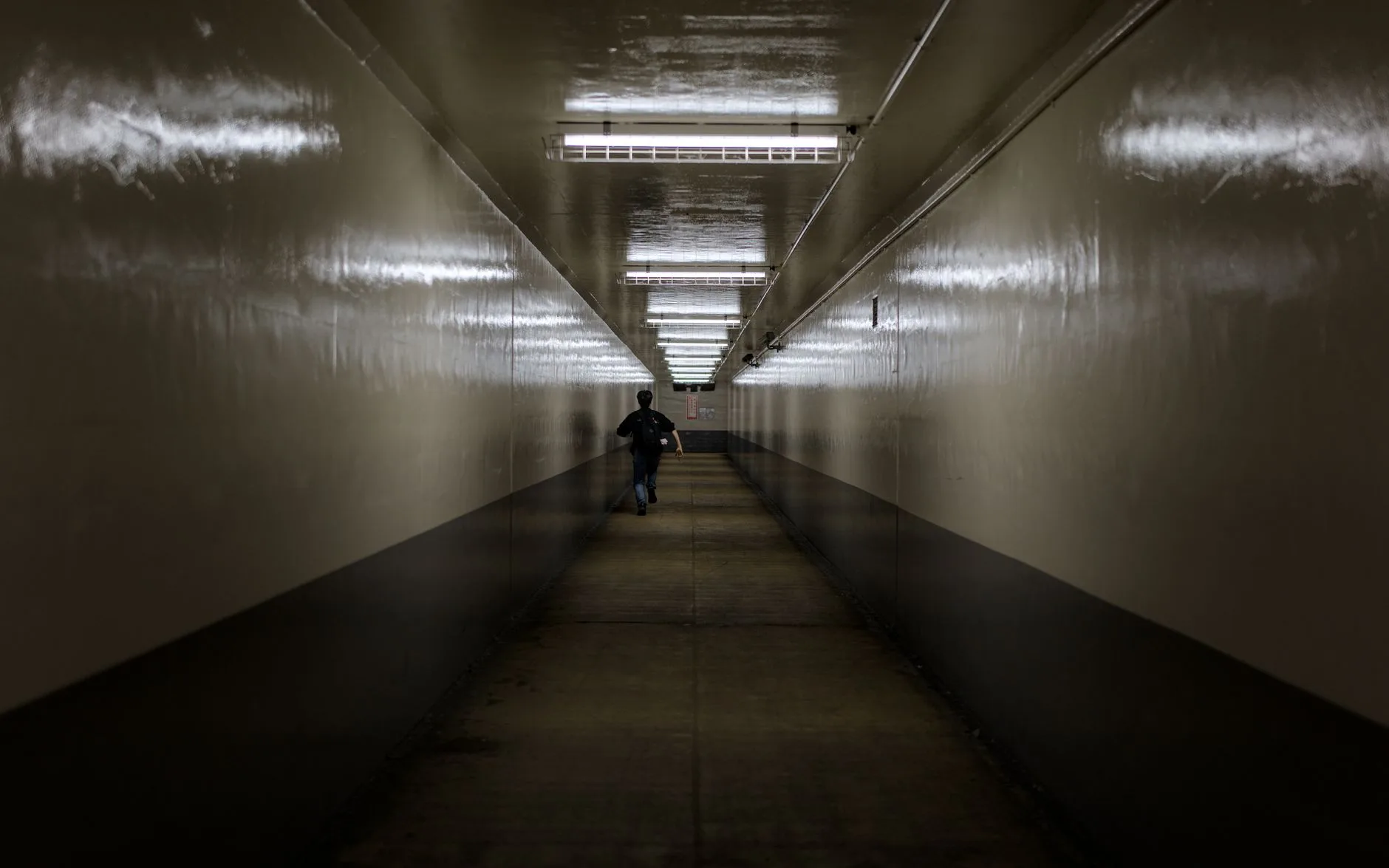
If your only free hour is 9pm after the kids are down, or 6am before the sun’s up in December, you already know the problem: the safest-feeling time to run often isn’t the safest time of day. You’re not being paranoid by thinking about this. You’re being sensible. Millions of runners train in the dark every week, and the vast majority finish their run exactly as uneventfully as they hoped. But “mostly fine” isn’t the same as “prepared,” and a bit of planning turns a slightly anxious dark run into a genuinely normal one.
This isn’t a scaremongering list. It’s the stuff that actually reduces risk — being seen, being findable, having an exit plan, and trusting your gut when something feels off. Some of it takes two minutes. None of it should stop you running.
Choose your route like it matters, because it does
The single biggest safety decision you make happens before you leave the house: where you run. A poorly lit canal path might be beautiful at 7am and genuinely risky at 9pm.
- Stick to routes with consistent lighting — not just “well-lit at the start.” Streetlights that cut out halfway through a park are worse than no lighting at all, because you relax too early.
- Avoid isolated loops through woods, unlit parks, or industrial estates, even if they’re your favourite daytime routes. Save them for daylight.
- Run routes with people around — main roads, residential streets, areas near shops or takeaways that stay open late. A slightly busier route beats a scenic empty one after dark.
- Vary your route and timing. Running the exact same loop at the exact same time every night makes you predictable. That’s not a reason to panic, but it is a reason to mix it up occasionally.
- Tell someone your route, not just “I’m going for a run.” A rough loop and expected return time takes ten seconds to text.
If you’re new to running and still building a route library, it’s worth doing that groundwork in daylight first — get familiar with pavements, crossings and dodgy kerbs before you add darkness to the mix.
Be seen — this is the non-negotiable one
Most night-running incidents involving traffic aren’t about malice — they’re about visibility. Drivers genuinely don’t see runners in dark clothing until it’s too late to react comfortably.
- Wear a high-vis vest or gilet — not just “a light-coloured top.” Genuine hi-vis (the yellow or orange reflective kind) is dramatically more visible than grey or navy under streetlights.
- Add a front and rear light, not just reflective strips. A cheap clip-on LED (£10–15) that flashes is more noticeable to drivers than static reflectors.
- Reflective details on your ankles and wrists catch headlights differently to your torso — the movement is what draws a driver’s eye, so ankle bands genuinely help.
- If you’re picking new kit anyway, it’s worth checking out proper running jackets for wet and cold weather — a lot of winter running jackets now build in reflective panelling as standard, which solves two problems at once.
Here’s a rough breakdown of visibility gear, from minimum to well-covered:
| Level | Gear | Approx. cost | Good for |
|---|---|---|---|
| Basic | Reflective armband + phone torch | £5–10 | Well-lit residential streets |
| Standard | Hi-vis vest + clip-on rear light | £20–30 | Most night runs, mixed lighting |
| Thorough | Hi-vis vest, front/rear lights, reflective ankle bands, head torch | £50–70 | Unlit roads, rural routes, winter mornings |
You don’t need the top tier for every run. But if your route has any stretch without streetlights, don’t go out in basic gear.
Keep one ear free, always
This is the tip runners resist most, and it’s the one worth being honest about. Full noise-cancelling headphones at full volume are genuinely risky at night — not because music is dangerous, but because you lose the early-warning system your ears normally give you: an approaching car, a bike, someone calling out.
You don’t have to run in silence. Bone-conduction headphones or open-ear designs let you hear music and traffic at the same time, and they’ve become the sensible default for night runners rather than a niche choice. If you’re shopping for new ones, it’s worth looking at options built specifically to stay in without blocking ambient sound — most sports medicine guidance on situational awareness backs this up in general terms, even if it’s not headphone-specific advice.
If you do prefer earbuds, keep volume low enough that you can hear someone shout your name from ten metres away. That’s the practical test — not a percentage on a volume slider.
Carry a way to call for help — and a way to be found
Your phone is your safety net, but only if it’s actually usable mid-run and not buried in a bag.
- Carry your phone somewhere accessible — an armband, a running belt, or a jacket pocket you can reach without stopping. Not zipped into a backpack.
- Share live location with a partner, friend or family member using Find My iPhone, Google Maps location sharing, or your running app’s live tracking feature, if it has one. This costs nothing and takes 30 seconds before you leave.
- Set up your phone’s emergency features — most phones now let you trigger emergency SOS with a button sequence, which alerts contacts and shares your location automatically.
- If you run the same routes often, a cheap GPS running watch adds a layer of redundancy — useful even at a budget price point, since it logs your route and pace independently of your phone.
None of this is about expecting the worst. It’s about the same logic as wearing a seatbelt — you do it every time, specifically so you never have to think about whether you did it the one time it mattered.
Trust your gut, not your guilt
This is the part that gets skipped in most “safety tips” lists, and it’s arguably the most important one. If something feels wrong — a car slowing down near you, someone following your pace, a street that feels different at night than it did on Google Maps — you’re allowed to change your plan immediately. Cross the road. Turn around. Run into a shop. Call someone, even just to talk out loud.
You don’t need a concrete reason. You don’t need to justify it later. The discomfort of “maybe I’m overreacting” is a much smaller cost than ignoring a real signal. Runners — especially women, who make up a disproportionate share of people who report feeling unsafe running alone — often describe a specific instinct to keep going out of politeness or embarrassment. Don’t. Trust the instinct, not the social pressure to seem unbothered.
If you consistently feel uneasy running alone at night, that’s worth listening to on a bigger scale too — not every route or every hour needs to be run solo.
Consider running with others, at least some nights
You don’t have to run alone every time. A running club session, a friend who runs your pace, or even a loosely organised group chat where two or three of you run the same loop on the same evenings — all of these solve the alone-in-the-dark problem without changing your training at all.
If you don’t currently run with anyone, it’s worth looking into local running clubs and groups — many offer structured evening sessions specifically because so many members work full days and can only train after dark. Running with company doesn’t just feel safer; the pace pressure and social accountability often make the session better too.
Dress for temperature, not just visibility
Night runs, especially in winter, are often colder than they look from your window. Layer for the first kilometre being genuinely a bit cold — you’ll warm up. Wet, cold conditions also affect grip and visibility for drivers, so if you’re investing in gear anyway, prioritise a jacket with both waterproofing and reflective detailing over one with just one or the other.
The Honest Takeaway
- Pick routes for lighting and foot traffic first, scenery second — save the pretty isolated loop for a Saturday morning.
- Wear genuine hi-vis plus a light, not just reflective trim — visibility to drivers is your biggest practical risk, bigger than almost anything else on this list.
- Keep one ear free or switch to bone-conduction headphones — you need to hear what’s around you, not just what’s in your playlist.
- Share your live location before you leave, every time, even for a familiar 5km loop — it takes 30 seconds and costs nothing.
- If something feels wrong, act on it immediately, without needing to justify the decision to yourself or anyone else.
Next read: Finding your running community: clubs and groups guide