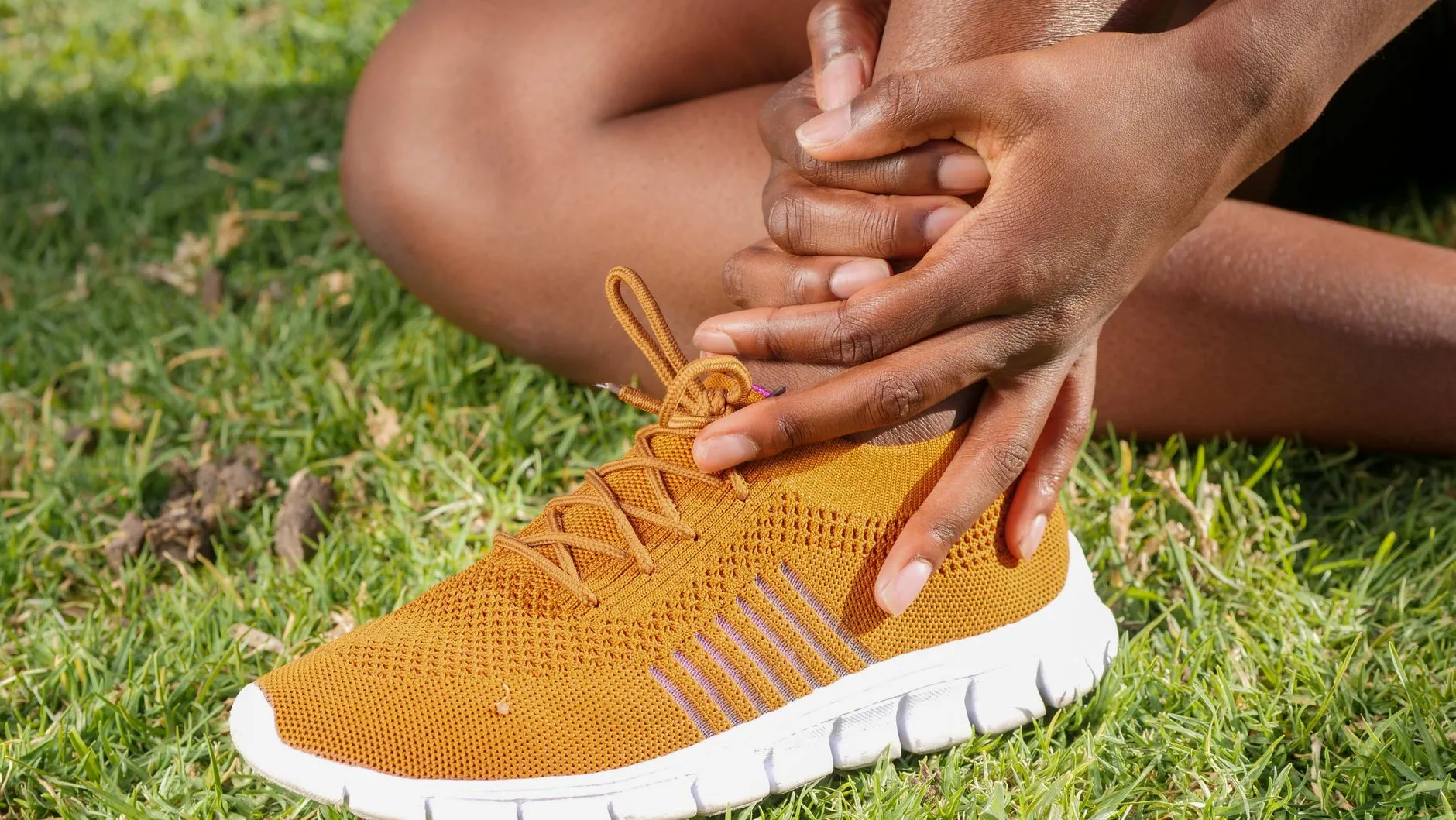
Photo by Kindel Media on Pexels
It usually starts quietly. A bit of stiffness getting out of bed, a tight pull at the back of your heel on the first few steps down the stairs, something that “runs off” after the first kilometre so you stop paying attention to it. Then one Tuesday it doesn’t run off. It’s there at kilometre 5, it’s there the next morning, and it’s definitely there when you try to run again two days later.
That’s Achilles tendon pain in runners, and it’s one of the most common reasons people end up quietly Googling at 11pm instead of sleeping. The good news, and it is genuine good news: this is also one of the most well-understood running injuries out there, with a recovery process that’s been studied for decades and that works for most people. The less good news is that it’s slow. Not “slow” as in six weeks of sulking. Slow as in three to nine months of deliberate, boring, repetitive work. If you’re looking for a quick fix, this isn’t that guide. If you want to understand what’s actually going on and do the right things in the right order, keep reading.
What’s actually happening (and why “tendinitis” is the wrong word)
Most runners say “Achilles tendinitis,” but for the vast majority of cases that aren’t acute and sudden, the correct term is Achilles tendinopathy. The “-itis” implies inflammation, and in a long-standing, nagging case, there usually isn’t much inflammation left to treat. What you’re dealing with is a tendon that has accumulated small amounts of structural damage faster than it’s been able to repair itself — collagen fibres that are disorganised, a tendon that’s thickened, weaker, and less tolerant of load than it used to be.
This matters practically because it changes what actually helps. Ice and anti-inflammatories might take the edge off a sharp flare, but they don’t fix a tendon that’s lost capacity. What fixes that is controlled, progressive loading — which sounds counterintuitive when the thing hurts, but is genuinely the evidence-backed approach. The NHS page on Achilles tendinopathy covers this well if you want a second, plainer-language source.
There are two common locations, and it’s worth knowing which one you’ve got because it changes your exercise selection slightly:
- Mid-portion tendinopathy — pain 2–6cm above where the tendon meets the heel bone. This is the more common one and generally responds faster to loading.
- Insertional tendinopathy — pain right at the heel bone, sometimes with a visible bony lump. This one needs a modified approach (more on that below) because full ankle stretching can actually aggravate it.
The first two weeks: calm it down, don’t chase it away
When it first flares up badly, the instinct is to either stop running entirely and rest “until it feels better,” or to push through because the race is in six weeks. Both tend to backfire.
Complete rest lets the tendon detrain — it gets weaker, not just quieter — and the pain often comes straight back the moment you resume. Pushing through full training load tends to keep re-irritating a tendon that hasn’t had a chance to settle.
What actually works in the early phase is load management, not load removal:
- Drop your weekly mileage by roughly 50% for 1–2 weeks rather than to zero.
- Cut out hills, speed work, and anything plyometric (strides, hill sprints, parkrun sprint finishes) immediately — these load the Achilles far harder than steady running.
- Swap some runs for cross-training that doesn’t load the tendon the same way — swimming or a stationary bike are good options if you want to maintain fitness without aggravating things. There’s a decent overview of options in our piece on cross training for runners.
- Use the “morning test”: if the tendon is noticeably stiffer or more painful the morning after a run than it was the morning before, you did too much the day before. Dial it back.
A useful, if blunt, pain rule many physios use: pain during or after a run up to 3–4 out of 10 (where 10 is “stop immediately”) is generally acceptable as long as it settles back to baseline by the next morning and doesn’t worsen week on week. Above that, or pain that lingers for days, means you’ve overloaded it.
Should you actually keep running?
This is the question everyone wants a yes/no answer to, and honestly, it depends on severity, how long you’ve had it, and what’s coming up on your race calendar. We’ve written a full breakdown on this exact decision in Achilles tendinopathy: can you keep running? — worth reading in full if this is live right now, because it walks through the specific signs that mean “stop” versus “modify and continue.”
The short version: mild, early-stage tendinopathy with pain that settles quickly usually tolerates modified running. More established cases, especially ones that have been nagging for 3+ months, usually need a proper period of reduced or no running while you rebuild tendon capacity through strength work — otherwise you’ll spend months running at 70% of your usual training while never actually getting better.
The loading protocol that actually works
The single most evidence-backed intervention for Achilles tendinopathy is a structured heavy, slow resistance or eccentric loading programme. The original version, developed by a physiotherapist named Håkan Alfredson in the 1990s, is still widely used and has held up well over time.
The classic eccentric heel drop protocol:
| Detail | Specification |
|---|---|
| Exercise | Heel drop off a step, straight knee (then repeat with bent knee for soleus) |
| Sets/reps | 3 sets of 15 reps |
| Frequency | Twice daily |
| Duration | 12 weeks minimum |
| Load | Add weight (rucksack, plate) once bodyweight feels easy |
| Key rule | Lower slowly (3–4 seconds), use your other leg or arms to get back to the top |
For insertional tendinopathy, avoid dropping the heel below the level of the step — going into that stretched position compresses the tendon against the heel bone and can make things worse. Keep the heel level with or just below the step edge instead.
This isn’t a “do it for a week and see” exercise. Most studies on this protocol run for 12 weeks, and meaningful improvement is often gradual rather than dramatic. Some mild discomfort during the exercise (that 3–4/10 range again) is normal and expected — it’s not a sign you’re damaging anything further, as long as it settles afterward.
Building your mileage back up — a realistic timeline
This is where most runners get impatient and relapse. The tendon feeling “fine” on a given run doesn’t mean it’s ready for your old training load. Here’s a rough, realistic progression — adjust based on your own response, not the calendar:
| Phase | Timeframe | What it looks like |
|---|---|---|
| Symptom settling | Weeks 1–2 | Reduced mileage, no hills/speed, start loading protocol |
| Isolated strength building | Weeks 2–6 | Loading protocol continues, easy running only, short and flat |
| Gradual volume return | Weeks 6–10 | Mileage back to ~70–80% of previous, still no plyometrics |
| Reintroducing intensity | Weeks 10–14 | Add gentle hills and strides, watch morning response closely |
| Full return | Week 14+ onward | Normal training, continue loading work 2–3x/week as maintenance |
That’s a minimum of 10–12 weeks for a moderate case, and genuinely 6+ months isn’t unusual for a tendon that’s been grumbling for a long time before you addressed it. If you’re mid-training block for a race, this is often where you need to make peace with adjusting the goal rather than forcing the original plan — our guide on dealing with a bad run touches on the mindset side of training disruptions, which applies just as much to injury setbacks as to one off day.
Strength and mobility work that prevents a repeat
Fixing the current flare-up is only half the job — most runners who get Achilles pain once get it again within a year if they don’t change something structural. A few additions that genuinely reduce recurrence risk:
- Calf strength, ongoing: 3 sets of 15–20 single-leg calf raises, 2–3x per week, even once you’re symptom-free. Weak calves are consistently linked to Achilles problems.
- Running cadence: increasing cadence slightly (by around 5–10%) can reduce the braking forces and vertical load through the Achilles on each stride, without you needing to change your shoes or stride length consciously.
- Gradual hill and speed reintroduction: don’t go from flat easy runs straight back to hill reps. Build through gentle inclines first.
- A proper warm-up: cold calves and a cold tendon handling sudden load is a classic trigger. A few minutes of our warm-up routine before every run, not just race day, matters more than most runners think.
- Shoe rotation: running in the same shoes every single day means the same loading pattern every single day. Rotating between two pairs with slightly different drop or cushioning spreads the load.
When to actually see someone
Self-management works for a lot of Achilles cases, but there are moments where you need a professional rather than another week of guessing:
- A sudden, sharp pain with a popping sensation and immediate difficulty walking — this could be a partial or full rupture and needs urgent assessment.
- Pain that hasn’t improved at all after 4–6 weeks of consistent loading work.
- Visible swelling that doesn’t go down, or a lump that’s growing.
- Pain on both Achilles tendons simultaneously, which can occasionally be linked to other causes worth ruling out.
A sports physiotherapist can also confirm you’re actually dealing with tendinopathy and not something that mimics it — like a mild ankle sprain, bursitis, or referred pain from the calf. The [AAOS OrthoInfo page on Achilles tendinitis](https://orthoinfo.aaos.org/
Next read: Achilles tendinopathy: can you keep running?