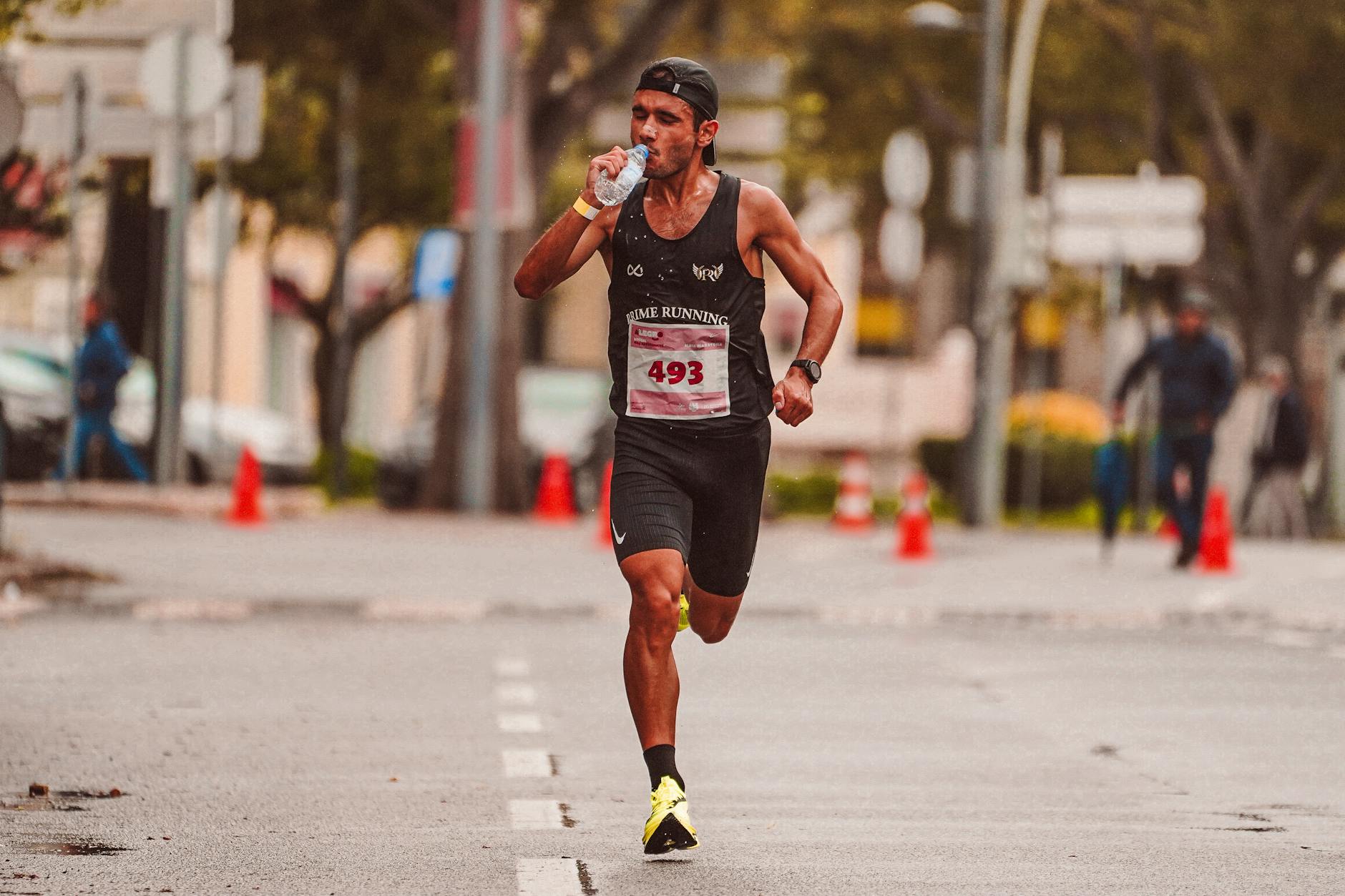
Photo by RUN 4 FFWPU on Pexels
You’ve heard it before: eat a big bowl of pasta the night before your marathon and you’ll be fine. If only it were that simple. Carbohydrate loading done badly — or half-understood — can leave you feeling bloated at the start line, hitting the wall at mile 18, or desperately searching for a toilet at mile 6. None of those are the race you trained months for.
Carb loading is real, it works, and the science behind it is solid. But it’s also specific. The timing matters. The amounts matter. What you eat matters. And — this is the part most articles skip — your individual gut matters too. This guide is for runners aiming to finish a marathon, run a PB, or simply not fall apart in the second half. Not for elites with a team of nutritionists. For you, trying to figure this out around a job, a family, and a training plan that probably didn’t go perfectly.
Here’s what actually works.
Why carb loading matters for marathon runners
Your muscles store carbohydrate as glycogen. During a marathon, that glycogen is your primary fuel — and most runners have enough stored to last roughly 90 minutes to 2 hours of sustained effort. At marathon pace, that means somewhere around mile 16–18 for many everyday runners. Sound familiar? That’s where the wall lives.
Carb loading aims to top up your glycogen stores beyond their normal level, so you start the race with a fuller tank. Research consistently shows this can delay fatigue and improve performance in events lasting longer than 90 minutes. A 2011 review published in the Journal of Sports Sciences confirmed that carbohydrate loading increases muscle glycogen concentration and improves endurance performance in events over 90 minutes — which every marathon is, for every runner reading this.
The catch? Your body can only store so much glycogen, and cramming in extra carbs in one panicked pre-race dinner doesn’t give your muscles enough time to absorb it properly.
When to start carb loading
The timing is more important than most runners realise. A single pasta dinner the night before your race is better than nothing, but it’s not true carb loading.
The most practical and evidence-supported approach for everyday runners is a 2–3 day loading phase, starting roughly 48–72 hours before race morning. Some elite protocols run for up to 6 days, but that usually involves a depletion phase first (deliberately running your glycogen low before flooding it back in), and it’s uncomfortable, hard to manage around real life, and unnecessary for most of us.
Practical timeline for a Sunday marathon:
| Day | Approach |
|---|---|
| Thursday | Normal eating, moderate carbs, easy or rest day |
| Friday | Begin increasing carbs — target 8–10g per kg of body weight |
| Saturday | High carb all day — same target, simple foods, familiar meals |
| Saturday evening | Moderate pasta or rice dinner (not enormous — see below) |
| Sunday morning | Race-day breakfast 2–3 hours before start |
Notice that Saturday evening is not your main loading meal — Friday and Saturday throughout the day are. By the time you sit down for dinner the night before, you want most of the work already done.
How many carbs do you actually need?
The target for carb loading is 8–10 grams of carbohydrate per kilogram of body weight per day, for two to three days before your race. That number sounds abstract, so let’s make it real.
For a 70kg runner, that’s 560–700g of carbohydrate per day. To put that in food terms: 100g of dry pasta contains around 75g of carbs. A large banana has about 27g. Two slices of white bread: roughly 30g. You can see why this takes planning — it’s genuinely a lot, and you need to spread it across the day, not pile it into one meal.
Sample high-carb day for a 70kg runner (target: 600g carbs):
| Meal | Food | Approx carbs |
|---|---|---|
| Breakfast | Large bowl of porridge + banana + glass of orange juice | ~90g |
| Mid-morning | Bagel with honey + sports drink | ~80g |
| Lunch | Large portion of white rice with grilled chicken | ~100g |
| Afternoon | Energy bar + banana | ~60g |
| Dinner | Large pasta portion + bread roll + fruit juice | ~130g |
| Evening snack | Rice cakes + jam + glass of apple juice | ~80g |
| Throughout day | Isotonic sports drink (500ml) | ~35g |
| Total | ~575g |
This is deliberately not exciting food. During carb loading, you want plain, familiar, low-fibre options — more on that in a moment.
What to eat (and what to leave alone)
During your loading days, carbohydrate quality matters less than it does in normal training. White rice, white pasta, white bread, bagels, fruit juice, bananas, and sports drinks are all fine — and actually preferable to high-fibre alternatives like brown rice or wholemeal bread. Why? Because high-fibre foods are harder to digest and can contribute to bloating and GI distress on race day.
Go for:
– White pasta, white rice, white bread
– Potatoes (boiled, not fried)
– Bananas, fruit juice, grapes
– Sports drinks and isotonic gels (familiar ones you’ve used in training)
– Pancakes, bagels, rice cakes
Avoid or minimise:
– High-fibre vegetables (broccoli, beans, lentils)
– Wholegrain anything
– Fatty or spicy foods — they slow gastric emptying
– Large quantities of red meat
– Alcohol (it disrupts glycogen synthesis and sleep)
– Anything you haven’t eaten before
That last point deserves its own emphasis: do not try new foods in the 48 hours before your marathon. Not new restaurants. Not exotic carb sources your running club friend swore by. Your gut is conservative — respect that.
The pasta dinner myth
The night-before pasta dinner isn’t wrong. It’s just overrated. By Saturday evening, if you’ve done two days of proper carb loading, you should be close to fully loaded already. Your dinner should be a normal-to-large portion of familiar, carb-rich food — not an enormous feast.
Eating a vast meal the night before causes three problems. First, it sits in your gut and you wake up feeling heavy and uncomfortable. Second, your body doesn’t have enough time to fully process and store all of it as glycogen. Third, large late meals can disrupt sleep — and poor sleep before a marathon is common enough already without you adding to it.
Eat a comfortable, satisfying dinner. Stop when you’re full. Then top up in the morning.
Race-day morning: your final top-up
Your race-day breakfast is part of the fuelling strategy, not separate from it. Aim to eat 2–3 hours before your start time, so your stomach has time to clear. According to guidance from the British Dietetic Association, a pre-exercise meal should be rich in carbohydrates, low in fat and fibre, and familiar.
A practical race morning breakfast for most runners:
– Porridge or white toast with honey or jam (50–80g carbs)
– Banana
– Water or diluted fruit juice
– Small coffee if that’s your habit — don’t introduce caffeine if you don’t normally use it
If your start time is very early (common in big city marathons), you may only have 1.5–2 hours. In that case, go smaller and lighter — toast over porridge, for example. Some runners also find a sports gel 15–30 minutes before the start helpful for a final top-up, particularly if the race has a long wait in the start pen.
What can go wrong (and how to avoid it)
Carb loading has a few common failure modes:
Bloating and discomfort — usually from too much fibre, too much food too quickly, or unfamiliar foods. Stick to white, processed carbs and spread intake across the day.
Weight gain — yes, you’ll likely gain 1–2kg during loading. This is water, stored with glycogen (roughly 3g of water per gram of glycogen). Don’t panic. That water is part of what helps you perform. It comes back off during the race.
GI problems on race day — often caused by high-fibre foods, fatty meals, or nerves. Keep it plain, keep it familiar, and don’t eat within 2 hours of the start if you can avoid it.
Under-loading — the most common mistake. One big dinner isn’t enough. Two full days of 8–10g/kg is the actual protocol. If you do nothing else from this article, start earlier.
The honest takeaway
- Start loading 48–72 hours before race morning, not the night before. Friday and Saturday are your main loading days for a Sunday marathon.
- Target 8–10g of carbohydrate per kg of body weight per day during the loading phase. For a 70kg runner, that’s around 560–700g per day — spread it across the whole day.
- Choose plain, low-fibre carbs: white pasta, white rice, white bread, bananas, fruit juice. Not the time for your usual wholegrains.
- Don’t overdo the night-before dinner. If you’ve loaded properly, you’re already close to full. Eat a normal, comfortable meal and go to bed.
- Eat breakfast on race morning 2–3 hours before your start — 50–80g of familiar, low-fibre carbs. Don’t skip it, and don’t experiment with anything new.
Thinking about how to fuel your actual long runs during training, not just race week? Read our guide on fuelling your long runs: what to eat and drink before, during and after.