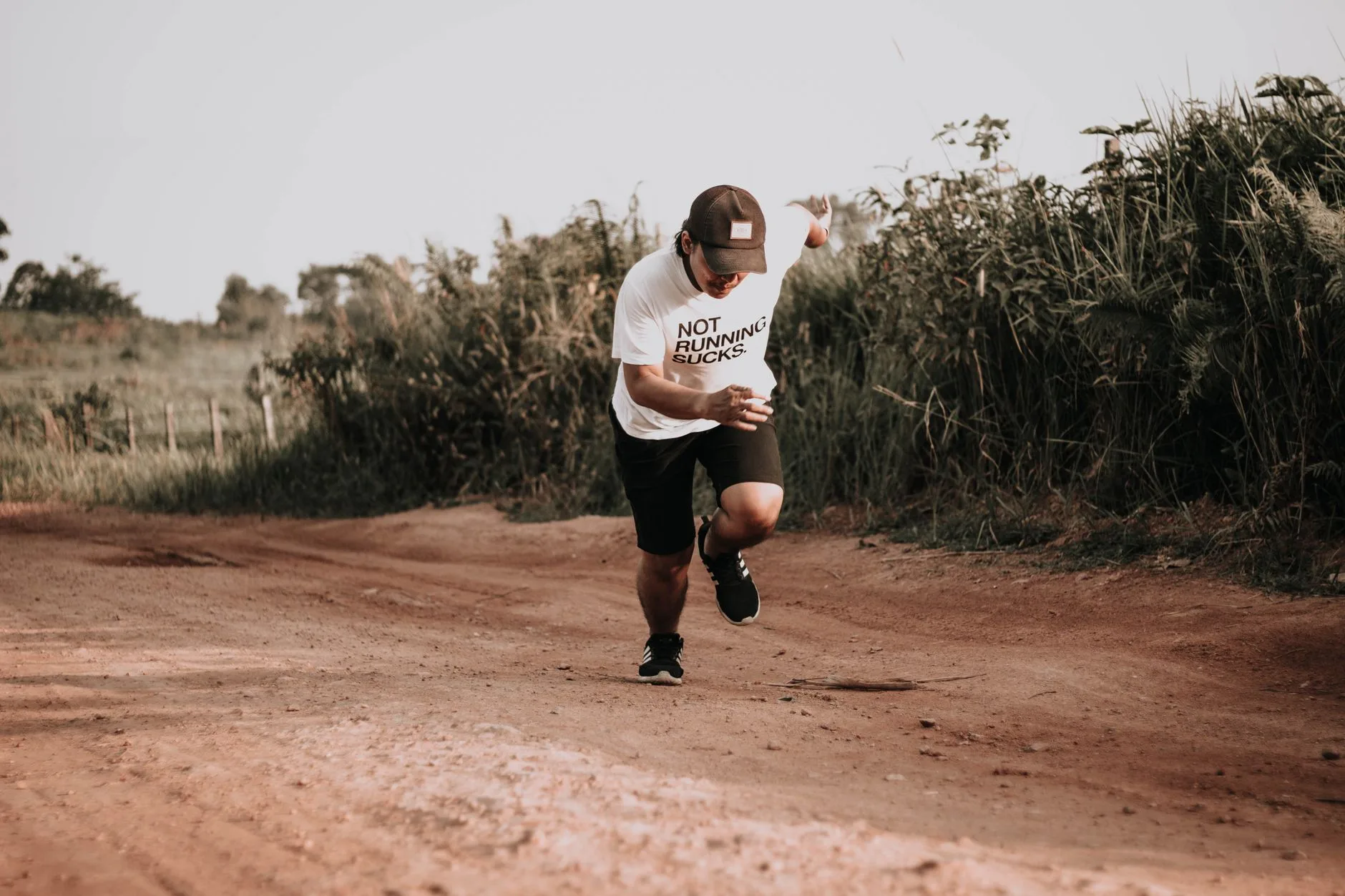
Photo by Nur Andi Ravsanjani Gusma on Pexels
Your knee hurts at the 4km mark. Your shins ache the next morning. Someone at parkrun mentioned your arms “do a lot” when you run. Somewhere along the way, you started wondering if the way you move is the problem — not your fitness, not your shoes, just you.
Here’s the honest answer: probably, partly, yes. Most running injuries in recreational runners aren’t caused by one dramatic mistake. They’re caused by small, repeated inefficiencies — a stride that’s slightly too long, a cadence that’s slightly too slow, a torso that collapses slightly too much by kilometre 8. None of these things are visible to you mid-run. They’re very visible on video, or to a physio watching you jog down a corridor.
The good news is that running form mistakes are fixable without turning you into a different runner. You don’t need to relearn how to run. You need to notice a handful of specific patterns and nudge them, gradually, over weeks — not overnight, and not by thinking about all of them at once on your Tuesday 6am loop.
Mistake 1: overstriding (your foot lands too far in front of you)
This is the single most common issue in runners who’ve never had a gait assessment. It usually shows up as a loud heel-strike with your foot landing well ahead of your hips, almost like you’re reaching for the ground.
Why it matters: overstriding acts like a small brake with every step. It increases impact force through your shins and knees and is strongly linked with shin splints and anterior knee pain in recreational runners.
The fix: don’t think about your foot. Think about your cadence — the number of steps per minute. Most overstriders run at 150–160 steps per minute. Nudging that towards 170–175 almost automatically shortens your stride and brings your landing foot closer under your hips.
Practical drill: for your next easy run, count your steps for 15 seconds and multiply by 4. If you’re under 165, try running to a metronome app or playlist at 172 bpm for just the first 10 minutes. Don’t force it for a whole run — your legs will fight you. Small doses first.
Mistake 2: slouched posture, especially late in a run
You start upright. By kilometre 6 of your long run you’re hunched forward, chin down, shoulders creeping up towards your ears. This isn’t really a “form mistake” in the technical sense — it’s fatigue showing up as posture collapse, and it makes everything else worse: your breathing gets shallower, your hip extension shortens, your glutes stop doing their job.
The fix: a simple cue, repeated every 10 minutes on longer runs — “tall, not tense.” Imagine a string gently pulling the crown of your head upward. Drop your shoulders. Unclench your jaw (seriously, check it). This costs you nothing in pace and buys you several more kilometres of decent mechanics.
Core strength helps too, but not crunches — think anti-rotation and hip stability work, 2–3 times a week, 10 minutes each.
Mistake 3: weak or collapsing cadence under fatigue
Related to the above but distinct: your stride length might be fine at the start, but your cadence drops as you tire, and your stride gets longer and lazier as compensation. This is where a lot of late-race injuries and “why does my hip hurt at mile 10” situations come from.
The fix: this is a strength and fatigue-resistance problem, not purely a technique one. Strides (4–6 x 20 seconds at a quick, controlled pace, with full recovery) once a week teach your legs what efficient turnover feels like when fresh, so your body has a pattern to fall back on when tired. Hill reps also build the glute and calf strength that keeps cadence from collapsing late in a run.
Mistake 4: arm swing across the body
If your hands cross your midline when you run, you’re generating rotational force that your torso then has to cancel out — wasted energy, and often the source of that “my lower back is tight” complaint.
The fix: arms should swing forward and back, elbows bent around 90 degrees, hands brushing past your hips, not crossing towards your opposite hip. A useful cue: imagine your hands are lightly brushing the pockets of a pair of jeans, not reaching across your body to shake someone’s hand.
Mistake 5: heavy heel-strike with a locked-out knee
Not all heel-striking is bad — plenty of efficient runners land on their heel with a slightly bent knee and a quick transition through the stride. The problem version is landing on the heel with the knee almost straight, which sends shock straight up the leg instead of absorbing it.
The fix: you usually can’t consciously fix foot strike directly — it tends to correct itself once cadence and stride length improve (see Mistake 1). If you want to check your own pattern, film yourself from the side at a park or track, even just on your phone propped against a bag. Slow-motion playback at 0.25x speed shows you more than any amount of “thinking about it” mid-run ever will.
Quick reference: form mistake, likely symptom, and fix
| Mistake | Common symptom | Primary fix | Timeframe to notice change |
|---|---|---|---|
| Overstriding | Shin pain, loud footstrike | Raise cadence to 170–175 spm | 2–4 weeks |
| Postural collapse late in runs | Breathlessness, hip tightness | “Tall not tense” cue + core work | 3–6 weeks |
| Cadence drop under fatigue | Late-run joint ache | Weekly strides + hill reps | 4–6 weeks |
| Arm swing across body | Lower back tightness | Elbow at 90°, hands by hips | 1–2 weeks |
| Heavy heel-strike, straight knee | Knee/shin impact pain | Usually resolves once cadence improves | 4–8 weeks |
A note on timeframes: these aren’t promises, they’re realistic ranges based on how long it genuinely takes a new movement pattern to become automatic rather than something you’re consciously forcing. If you’re still thinking hard about your cadence after eight weeks, that’s not failure — some runners need longer, especially if they’re also managing a busy work schedule and inconsistent sleep. Consistency beats intensity here.
Why you shouldn’t try to fix everything at once
This is the part most form advice skips: trying to correct five things simultaneously usually makes your running worse before it makes it better, because you’re spending mental energy on technique instead of just running. Pick one — the one tied to whatever actually hurts — and work on it for 3–4 weeks before adding another. A structured warm-up routine before running is a good place to rehearse a single cue (cadence, posture, arm swing) in a low-stakes setting before carrying it into a full run.
It’s also worth separating form issues from fitness issues. A lot of “bad form” is actually just under-trained legs compensating for a lack of aerobic base — form tends to deteriorate faster in runners who are pushing paces their fitness doesn’t yet support. If that sounds familiar, the more useful fix might not be a drill at all; it might be slowing your easy runs down and being more disciplined about the difference between an easy run and a recovery run.
When form problems are actually injury problems
If a “form issue” comes with persistent pain rather than just general fatigue or awkwardness, treat it as an injury question first. Shin splints, for example, are closely linked to overstriding and sudden mileage increases, and the NHS guidance on shin splints is a sensible starting point before you assume a cadence drill will fix it. Same with persistent heel or arch pain — the NHS page on plantar fasciitis is worth checking if pain is sharp first thing in the morning, since that’s a specific pattern form tweaks alone won’t resolve.
Form correction is not a substitute for rest when something is actually inflamed or injured. It’s a prevention and performance tool, not a treatment for an existing problem.
The Honest Takeaway
- Pick one fix, not five. Work on cadence, posture, or arm swing — whichever matches your actual symptom — for a full 3–4 weeks before adding another.
- Film yourself once. Ten seconds of slow-motion video from the side tells you more than weeks of guessing mid-run.
- Raise cadence gradually, not dramatically. Going from 155 to 172 spm overnight will just create new problems. Add 5 spm at a time, a few runs a week.
- If pain shows up alongside the “form issue,” treat it as an injury question first, not a technique one.
- Don’t skip strength work. Most form breakdown under fatigue is a strength and base-fitness problem wearing a technique costume — hills, strides, and basic glute and core work do more for your mechanics than any cue you repeat in your head.
Next read: Build your aerobic base before you worry about form