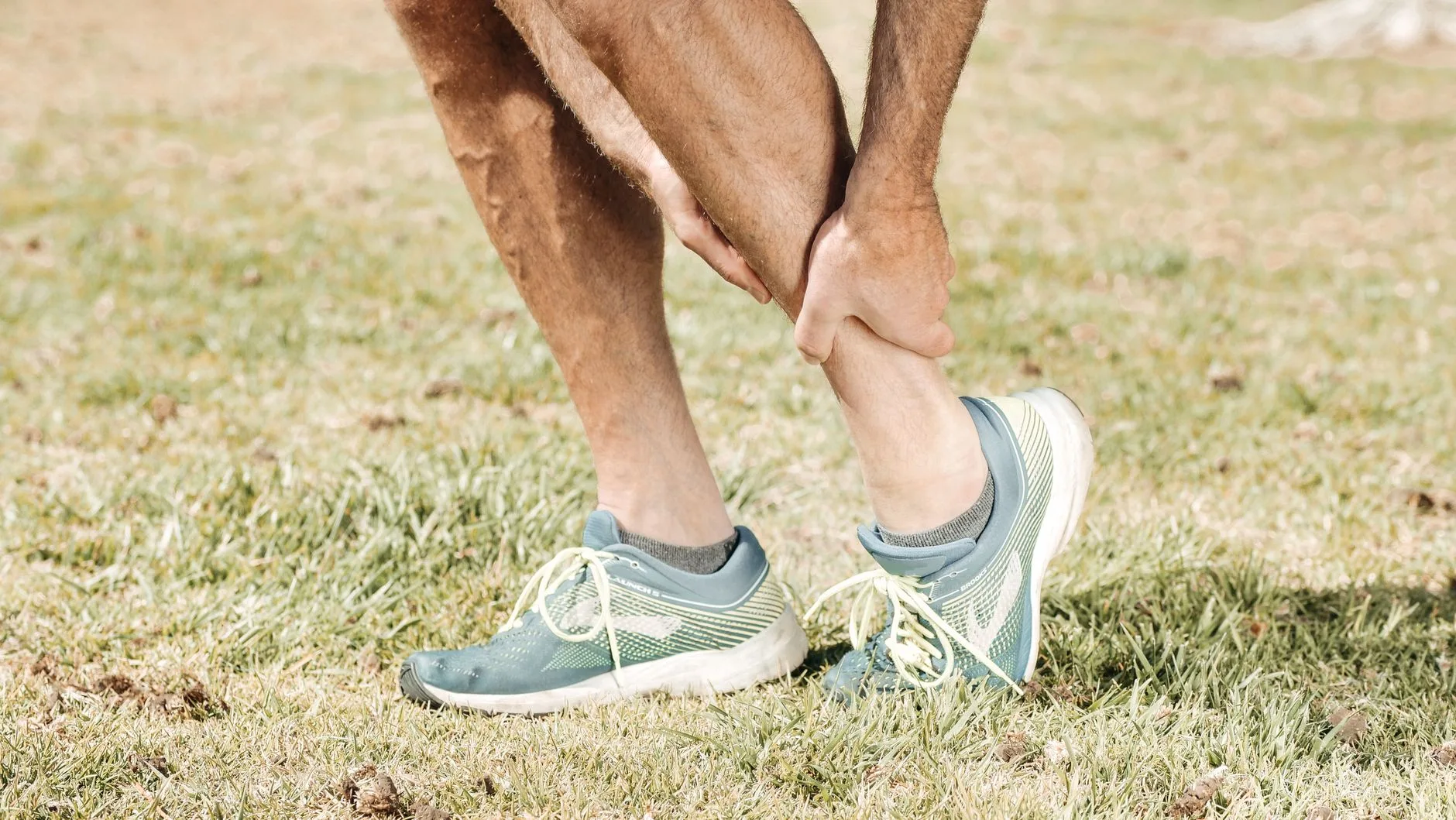
Photo by Kindel Media on Pexels
Hamstring strain when running: what to do next
That sharp pull at the back of your thigh. Maybe it happened mid-stride during a tempo run, maybe it crept up on you during a long easy effort. Either way, you felt something, you slowed down, and now you’re wondering how bad it actually is — and whether you’ve just torched the next few weeks of training.
Hamstring strains are one of the most common running injuries, and also one of the most commonly mismanaged. Runners tend to do one of two things: push through it and make it significantly worse, or rest completely for two weeks, then go straight back to interval sessions and re-injure it within days. Neither approach works. What does work is understanding what you’re actually dealing with and being methodical about how you come back.
This isn’t a guide that’ll tell you to “listen to your body” and leave it at that. You’ll get a clear breakdown of how to grade your injury, what the first 72 hours should look like, a realistic return-to-running timeline, and the exercises that will actually help.
How to tell how bad your hamstring strain is
Not all hamstring strains are equal. Sports medicine classifies them in three grades, and knowing which one you’re dealing with shapes everything that follows.
| Grade | What happened | What it feels like | Return to running |
|---|---|---|---|
| Grade 1 | Mild tear of a few muscle fibres | Tightness or mild ache, no loss of strength | 1–3 weeks |
| Grade 2 | Partial muscle tear | Clear pain, some swelling, weakness going upstairs or extending leg | 4–8 weeks |
| Grade 3 | Complete muscle rupture | Severe pain, bruising, significant swelling, can barely walk | 3–6 months — needs medical assessment |
Most running-related hamstring strains are Grade 1 or low-Grade 2. If you can walk without limping and the pain is more of a 3–5 out of 10 than an 8–9, you’re probably in that range. If you heard or felt a “pop,” have visible bruising within the first few hours, or can’t straighten your leg comfortably, get it assessed by a physiotherapist or GP before doing anything else. NHS guidance on sprains and strains recommends medical attention if you can’t bear weight or suspect a significant tear.
The first 72 hours: what to actually do
The old RICE protocol (Rest, Ice, Compression, Elevation) has largely been replaced by a more nuanced approach. The current thinking, backed by sports physios, leans toward PEACE & LOAD — which sounds like a CrossFit class but is actually useful.
In the first 72 hours:
- Stop running. Even if it “eases off,” continuing will extend your recovery by days or weeks.
- Avoid aggressive icing. Short cold applications (10–15 minutes, not directly on skin) can help with pain, but heavy icing may blunt the early inflammatory response your body needs for healing.
- Elevate when resting. Helps reduce any swelling.
- Avoid anti-inflammatory medications if you can. This is counterintuitive, but NSAIDs like ibuprofen, taken in the first 48–72 hours, may interfere with tissue repair. Paracetamol for pain is a better call early on.
- Keep moving gently. Not running — but walking and gentle range-of-motion movements prevent stiffness and maintain blood flow to the area.
What you shouldn’t do: heat, massage, or any kind of stretching in the first 48 hours. Stretching a freshly torn muscle feels “productive” but can increase micro-damage.
Days 3–7: gentle loading begins
Once the acute phase has passed and you’re not limping around the house, you can start introducing very light movement. This is where most runners either go too cautious (full rest for two more weeks) or too aggressive (a light jog “just to test it”).
Start here:
Prone hip extension: Lying face down, slowly lift your heel toward the ceiling, knee bent at 90 degrees. 3 sets of 10–12, no pain.
Standing hamstring curl: Hold a wall for balance, slowly curl one heel to your glutes. 3 sets of 12–15. Should feel like mild effort, not pain.
Short walks: 20–30 minutes at a comfortable pace. If you finish without tightness or soreness, that’s a positive sign.
The goal isn’t to “test” the hamstring — it’s to encourage tissue remodelling with controlled load. Pain during these exercises means you’re moving too fast.
When can you run again?
There’s no magic day. But there are clear markers to hit before you lace up:
- You can walk briskly for 30+ minutes with zero pain
- You can jog on the spot for 60 seconds without tightness
- You can do a single-leg Romanian deadlift (slow, controlled) with the injured leg without pain
- The area isn’t tender to the touch
For a Grade 1 strain, this typically lands somewhere between 10–21 days after injury, depending on how bad it was and how sensible you’ve been. For Grade 2, you’re more likely looking at 4–6 weeks minimum.
When you do return, your first run back should be short (20–25 minutes), genuinely easy (think 6:00–6:30/km if you’re a 5:00–5:30/km runner normally), and on flat terrain. No hills, no fartlek, no parkrun PB attempts. If you’re the type who struggles to run slow, easy run vs recovery run: what’s the difference? explains why going slow in these early sessions actually matters.
The exercises that actually speed up recovery
Strengthening — not stretching — is what prevents hamstring re-injury. Research from sports science consistently shows that eccentric exercises (where the muscle lengthens under load) are the most effective rehab tool for hamstring strains.
The two you need:
Nordic hamstring curl: Kneel on a soft surface with feet anchored (under a sofa, or have someone hold them). Slowly lower your upper body toward the floor, controlling the descent with your hamstrings. Use your hands to push back up. Start with 3 sets of 4–6. This is hard — that’s the point. Studies cited by the British Journal of Sports Medicine show nordics significantly reduce hamstring re-injury rates in athletes.
Romanian deadlift (RDL): Stand on both feet, hinge at the hip with a slight knee bend, lowering your hands toward the floor while keeping a neutral spine. Bodyweight first, then add dumbbells when pain-free. 3 sets of 8–10.
Introduce these around week 2–3 for Grade 1, or when your physio clears you for Grade 2. They should feel challenging but never sharp or painful.
What you can do instead of running
Being injured doesn’t mean fitness has to fall off a cliff. If you’re mid-plan — training for a 10K, half marathon, or beyond — cross-training can maintain a meaningful chunk of your aerobic base without stressing the hamstring.
Good options:
– Pool running / aqua jogging — highest carryover to running fitness, zero impact
– Cycling (flat, easy) — fine for Grade 1 from around day 5–7; avoid if it pulls at the back of the thigh
– Swimming — good general cardio, but avoid breaststroke kick which loads the hamstring
– Rowing machine — avoid until at least week 3; the hip hinge pattern can aggravate a healing strain
What to avoid: elliptical machines with high incline, heavy leg pressing, or any explosive lower-body work until you’re well into your return phase.
Why hamstrings get strained in the first place
Knowing the cause helps you avoid repeating it. The most common triggers in everyday runners:
- Sudden acceleration — sprinting for a bus, a fast finish in a race, or interval sessions without proper warm-up
- Running fatigued — hamstrings are more vulnerable in the final third of a long run when form degrades
- Tight hip flexors — when the hip flexors are tight, the hamstrings are forced to work harder to control hip extension
- Weak glutes — the glutes and hamstrings share the load during push-off; if one is weak, the other compensates
- Too much, too soon — rapidly increasing mileage or intensity without building the supporting strength
If you’ve struggled with hip flexor tightness alongside this, it’s worth reading about hip flexor pain when running: causes and treatment — the two issues often travel together.
The honest truth is that many hamstring strains are preceded by weeks of tightness that runners ignore. That nagging “tight hamstring” feeling that goes away once you warm up is your body flagging that something needs attention.
The honest takeaway
-
Grade the injury honestly. If you can’t walk normally or have visible bruising, get it assessed before doing anything else. Don’t try to self-manage a Grade 3 strain.
-
The first 72 hours matter. Stop running, move gently, skip the aggressive icing and NSAIDs if possible, and resist the urge to stretch it.
-
Return to running has clear criteria — it’s not about a specific number of days. Walk pain-free, pass the single-leg RDL test, then ease back in with short, slow, flat runs.
-
Eccentric strengthening is not optional. Nordic hamstring curls feel brutal but they genuinely reduce re-injury risk. Most runners skip them and re-strain the same area within a month.
-
The reason it happened matters. Weak glutes, tight hip flexors, running tired, or ramping up too fast — address the cause or you’ll be back here again. A hamstring strain that’s managed properly is a one-time disruption. One that’s ignored or rushed becomes a recurring problem that dogs you for months.