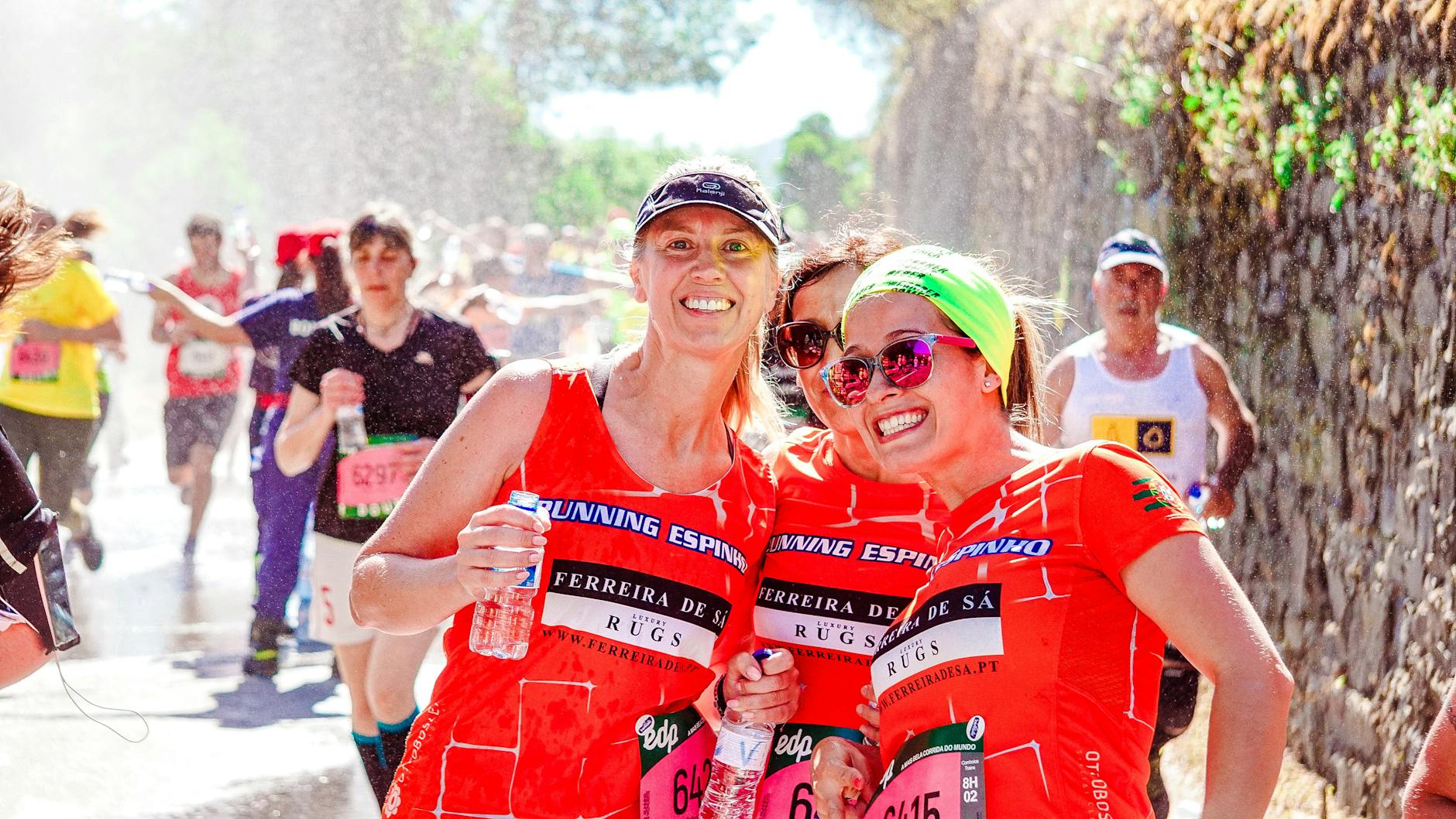
Photo by RUN 4 FFWPU on Pexels
How to deal with race day nerves (and actually run well)
You’ve done the training. The long runs are in the bank. You’ve tapered (sort of), laid your kit out the night before, and set three alarms. And yet — your stomach is in knots, you barely slept, and you’re convinced you’re going to forget how to run the moment the gun goes off.
Race day nerves are almost universal. It doesn’t matter if it’s your first parkrun or your fifth marathon — that pre-race anxiety has a way of showing up regardless of how prepared you are. The problem isn’t that you feel nervous. The problem is when the nerves start working against you: disrupting your sleep, sending you to the toilet six times before the start line, or pushing you out way too fast in the first kilometre.
This article won’t tell you to “just relax.” Instead, it’ll give you specific, practical things you can do in the days, hours, and minutes before a race to keep the nerves manageable — and maybe even use them to your advantage.
Why you get nervous before a race (and why it’s not all bad)
Race anxiety is your body responding to something it perceives as a threat — or at least a significant challenge. Your sympathetic nervous system kicks in: heart rate rises, adrenaline spikes, digestion slows. This is the same physiological response as genuine fear, which is why it feels so uncomfortable.
But here’s the thing: that same response also sharpens your focus, increases blood flow to your muscles, and primes you to perform. Research in sports psychology consistently shows that moderate pre-competition anxiety is associated with better performance — not worse. The athletes who struggle are the ones who interpret their nerves as a sign that something is wrong. If you can reframe “I’m terrified” as “my body is getting ready,” you’re already ahead.
The goal isn’t to eliminate nerves. It’s to keep them in the useful zone rather than the overwhelming one.
The two types of race day anxiety
Before you can manage your nerves, it helps to know what kind you’re dealing with:
| Type | What it looks like | When it usually peaks |
|---|---|---|
| Somatic anxiety | Physical symptoms — upset stomach, needing the loo, shaky hands, tight chest | Morning of the race, before the start |
| Cognitive anxiety | Mental symptoms — negative self-talk, catastrophising, inability to focus, dread | Days before the race, often worst at night |
Most runners experience both. But they respond to different strategies. Somatic anxiety responds better to physical interventions (breathing, movement, warmth). Cognitive anxiety responds better to mental reframing and planning. Knowing which is your dominant pattern helps you pick the right tools.
The week before: don’t let your brain run away with itself
Race week is where cognitive anxiety does its most damage. You’re running less (because you’re tapering), which means you have more time to think — and worry. Suddenly you’re re-reading your training log and finding gaps. You’re convinced that one missed long run back in February has doomed you.
A few things that actually help:
Write down what you’ve done, not what you haven’t. Seriously — make a list of your key sessions. The long runs you completed. The weeks you hit your mileage. That’s your evidence. Anxiety feeds on vagueness; specifics push back.
Don’t do anything new. No new shoes, no new gels, no experimental pre-race dinner, no sudden decision to try intervals the day before. Familiarity is calming. Novelty creates uncertainty.
Plan everything you can. Know your route to the start. Know where to park, or which train to catch. Know where the bag drop is. The more logistical unknowns you can eliminate, the more mental bandwidth you free up.
Limit how much you talk about the race. Telling everyone your goal time, reading every race report, and checking the weather forecast every 90 minutes will wind you up more. Set a cut-off for race-related information consumption.
Race morning: a routine that keeps you grounded
The morning of a race, your brain wants to spiral. The antidote is routine — doing the same sequence of familiar things so your body doesn’t have to think too hard.
Eat what you’ve trained with. If you’ve been doing your long runs after porridge and a coffee, eat porridge and have a coffee. This is not the morning to experiment with a hotel breakfast you’ve never tried before.
Give yourself more time than you need. If you think you need 90 minutes to get ready and travel, give yourself two hours. Being early is boring. Being rushed is catastrophic for anxiety.
Warm up physically. Even 10 minutes of easy walking and a few strides will help shift your body from “scared still” to “ready to move.” The NHS recommends diaphragmatic breathing for acute anxiety — slow, belly-led breaths with a longer exhale than inhale (try 4 counts in, 6 counts out) — and it genuinely works when your heart is hammering at the start line.
Have a cue word or phrase. Something short and specific that anchors you. “Trained for this.” “One kilometre at a time.” “Steady and strong.” Pick something before race day so you’re not improvising it when you’re panicking.
At the start line: what to do when it gets overwhelming
The start line is peak somatic anxiety territory. Everyone’s shuffling, music is loud, someone’s already sprinting off for the toilets, and you can feel your heart rate climbing before you’ve even moved.
Things that help in those final minutes:
- Focus on your breathing, not other runners. What everyone else is doing is irrelevant information right now.
- Shake out your arms and legs. Literally shake them. It releases tension and feels slightly ridiculous, which is also helpful.
- Remind yourself: the first kilometre doesn’t count. It’s almost always chaotic. Don’t make decisions based on how the first kilometre feels.
- Seed yourself correctly. If your goal pace is 6:30/km, don’t line up with the 5:00/km runners. Being in the right corral means you’re not fighting against traffic in the first few hundred metres, which will spike your anxiety and your pace.
During the race: when nerves turn into panic
Sometimes anxiety doesn’t disappear once you start — it follows you into the race. You go out too fast, realise it at 3km, and your brain starts catastrophising. Or you hit a hard patch at 15km and suddenly you’re convinced you’re going to blow up.
When this happens mid-race, bring yourself back to the present kilometre. Not the finish. Not the halfway point. The kilometre you’re in. Ask yourself: Can I hold this pace for the next kilometre? Usually, the answer is yes — and that’s all you need to know right now.
Check your form as a distraction tactic: relax your shoulders, soften your hands, check your cadence. Giving your brain a task short-circuits the spiral.
And if the goal genuinely isn’t happening — if you’re 10km in and you can feel it’s not your day — adjusting the target isn’t failure. Finishing a race with a revised goal teaches you more than DNF-ing because you refused to adapt.
What to do differently next time
The best long-term tool for race day nerves is race experience. Every race you do — no matter how it goes — reduces the number of unknowns next time. That’s why doing smaller, lower-stakes races in your build-up helps enormously. A local 5K or 10K a few weeks before your target half marathon gives you a dress rehearsal without the consequences.
After each race, write down:
– What you were most worried about beforehand
– Whether those things actually happened
– What you’ll do differently at the start next time
You’ll start to notice that your pre-race fears are rarely the things that actually go wrong.
The honest takeaway
- Nerves are physical and mental — treat them differently. Breathing and movement for physical symptoms; planning and reframing for mental ones.
- Your pre-race routine is a performance tool. Eat, travel, and warm up the same way you have in training. Familiarity reduces anxiety more than any pep talk.
- The first kilometre of a race is the worst time to make decisions. Don’t let early adrenaline push you out 30 seconds per kilometre faster than your goal pace.
- Reframe, don’t suppress. You’re not trying to feel calm. You’re trying to feel ready. There’s a difference.
- More races = fewer nerves. It really is that simple. Sign up for a low-stakes local race and treat it as practice — for the running and the anxiety.