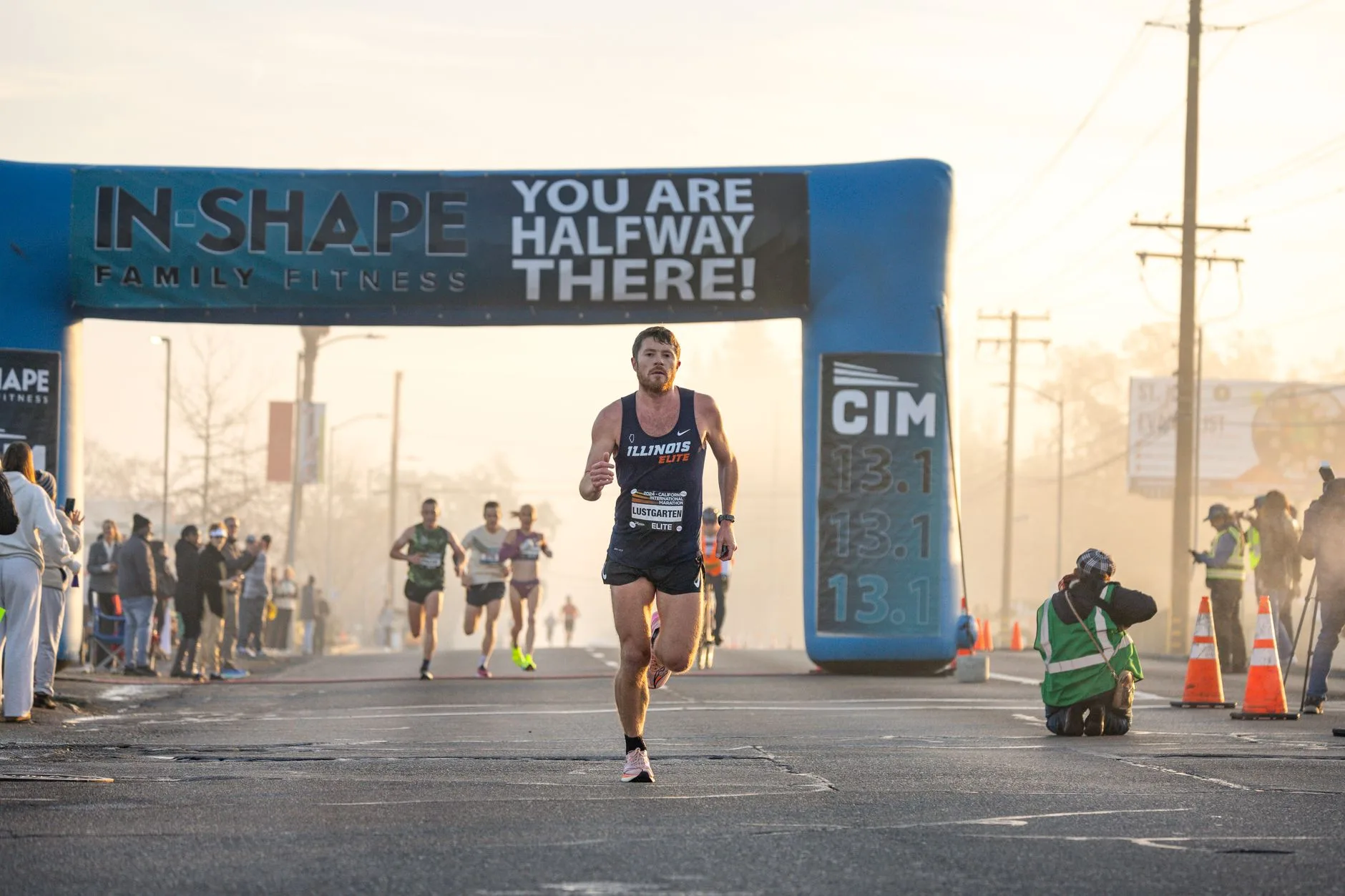
Photo by Stephen Leonardi on Pexels
A 10 mile race sits in an interesting gap in the race calendar. It’s long enough to demand genuine endurance training — you can’t bluff through it on base fitness alone — but short enough that most runners who’ve been running regularly for 6–12 months can target it without a major overhaul of their training. It’s also one of the most enjoyable race distances: long enough to have a proper race narrative, short enough that the last two miles don’t feel like a survival exercise.
This guide is for runners who can currently run 3–5 miles comfortably and want to be ready for a 10 mile race in 12–16 weeks.
What You’re Actually Building
Training for a 10 mile race requires three things:
Aerobic base: The ability to run for 90 minutes to 2 hours without your cardiovascular system giving up. This comes from consistent easy running over weeks and months.
Muscular endurance: Your legs, particularly your calves, quads, and hip flexors, need to be conditioned for the specific repetitive stress of running at pace for 10 miles. This takes longer to build than cardiovascular fitness, which is why there’s no shortcut for long runs — they train your muscles and connective tissues, not just your lungs.
Race-specific fitness: Running at your target race pace long enough that it doesn’t feel alien. This comes from tempo runs and race-pace work in the final 4–6 weeks.
The Training Plan: 12 Weeks
If you’re starting with a 5-mile long run and running 3–4 days per week, 12 weeks is enough. If you’re newer or coming back from a break, use 16 weeks.
Weeks 1–4: Building the base
The priority is establishing consistency and gradually extending your long run. Don’t worry about speed.
- Run 3–4 days per week
- Long run starting at 5–6 miles, adding 1 mile every 1–2 weeks
- Keep all runs at easy/conversational pace (you can hold a conversation throughout)
- Total weekly mileage: 15–22 miles
Weeks 5–8: Building endurance
- Long run progressing to 8–9 miles
- Add one tempo run per week: 20–30 minutes at a comfortably hard pace (roughly 80–85% effort — you can speak in short phrases but not hold a conversation)
- Total weekly mileage: 22–30 miles
Weeks 9–11: Race-specific work
- Long run reaches 9–10 miles (your race distance — doing it once in training removes the fear)
- Tempo runs lengthen to 35–45 minutes, or include race-pace miles within your long runs (e.g., miles 6–8 at race pace)
- Total weekly mileage: 28–35 miles
Week 12: Taper
- Reduce mileage by 30–40% but keep the intensity
- Long run: 5–6 miles, easy
- 2–3 short runs during the week
- Rest 2 days before the race
The Long Run: Most Important Session
Your weekly long run is the cornerstone of 10 mile training. A few principles:
Run it slowly. The purpose of the long run is time on feet and musculoskeletal conditioning, not cardiovascular stress. Running at 60–70% of your maximum effort — probably 60–90 seconds per mile slower than your race pace — is correct. Running long runs too fast is one of the most common training mistakes and leads to fatigue that compromises the rest of your week.
Take water. From 60 minutes onward, hydration matters. Carry a handheld bottle or plan a route with water fountains.
Recover properly. The 24–48 hours after a long run should be easy running or rest. Don’t try to train hard the day after.
Pacing: What’s Realistic?
A rough guide to finish times based on current 5K pace:
| 5K time | Approximate 10 mile finish |
|---|---|
| 20:00 | ~1:05–1:10 |
| 25:00 | ~1:22–1:30 |
| 30:00 | ~1:38–1:48 |
| 35:00 | ~1:55–2:10 |
| 40:00 | ~2:10–2:30 |
For your first 10 mile race, start conservatively. Most runners run the second 5 miles 5–10% slower than the first; if you start too fast, the gap widens dramatically. A common approach: run the first 4 miles at slightly easier than target pace, settle into race pace for miles 4–8, and leave whatever you have for miles 9–10.
Nutrition During Training
For runs under 75 minutes, water is sufficient for most runners. Once your long runs exceed 75–90 minutes, taking on carbohydrate during the run improves performance and helps you recover better afterward.
Gels and chews: 1 gel every 45 minutes of running. Take with water, not on an empty stomach. Practice with gels in training — race day is not the time to discover you don’t tolerate them.
Real food alternatives: Dates, banana pieces, and rice cakes work for runners who don’t like gels. The key is approximately 30–60g of carbohydrate per hour of running.
Pre-run: eat 1.5–2 hours before a long run. A bowl of oats, toast with peanut butter, or a banana. Running on empty for long runs is harder and provides no training benefit.
Common Mistakes
Running too fast on easy days. Most training runs should feel genuinely easy — if you feel good for the whole run, you paced it correctly. If you feel slightly tired, you ran too hard.
Skipping the long run. It’s the most important session of the week. Shorter runs can be moved or compressed; the long run cannot easily be substituted.
Not tapering properly. Runners who ignore the taper and try to cram in extra miles in the final 2 weeks typically arrive at race day feeling flat or tired. Trust the taper.
New shoes on race day. Wear shoes you’ve trained in. New shoes cause blisters.
What to Expect on Race Day
A 10 mile race takes most recreational runners 1 hour 20 minutes to 2 hours 30 minutes. Plan your logistics accordingly:
- Arrive at the start at least 45 minutes early
- Use the bag drop or leave kit with a spectator — you’ll have all you need in your pockets
- Eat breakfast 2–3 hours before the start
- Take a gel or fuel at miles 4 and 7 if your race has aid stations, or carry your own
- Don’t let the first-mile adrenaline pull you out too fast — the race starts at mile 3
Summary
Training for a 10 mile race in 12 weeks is realistic for any runner who’s been running consistently for 6+ months. The non-negotiables:
- Run 3–4 days per week consistently throughout the 12 weeks — consistency beats intensity
- Complete every long run on the plan — the musculoskeletal adaptation takes time and can’t be compressed
- Keep easy runs easy — 70–80% of your mileage should be genuinely conversational pace
- Start fuelling on runs over 75 minutes — practice with gels in training before race day
- Trust the taper — feeling slightly sluggish in week 12 is normal; you’ll feel sharp on race day
Next read: How to safely increase your weekly running mileage