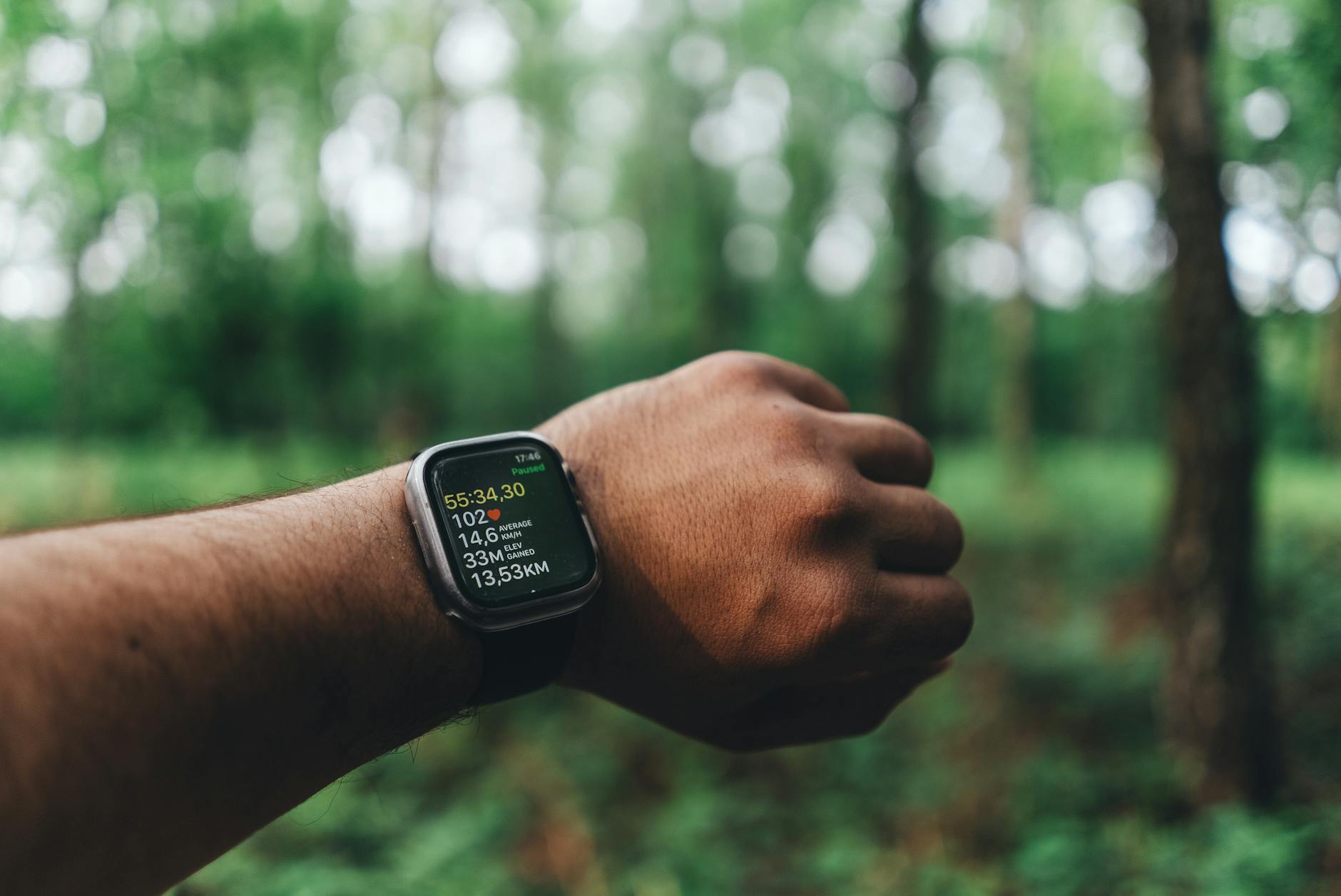
Photo by Omar Ramadan on Pexels
Running with a heart rate monitor: what the numbers actually mean and how to use them
You strap on a heart rate monitor, head out for what feels like an easy run, and glance down to see your heart rate sitting at 172 bpm. Is that fine? Is that dangerous? Should you slow down? Most beginners hit exactly this wall — data without context. The monitor is doing its job, but no one told you what to do with the information.
Heart rate training works. The science behind it is solid, and it genuinely helps everyday runners train smarter rather than harder. But it comes with a learning curve, and the first few weeks can feel more confusing than helpful. This guide is here to fix that. You’ll come away knowing what your zones mean, how to find your actual numbers (not the guesses printed on gym equipment), and how to use heart rate data in your real training — the kind that gets disrupted by long work weeks, poor sleep, and the occasional missed session.
Why bother with a heart rate monitor at all?
The honest answer: because most runners train at the wrong intensity almost every day. Without data, effort feels like a reasonable guide — but effort is unreliable. Stress, heat, tiredness, and caffeine all shift your perceived exertion. You end up going too hard on easy days, and then not hard enough on the days that actually matter.
Heart rate cuts through that noise. It gives you an objective measure of what your body is actually doing — not what you think it’s doing. For beginners especially, this tends to reveal one uncomfortable truth: your “easy” run probably isn’t easy. Most new runners cruise along at 80–85% of their max heart rate and wonder why they’re always tired, always picking up niggles, and not improving as fast as they expected.
That said, heart rate monitoring isn’t magic, and it’s not something you need to obsess over from day one. Think of it as a tool that becomes more useful the more you understand it.
Chest strap vs. optical wrist sensor: which should you use?
This matters more than most people realise.
| Type | Accuracy | Best for | Downsides |
|---|---|---|---|
| Chest strap (e.g. Garmin HRM-Dual, Polar H10) | High | Intervals, threshold runs, any structured session | Less convenient, needs to be damp to work well |
| Optical wrist sensor (built into most GPS watches) | Moderate | Easy runs, long runs, general tracking | Lags during intensity changes, can be affected by movement |
| Optical arm band (e.g. Wahoo TICKR FIT) | Good | Good middle ground | Less common, costs extra |
For most beginners doing mostly easy running, the optical sensor in your watch is good enough to get started. But if you’re planning to do any interval training or want to trust the numbers for structured sessions, a chest strap is worth the investment. The Polar H10 consistently comes out near the top of independent accuracy tests and connects to most watches and apps via Bluetooth or ANT+.
Finding your maximum heart rate — properly
The formula 220 minus your age is a starting point, not a fact. It’s a population average, and the actual variation between individuals is enormous. A 40-year-old runner’s true max might be anywhere from 165 to 195 bpm and still be perfectly normal.
If you want numbers you can actually train from, you need to find your real max. The simplest field test:
- Warm up for 10–15 minutes at an easy pace
- Run a hard uphill effort for 2–3 minutes — not a sprint, a sustained hard push
- In the final 30 seconds, push as hard as you can
- Note the highest number your monitor records
Do this when you’re fresh, not after a long week. And be aware — if you have any history of cardiac issues, talk to your GP before attempting a max HR test. The NHS guidance on exercise and heart health is worth reading before you start any new intensity-based training programme.
Understanding your heart rate zones
Most platforms use a 5-zone model. Here’s what they mean in plain terms:
| Zone | % of Max HR | What it feels like | What it’s for |
|---|---|---|---|
| Zone 1 | 50–60% | Barely trying. Walking pace for most. | Recovery, warm-up |
| Zone 2 | 60–70% | Conversational. Could talk in full sentences. | Aerobic base building — most of your easy runs |
| Zone 3 | 70–80% | Getting harder. Short sentences only. | Tempo and progression runs |
| Zone 4 | 80–90% | Uncomfortable. One or two words at a time. | Threshold work, cruise intervals |
| Zone 5 | 90–100% | All-out. Can’t speak. | Short intervals, race efforts |
If your max is 185 bpm, your Zone 2 sits between 111 and 129 bpm. That’s probably much slower than you’re used to running. For many beginners, hitting Zone 2 means running at 6:30–7:30/km or even slower. That’s not failure — that’s how base fitness gets built.
The hardest part: slowing down
Here’s what no one tells you clearly enough: when you first start training by heart rate, running slowly feels ridiculous. You might have to slow to a shuffle — or even walk — to keep your heart rate in Zone 2. This is normal. It’s not a sign you’re unfit (well, not only that). It’s the monitor doing its job.
The good news is that this changes faster than you’d expect. After 8–12 weeks of genuinely easy running, most people find they’re covering significantly more ground at the same heart rate. Your pace at 130 bpm might go from 7:00/km to 6:15/km without any extra effort. That’s aerobic adaptation happening in real time, and it’s one of the most satisfying things you’ll see in this sport.
The temptation to ignore the data and just run “comfortably hard” is real. Resist it for at least a month. The Zone 2 slog is temporary. The fitness benefit isn’t.
How heart rate changes day to day — and what to do about it
Your heart rate isn’t a fixed number for a given pace. It shifts based on:
- Heat and humidity — HR can run 10–15 bpm higher in warm weather at the same effort level
- Sleep quality — even one poor night can push your resting and running HR up noticeably
- Fatigue and overtraining — a creeping rise in HR at easy paces is often the first warning sign
- Caffeine — your morning coffee can raise HR by 5–10 bpm for an hour or two
- Dehydration — even mild dehydration increases HR
This is why heart rate data needs context, not just numbers. If your easy run has you 10 bpm higher than usual, look at what’s different that day before concluding you’re suddenly less fit. Research published in the Journal of Strength and Conditioning Research consistently shows that training load, recovery status, and environmental factors interact significantly with heart rate response — meaning the same run can produce very different numbers on different days.
Building your first week of HR-based training
You don’t need to overhaul everything at once. Start with this:
- 3–4 runs per week: aim for 2–3 of them to be genuinely Zone 2 (60–70% max HR)
- 1 run with some intensity: a short threshold block (15–20 minutes at Zone 3–4), or parkrun, or a local race
- Check your resting HR each morning (before you get up): note it in a running log or your watch app. A resting HR 5+ bpm above your normal baseline is a signal to keep that day’s run easy or rest entirely
The key is consistency over precision. You don’t need to nail 68% of max HR on every easy run. You need to keep most of your training genuinely aerobic, and let the monitor help you do that honestly.
The honest takeaway
- Your easy pace is probably too fast. A heart rate monitor will prove it. Zone 2 running (60–70% of your max HR) is slower than it feels like it should be, especially early on. Do it anyway.
- Use your actual max HR, not the formula. 220 minus age is a rough guess. A field test gives you numbers you can genuinely train from.
- A chest strap beats a wrist sensor for accuracy, especially during harder sessions. For everyday easy running, your watch’s optical sensor is fine.
- Heart rate shifts daily. Heat, poor sleep, stress, and caffeine all affect it. Give the data context before drawing conclusions.
- Give it 8–12 weeks before judging. The payoff isn’t instant, but a faster pace at the same heart rate is one of the clearest signs your aerobic fitness is genuinely improving.
Ready to structure your training properly? Read our guide to building your first running training plan → /beginner-running-training-plan