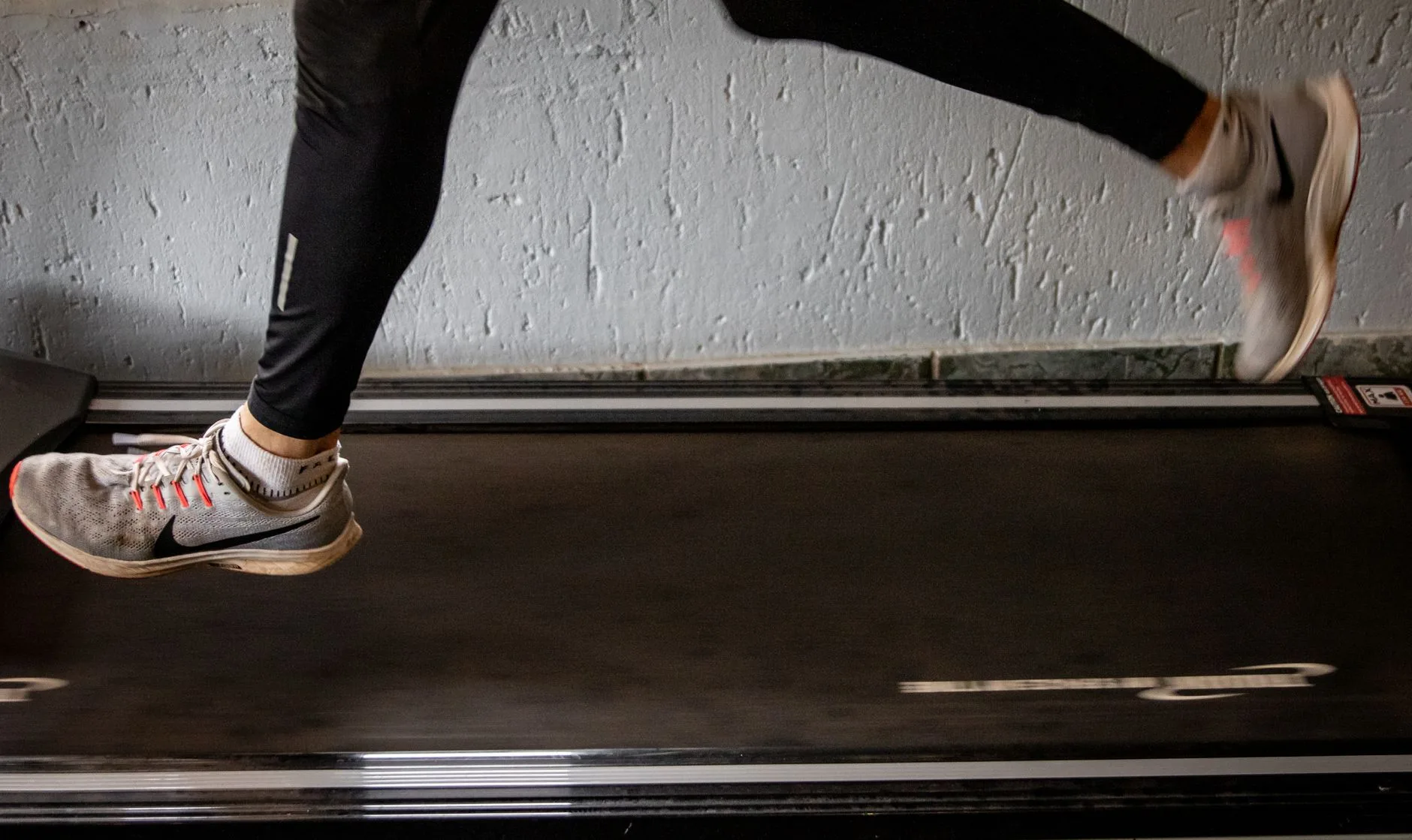
Photo by Magda Ehlers on Pexels
You’ve read that strength training prevents injuries and makes you faster. You’ve also, almost certainly, not been doing it — because between work, the kids, and the actual running, the idea of driving to a gym twice a week feels like a plan for someone else’s life. That’s fair. It’s also not necessary.
Strength training for runners doesn’t need a barbell, a gym membership, or an hour you don’t have. It needs a bit of floor space, maybe a resistance band, and 20–25 minutes, twice a week. The exercises that actually move the needle for runners are almost all bodyweight-based anyway — single-leg strength, hip stability, and calf endurance matter far more to your running than how much you can bench.
This isn’t about building a six-pack or looking strong. It’s about your knees still working at mile 10, your calves not giving out on hills, and your hips staying level when you’re tired at the end of a long run. That’s what this routine is built for.
Why runners actually need strength training (and what it’s not for)
Running is a repetitive, single-leg sport — every stride is a tiny balancing act on one foot. Weak hips and glutes mean your knee or ankle compensates, which is where a lot of common injuries (runner’s knee, IT band pain, shin splints) start. Research from sports medicine bodies like the NHS consistently backs strength work as part of injury prevention and general fitness, not just for athletes chasing PBs.
It’s not about adding muscle bulk — if you’re curious whether running itself builds muscle, the short answer is a little, but not much, and that’s a separate conversation. Strength training for runners is about control and endurance in the muscles that stabilise you, not maximal strength. You’re not training to lift heavy. You’re training your body to hold its form when it’s tired, which is exactly when injuries happen — usually in the second half of a long run or race.
The 8 exercises that matter most
You don’t need 20 exercises. You need these eight, done consistently.
1. Single-leg glute bridge — 3 sets of 10 per leg. Lie on your back, one foot flat on the floor, the other leg extended. Push through the planted heel to lift your hips. This targets the glute medius, which keeps your pelvis level mid-stride.
2. Bulgarian split squat — 3 sets of 8–10 per leg. Rear foot elevated on a sofa or step, front knee bending to roughly 90 degrees. This is the single best exercise for runners with no equipment — it builds single-leg strength in exactly the pattern running demands.
3. Calf raises (single-leg) — 3 sets of 15 per leg. Stand on a step for full range of motion if you have one, or flat ground if not. Calves and the Achilles absorb huge load every stride; this is non-negotiable if you’ve had Achilles issues before.
4. Side-lying hip abduction — 2 sets of 15 per side. Lie on your side, lift the top leg straight up. Slow and controlled — this is small-range work for the hip stabilisers that a lot of runners neglect completely.
5. Plank (standard or side) — 3 x 30–45 seconds each. Core strength here isn’t about abs showing — it’s about keeping your trunk upright and efficient when your form starts to degrade late in a run.
6. Step-ups — 3 sets of 10 per leg. Use a stair, a sturdy box, or a low wall. Drives the same single-leg power as hill running without needing a hill.
7. Clamshells — 2 sets of 15 per side. Lying on your side, knees bent, lift the top knee while keeping feet together. Classic physio exercise for a reason — it directly targets the glute that controls knee tracking.
8. Standing single-leg balance (with reach) — 2 sets of 8 per side, 20–30 second holds or reaching with the free leg to tap the floor in front, side, and back. Proprioception and ankle stability, which matter more on trail or uneven pavement than most runners realise.
A no-gym weekly structure that actually fits
The honest failure point with strength training isn’t the exercises — it’s consistency. Here’s a layout that works around a normal running week rather than competing with it.
| Day | Session | Time needed |
|---|---|---|
| Monday | Easy run | — |
| Tuesday | Strength circuit (exercises 1–4, 2 rounds) | 20 min |
| Wednesday | Speed/tempo run | — |
| Thursday | Rest or short recovery jog | — |
| Friday | Strength circuit (exercises 5–8, 2 rounds) | 20 min |
| Saturday | Long run | — |
| Sunday | Rest | — |
Two sessions a week is the sweet spot for most runners training 3–5 days. Three is better if you can manage it, but two done consistently beats three done for a fortnight then abandoned. Do strength work on easier running days or the day after a hard session — not the day before a long run, when you want fresh legs.
If you’re mid-marathon-block and short on time, fold it into your warm-up or cool-down rather than treating it as a separate session — 10 minutes of exercises 1, 2, and 6 after an easy run is far better than nothing.
What equipment actually helps (and what’s optional)
You genuinely don’t need equipment for any of the eight exercises above. But two cheap additions make progression easier as you get stronger:
- A resistance band (loop or long band) — around £8–12. Lets you add resistance to clamshells, hip abduction, and monster walks once bodyweight gets easy, which for most runners happens within 4–6 weeks.
- A step or sturdy box — a stair in your house works fine. Needed for proper-depth calf raises and step-ups.
That’s it. No dumbbells, no kettlebells, no squat rack. If you already do a dynamic warm-up before runs, these exercises pair naturally with that routine, and a good warm-up routine before running is worth having anyway regardless of your strength work.
How to know it’s working
Strength gains from bodyweight training are slower and quieter than running gains — you won’t see a PB from a plank. What you’ll notice instead, usually around week 4–6:
- Your hips feel more stable on tired, late-run strides.
- Hills feel less punishing — calves and glutes fatigue less.
- If you’ve had recurring knee or IT band niggles, they show up less often or less severely.
- Single-leg balance exercises get noticeably easier — a genuinely useful marker of improved stability.
None of this is dramatic. It’s the kind of improvement you notice in hindsight — “actually, my knees haven’t bothered me in weeks” — rather than something you feel mid-session.
Common mistakes that waste the effort
Going too heavy, too soon. If you’re adding a resistance band, increase slowly. Soreness that stops you running the next day defeats the purpose.
Skipping it when the week gets busy. This is the one that actually matters. Two 15-minute sessions beat one skipped 40-minute session. Scale down, don’t cancel.
Treating it as cardio. Rest 30–45 seconds between sets. This is strength and control work, not a HIIT class — rushing through it undermines the actual benefit.
Ignoring pain versus normal fatigue. Muscle fatigue during single-leg work is expected. Sharp joint pain isn’t — stop and check with a physio if that happens, particularly around the knee or Achilles.
If you’re currently dealing with something like Achilles tendinopathy or a hamstring strain, some of these exercises need modifying or skipping entirely — strength training around an existing injury is a different conversation from general prevention, so get specific guidance rather than pushing through.
The Honest Takeaway
- Pick the eight exercises above and do them twice a week — that’s the whole commitment, no gym required.
- Schedule strength sessions on easy running days, never the day before a long run.
- Progress slowly: add a resistance band after 4–6 weeks of bodyweight-only, not before.
- Expect quiet, cumulative results — fewer niggles and steadier form late in runs, not a sudden PB.
- If something hurts rather than just feels tired, stop and get it checked rather than pushing through on principle.