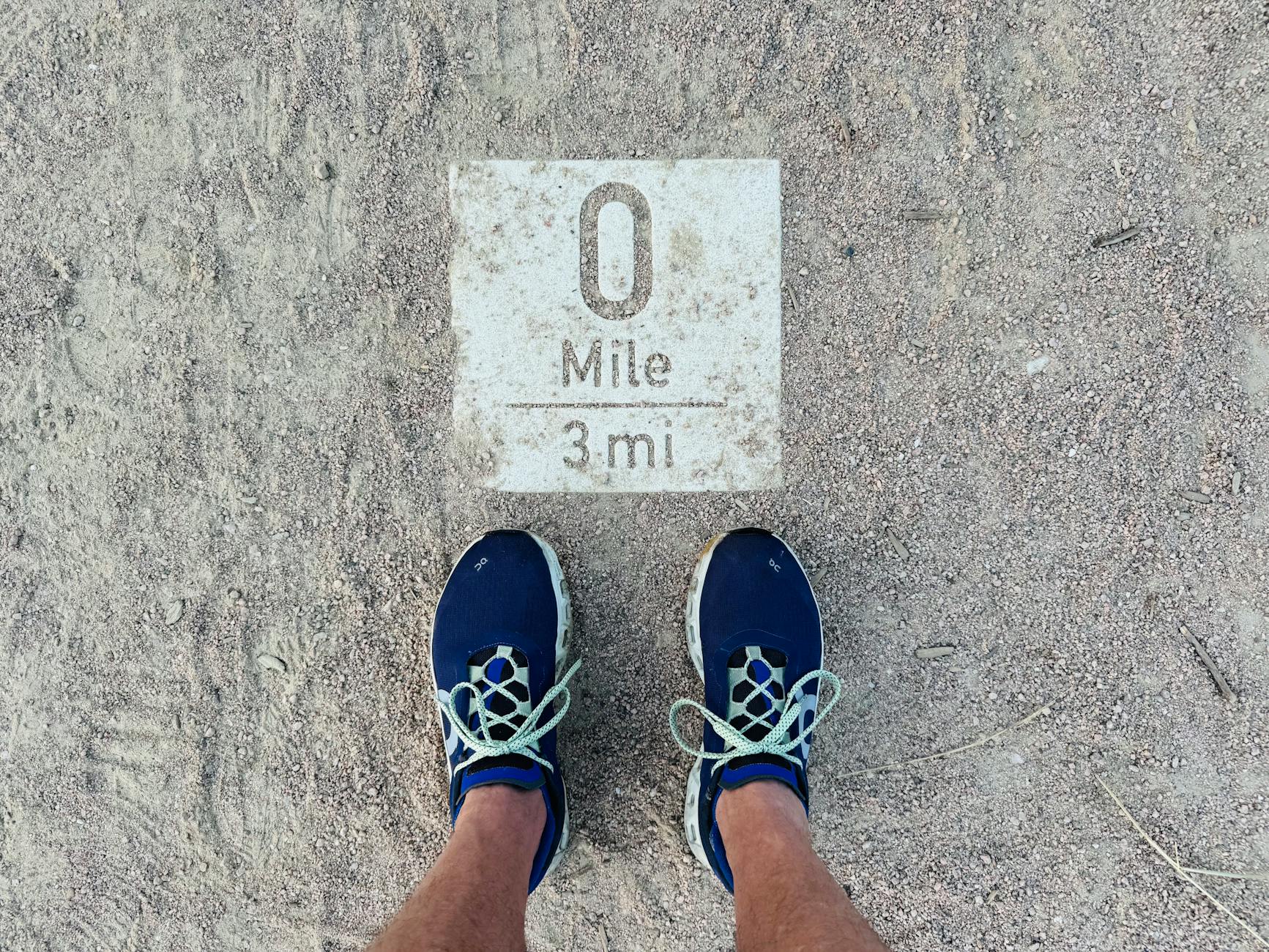
Photo by EnsearchofYou * on Pexels
You’ve been running roads for a while, someone suggests a trail run, and suddenly you’re staring at two very different walls of shoes in a running shop wondering what actually separates them. Or maybe you do a bit of both and you’re wondering whether you can get away with one pair. It’s a fair question, and the answer is more practical than you might expect.
The short version: trail and road shoes are built for genuinely different surfaces, and the differences aren’t just marketing. The grip, the cushioning, the rigidity, the fit — all of it is shaped by what’s underneath your feet. Wearing the wrong shoe won’t necessarily ruin your run, but over time it can lead to discomfort, poor performance, and a higher injury risk. Here’s what you actually need to know.
The surface is everything — and that’s why the shoes differ
Road running shoes are designed for tarmac and pavement: predictable, flat, unforgiving surfaces. Trail shoes are built for mud, roots, rocks, wet grass, loose gravel, and everything in between. That single difference — the surface — drives every design choice in both types of shoe.
When you run on roads, your foot strikes a consistent, hard surface thousands of times per run. The shoe needs to absorb that repeated impact efficiently and return energy to keep you moving. When you’re on trails, the surface changes with every step. Your foot needs stability in unpredictable directions, protection from sharp objects underneath, and traction that actually grips rather than slides.
Think of it this way: road shoes are optimised for efficiency. Trail shoes are optimised for safety and adaptability. Neither does the other’s job particularly well.
Outsole grip: the most obvious difference
Flip a trail shoe over and you’ll see aggressive, multi-directional lugs — raised rubber knobs that dig into soft and uneven ground. Flip a road shoe over and you’ll find a relatively flat, smooth rubber outsole designed for consistent contact with a flat surface.
Trail shoe lugs vary depending on the terrain they’re built for:
- Shallow lugs (3–4mm): Better for hard-packed dirt, gravel, and light trails. More versatile if you’re mixing surfaces.
- Deep lugs (5–6mm+): Built for soft, muddy, technical ground. These will feel clunky on tarmac and wear down quickly if you use them on roads.
If you’re running a local trail that’s mostly compacted path with some muddy patches, you don’t need the most aggressive lug pattern available. That’s worth knowing before you buy.
Midsole cushioning and stack height
Road shoes tend to have higher stack heights — meaning more foam between your foot and the ground. High-end road shoes from brands like ASICS, Brooks, and Saucony can have stack heights of 35–40mm or more. This cushioning is optimised for the sustained impact of hard surfaces over long distances.
Trail shoes are typically lower to the ground. Not always — some longer-distance trail shoes have significant cushioning — but the priority shifts. A lower stack height improves proprioception: your foot’s ability to feel and react to the ground beneath it. On a trail, that feedback matters. You need to know when you’re landing on a root or a loose rock. Too much foam between you and the ground reduces that signal.
There’s a practical trade-off here. More cushioning means more comfort on long, flat efforts. Less cushioning means more ground feel and agility, but potentially more fatigue on harder surfaces over distance.
Rock plates: protection you don’t get on road shoes
Many trail shoes — especially those designed for technical or rocky terrain — include a rock plate. This is a rigid or semi-rigid layer (often TPU plastic or carbon fibre) built into the midsole specifically to prevent sharp rocks and debris from bruising your foot through the shoe.
Road shoes don’t have these, because they don’t need them. But if you’ve ever stepped on a sharp stone in a road shoe on a gravel path and felt it straight through to your arch, you’ll understand immediately why this feature exists.
Rock plates add a small amount of stiffness to the shoe, which takes a short adjustment period. If you’re moving from a flexible road shoe to a plated trail shoe, your foot and calf muscles will notice it over the first few runs.
Upper construction and fit
Road shoe uppers are generally more breathable and lightweight, built for airflow over protection. The mesh is often finer and more open — great on a dry summer road run, less ideal when you hit a boggy section of trail.
Trail shoe uppers are reinforced. Look for:
- Toe bumpers/guards: Protect against roots and rocks at the front of the shoe.
- Denser overlays: Provide structure against lateral forces when your foot twists or rolls on uneven ground.
- Closer fit around the midfoot: Prevents heel slippage on steep descents — one of the trickier skills in trail running.
Some trail shoes also feature drainage ports for river crossings and wet conditions. Others use waterproof membranes like GORE-TEX, which keeps water out but also traps heat and reduces breathability. Worth thinking about depending on your climate and typical conditions.
A direct comparison: what changes between trail and road
| Feature | Road shoes | Trail shoes |
|---|---|---|
| Outsole | Flat, smooth rubber | Lugged for grip (3–6mm+) |
| Midsole stack height | High (often 35–40mm) | Lower to moderate |
| Cushioning focus | Impact absorption/energy return | Ground feel and stability |
| Rock plate | No | Often yes (on technical models) |
| Upper | Lightweight, breathable mesh | Reinforced, protective |
| Heel-to-toe drop | 4–12mm typically | 4–8mm typically |
| Durability on roads | Good | Lugs wear quickly on tarmac |
| Durability on trails | Poor grip; upper damage risk | Built for it |
| Weight | Generally lighter | Slightly heavier |
This isn’t an exhaustive list, and there are hybrid shoes — sometimes called “trail-road” or “all-terrain” — that sit somewhere in the middle. These can be useful if you’re genuinely mixing surfaces on every run, but they tend to compromise on both ends. They won’t grip as well as a true trail shoe or feel as fast as a dedicated road shoe.
Can you use road shoes on trails (or vice versa)?
This comes up constantly, and the honest answer is: it depends on the trail.
Road shoes on light gravel paths or well-maintained dirt trails? Probably fine, especially if it’s dry. Road shoes on wet, muddy, rooted, or rocky terrain? You’ll slip, you’ll bruise your feet, and you’ll work much harder than you need to. The energy you spend compensating for poor grip and protection adds up, especially on longer efforts.
Trail shoes on roads? They’ll work, but the lugs create an uneven contact surface on tarmac, which reduces efficiency and wears the lugs down faster. If you’re running 20% trails and 80% roads, trail shoes on the road sections will feel noticeably clunky.
Research from the British Journal of Sports Medicine consistently highlights that footwear matched to surface conditions plays a meaningful role in injury prevention, particularly ankle sprains and stress fractures — injuries that trail and road runners experience at different rates partly due to footwear mismatch.
If you’re regularly doing both, the realistic options are: buy two pairs and rotate them, or find a hybrid shoe that suits your typical split. Runners World’s shoe lab tests both trail and road models independently and is a reliable starting point for shortlisting specific models.
Do you actually need trail shoes?
Ask yourself these questions:
- Are you running on terrain that’s genuinely loose, wet, muddy, or rocky — or just slightly uneven?
- Are you heading out in wet conditions regularly?
- Do you run technical descents where foot slippage could cause a fall?
- Are your runs longer than 60–90 minutes on trail surfaces?
If you answered yes to two or more of these, proper trail shoes are worth the investment. Entry-level trail shoes from brands like Salomon, Inov-8, Brooks Cascadia, or Altra Lone Peak start around £80–£120 and will last well if you’re not wearing them on roads every day.
If you’re occasionally nipping down a dry towpath or gravel path, your road shoes will be fine.
The Honest Takeaway
- The key differences are real, not marketing: grip, protection, cushioning profile, and upper construction are all genuinely different for a reason. The surface drives everything.
- Don’t run technical, wet trails in road shoes. You’ll work harder, risk slipping, and likely bruise your feet on anything rocky. It’s not worth it.
- Trail shoes on roads wear down faster and feel worse. If you’re mostly a road runner doing occasional easy trails, a hybrid shoe or simply saving your trail shoes for off-road sessions is the smarter call.
- Lug depth matters more than brand. Match the lug pattern to your typical terrain — aggressive lugs for mud, shallower lugs for hard-pack and gravel.
- If you’re regularly doing both, budget for two pairs. It’s not extravagant — it’s the practical move that protects both the shoes and your feet.