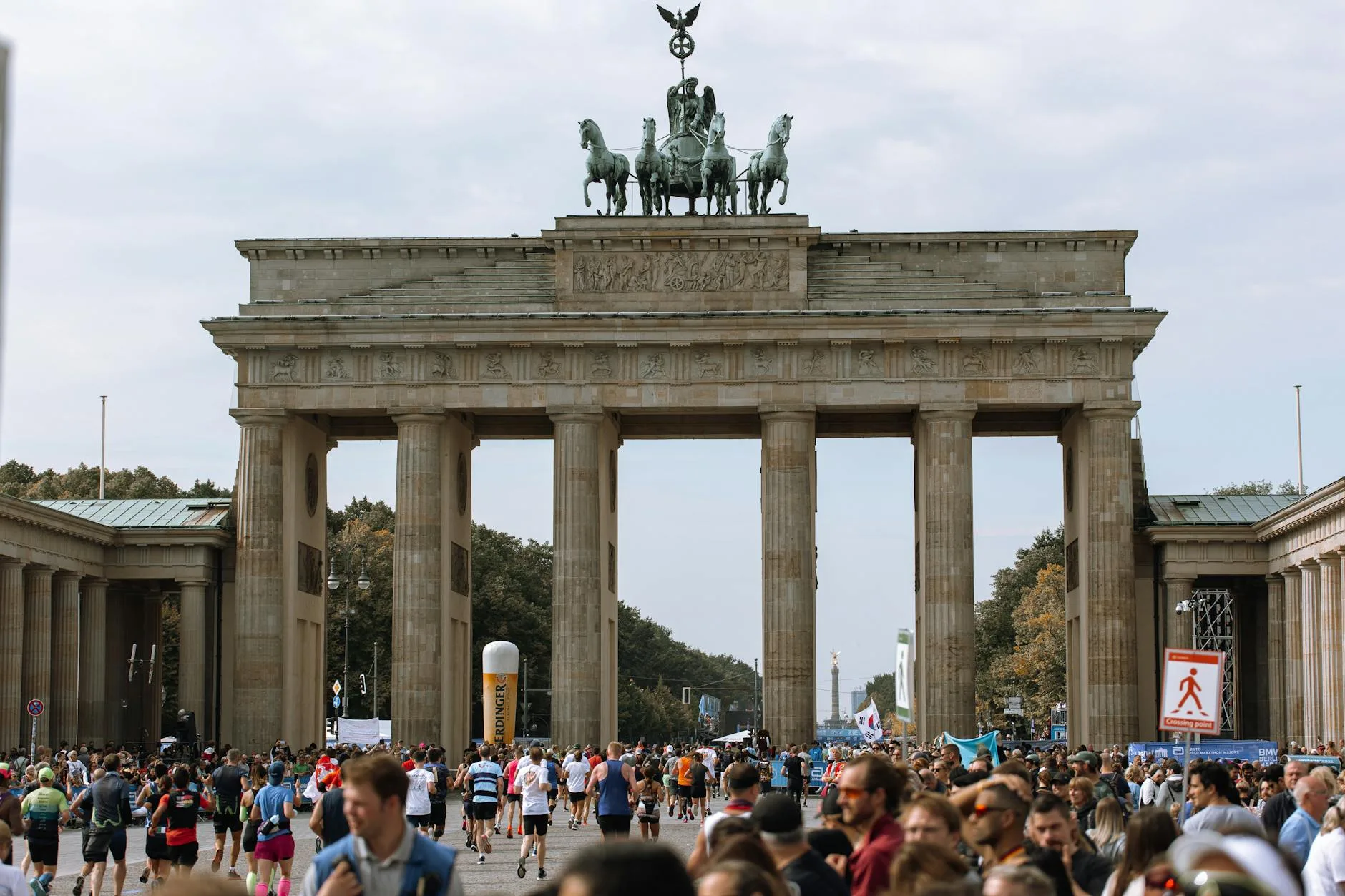
Photo by Eddson Lens on Pexels
You got a place in the Berlin Marathon. Maybe through the ballot, maybe via a tour operator, maybe you’re still refreshing the results page hoping your name is there. Either way, you’re thinking about running 42.2km through one of the world’s most iconic cities — and you want to know what you’re actually getting into.
Berlin is regularly cited as the fastest marathon course in the world. The course is flat, the September weather is usually cool enough to run well, and the crowd support through the city centre is extraordinary. That’s all true. But none of it matters if you arrive undertrained, go out too fast in the first 10km, or hit the wall at Kilometer 32 without a clue what to do. The course helps — it doesn’t carry you.
This guide is for the everyday runner taking on Berlin for the first time. Not the person chasing a 2:45. The person who has a job, a family, limited training hours, and a genuine goal of finishing — or maybe finishing in under 5 hours, or breaking 4:30. Here’s what you actually need to know.
How to get a Berlin Marathon entry
The BMW Berlin Marathon is one of the Abbott World Marathon Majors, which means getting a place is competitive. The main ballot opens in the autumn for the following year’s race (typically held on the last Sunday of September). Ballot acceptance rates have historically been around 10–15%, so don’t count on it.
Your realistic options:
- The public ballot — opens each autumn, results in spring. Apply through the official Berlin Marathon website. Free to enter, but low odds.
- Charity places — a smaller number than London, but some international charities and German organisations offer guaranteed entries with a fundraising commitment.
- Tour operators — companies like Sportsworld and Marathon Tours offer packages that include guaranteed entry plus accommodation. You’ll pay a premium, but for a first-timer who wants logistics handled, it’s often worth it.
- Good for Age — if you’ve run a qualifying time at a certified race within the past two years, you may qualify. Standards for 2026 sit around 3:50 for men and 4:15 for women (age-graded), but check the official site as these shift.
One practical note: if you’re travelling from outside Europe, the tour operator route often makes more sense than juggling flights, hotels and ballot stress separately.
What to expect from the Berlin course
The Berlin course is genuinely flat. From the start near the Tiergarten to the finish on Unter den Linden, the total elevation gain is roughly 100 metres — most of which comes from bridge crossings, not hills. There are no significant climbs. For a first-timer, that’s a real advantage.
The route takes you through Charlottenburg, Kreuzberg, Treptow, Neukölln, Schöneberg, and back into the city centre. You run through the Brandenburg Gate in the final kilometre. It is, objectively, spectacular.
What the flat course also does is remove your excuse for pacing badly. On a hilly course, slowing down on hills is rational. On Berlin’s course, if you’re slowing at 32km, it’s because you went out too hard in the first half. That’s one of the most common first-timer mistakes here, and it’s worth taking seriously.
Training: what you need, realistically
You don’t need to be running 70 miles a week to finish Berlin. Most first-timers do well on a plan that builds to a weekly long run of 32–35km (20–22 miles) and totals around 50–60km per week at peak. If you’re aiming for a specific time target, you’ll need consistent work, not just mileage.
A 16-week plan is the minimum realistic build if you’re already comfortably running 30–40km a week. If you’re starting from less, you need more runway — consider a 16-week marathon training plan for beginners as your structure, and be honest about where your fitness actually is.
Key training benchmarks before race day:
| Checkpoint | What you should be able to do |
|---|---|
| 12 weeks out | Run 25km comfortably at an easy pace |
| 8 weeks out | Complete a 30km long run without falling apart |
| 5 weeks out | Have at least two runs above 32km under your belt |
| 3 weeks out | Begin taper — reduce volume, not intensity |
| Race week | No runs longer than 8–10km. Trust the work you’ve done |
Your long runs should feel genuinely conversational — you should be able to speak in full sentences without gasping. If you can’t, you’re running them too fast. A common guide: add 60–90 seconds per kilometre onto your target race pace for your long runs.
Pacing strategy for first-timers
Berlin tempts you to go out fast. The flat course, the crowd noise at the start, the adrenaline of being there — all of it pushes you to bank time in the first half. Resist it.
For a first-timer, the goal is to get to 30km feeling like you still have something left. That means running the first half slightly slower than goal pace, not matching it. A 5:00/km runner aiming for 3:30 should target 5:05–5:10/km through the first 21km, then hold or slightly increase from there.
The wall — that catastrophic energy depletion around kilometres 30–35 — is not inevitable. But it becomes almost guaranteed if you run the first 21km at a pace that depletes glycogen reserves faster than your fuelling strategy can replenish them. Read about hitting the wall in a marathon and how to avoid it before you finalise your race plan.
A rough pace guide for common finish times:
| Target finish | Required pace (per km) | First half target pace |
|---|---|---|
| 4:00 | 5:41/km | 5:46–5:51/km |
| 4:30 | 6:24/km | 6:29–6:34/km |
| 5:00 | 7:06/km | 7:11–7:16/km |
| 5:30 | 7:49/km | 7:54–7:59/km |
These aren’t rigid — they’re a starting point. Your fitness, the weather on the day, and how well you’ve slept in the days before will all affect what’s actually achievable.
Fuelling and hydration on the course
Berlin has aid stations roughly every 5km, offering water and electrolyte drinks. There are also gel stations, but don’t rely on the course-supplied gels being the brand you’ve trained with. Practise fuelling in training using exactly what you plan to use on race day — gels, chews, whatever works for your stomach — because race day is a bad time to discover a sensitivity.
A basic fuelling framework for a 4–5 hour finish:
– Take a gel or equivalent carbohydrate every 40–45 minutes from around the 45-minute mark
– Aim for 30–60g of carbohydrate per hour, depending on your tolerance
– Drink water consistently rather than gulping large amounts at each station
– If it’s warm (above 17°C is genuinely warm for marathon racing), prioritise electrolytes, not just water
September in Berlin is typically 12–18°C at race time, which is close to ideal. But September can also deliver unexpected warmth, so check the forecast in the week before and adjust your hydration plan accordingly. According to research published via the British Journal of Sports Medicine, even mild dehydration of 2% body weight can impair performance meaningfully — and first-timers often underdrink early because they feel fine.
Berlin race day logistics
The Berlin Marathon is well-organised, but it’s enormous — around 47,000 runners. Knowing the logistics in advance saves you stress you don’t need.
Start area: The race starts near the Tiergarten park, with wave starts based on your predicted finish time. You’ll need to submit an estimated time when you register. Be honest — seeding yourself in a wave that’s too fast is uncomfortable for you and everyone around you.
Bag drop: Clearly marked and efficient. Drop bags are available near the start and collected post-finish. Use a clear bag if possible (some events require it — check the race guide).
Transport: The U-Bahn and S-Bahn run early on race day and the network is reliable. Stay central if you can — the finish line is near the Brandenburg Gate and easy to reach on foot if you’re close.
The finish: You’ll cross the line on Unter den Linden, just before the Brandenburg Gate. The finish area is spacious, with clear sections for medals, food, and reuniting with family. Have a meeting point agreed in advance — phone signal can be patchy with 47,000 runners and their supporters all in one area.
What to pack in your kit bag:
– Dry clothes, including a warm top and tracksuit bottoms
– Flip flops or loose shoes — your feet will be swollen
– Your post-race snack (the provided food is fine but if you have specific needs, bring your own)
– A foil blanket if you run cold post-race
The week before and taper anxiety
The taper — the three-week reduction in training volume before race day — is one of the strangest parts of marathon prep. Your legs might feel heavy, flat, or oddly tired even though you’re running less. Your brain will tell you that you haven’t done enough. You probably have.
Cut your weekly mileage by around 40% in week three before the race, 50–60% in the final week. Keep some faster running in — short efforts at race pace so your legs remember the feeling — but avoid any new hard sessions. Nothing you do in the final 10 days will improve your fitness. You’re just trying not to break yourself before the start.
The taper is covered in more detail in marathon taper week: what to expect and how to handle it — worth reading before you spiral.
On the day before the race: walk gently, stay off your feet where possible, eat familiar carbohydrate-rich food (pasta, rice, bread — whatever you normally eat), drink consistently throughout the day, and get to bed early even if you can’t sleep.
The Honest Takeaway
- Berlin is a legitimately great first marathon course. Flat, spectacular, and well-organised. But the course doesn’t run itself — your training and pacing decisions matter more than the conditions.
- Don’t start too fast. It sounds obvious. Everyone goes out too fast anyway. Add 5–10 seconds per kilometre to your target pace for the first 10km and thank yourself at kilometre 35.
- Practise everything in training — your gels, your race shoes, your kit, your nutrition timing. Nothing new on race day is not just a cliché; it’s protective.
- Build your training properly. A first marathon deserves at least 16 weeks of structured preparation. If you’re not there yet, the 16-week marathon training plan for beginners is a solid, realistic starting point.
- Enjoy it. You’re running through the middle of Berlin. When you cross the Brandenburg Gate, you will have earned that finish. Give yourself permission to feel it.
Next read: How to pace yourself in your first marathon