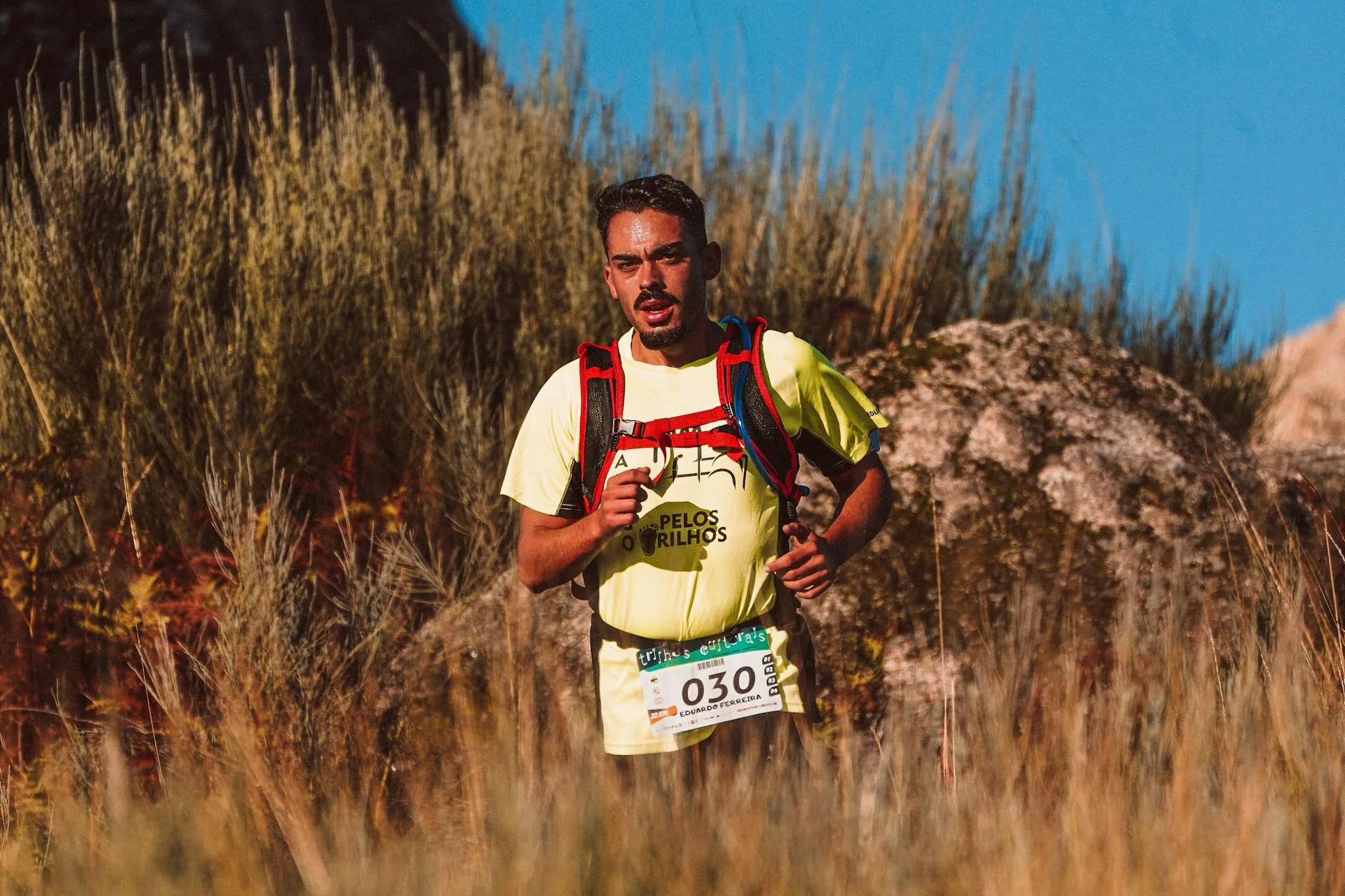
Photo by RUN 4 FFWPU on Pexels
You’ve signed up for a trail ultra, or maybe your long runs are pushing past 25km and aid stations are no longer a given. Either way, you’re at the point where pockets and a handheld bottle aren’t cutting it anymore. You need a running backpack — but the options are overwhelming, the prices are steep, and some packs you try will chafe you raw by kilometre 15.
This guide is for runners who are training seriously but practically. You’re not necessarily racing the UTMB. You might be doing your first 50K, training for a trail marathon, or just spending long Saturday mornings in the hills with no convenient café stop. The right pack changes everything. The wrong one ruins your run and sits in a drawer.
Here’s what to actually look for, what to ignore, and which packs are worth your money in 2026.
What capacity do you actually need?
This is where most people go wrong. They either buy a tiny 5-litre vest that can’t carry mandatory kit, or they show up to a 30K run with a 20-litre pack that pulls them backwards on every climb.
A rough guide:
- 5–8 litres: Fast-and-light training runs of 15–25km, minimal mandatory kit, warm conditions
- 10–12 litres: Longer training runs and short ultras (up to 50K), space for a layer, food, and first aid
- 15–20 litres: Multi-stage races, mountain ultras with serious mandatory kit lists, or cold-weather days where you’re carrying an extra base layer, waterproof trousers, and emergency gear
Most everyday runners doing long training runs and local ultras will live happily in the 10–12 litre range. It’s enough to carry 1.5–2 litres of water, a jacket, gels and real food, a phone, and a basic first aid kit — without the pack shifting around or pulling you off balance.
Soft flasks vs hydration bladder: which is better for running?
Both work. Both have drawbacks. Here’s the honest breakdown:
Soft flasks (typically 500ml) sit in the chest pockets of most running vests. You can drink without breaking stride, see how much fluid you have left, and refill quickly at checkpoints. The downside: you usually carry 1–1.5 litres total unless the pack has rear flask pockets too.
Hydration bladders (1.5–3 litres) sit in the back of the pack and feed a tube to your shoulder. You can carry more volume without stopping. The downsides: they’re harder to refill mid-run, they’re a pain to clean, and the tube can freeze in cold conditions.
For most ultras and long training runs, a combination works best — soft flasks up front for easy sipping, a small bladder or extra flask in the back for volume. Many modern vests are built exactly this way.
How to get the fit right (this matters more than the brand)
A running pack that fits badly is worse than no pack at all. Here’s what to check before you buy:
Check the torso sizing. Most brands (Salomon, Ultimate Direction, Osprey) offer S/M and M/L options based on chest circumference and torso length. Measure yourself. Don’t assume “medium” fits because it always has in other gear.
Check the chest and sternum straps. A good running vest should feel snug without restricting your breathing. The shoulder straps should not bounce. If the chest strap has to be yanked tight to stop the pack moving, the fit is wrong.
Test it loaded. Always try a running pack with at least 1.5 litres of water in it. Empty, almost anything feels fine. Full, a poorly fitting pack will shift left and right with every stride and start to pull on your shoulders after 10km.
Look at the pocket placement. Can you reach the chest pockets without taking the pack off? Can you get to the main zip pocket without help? Front accessibility matters enormously on long runs when your hands are cold or you’re mid-descent and don’t want to stop.
Running pack comparison: top picks for 2026
Here’s an honest breakdown of packs worth considering across different use cases and budgets.
| Pack | Capacity | Best For | Hydration | Approx Price | Notes |
|---|---|---|---|---|---|
| Salomon Active Skin 8 | 8L | Fast training runs, short trails | 2× 500ml flasks (included) | £105 | Excellent fit system, limited main compartment |
| Salomon Sense Pro 10 | 10L | Trail marathons, 50K ultras | 2× 500ml flasks + bladder compatible | £120 | One of the best fits on the market |
| Ultimate Direction Fastpack 20 | 20L | Multi-stage, mountain ultras | Bladder compatible | £165 | More rucksack than vest, slower access |
| Osprey Dyna 6 / Duro 6 | 6L | Shorter runs, race day only | 1.5L reservoir included | £95 | Women’s (Dyna) and men’s (Duro) specific fit |
| Nathan Pinnacle 12L | 12L | Long training runs, first ultras | 2L bladder included | £100 | Good value, slightly heavier than Salomon |
| Black Diamond Distance 15 | 15L | Bigger mountain days, mandatory kit | Bladder compatible | £130 | Bomber build, less running-specific feel |
Prices are approximate and vary by retailer. Always check current listings.
If you’re just starting out with longer runs and want one pack that’ll cover 25km training days and your first trail ultra, the Salomon Sense Pro 10 or the Nathan Pinnacle 12L are the most practical choices for most runners. The Salomon costs more but the fit is genuinely excellent — if you’ve ever had a vest bounce or chafe, the S-Lab-derived shoulder system makes a real difference.
What to look for in ultra-mandatory kit compliance
Many ultras — particularly in the UK and Europe — require you to carry mandatory kit: a waterproof jacket with sealed seams, a space blanket, whistle, first aid kit, and in some cases a full waterproof set, headtorch, and extra food. Before you buy a pack, check your target race’s mandatory kit list.
The Ultra Trail du Mont Blanc (UTMB) publishes a detailed mandatory kit list that’s a good benchmark for European mountain ultras, even if you’re not racing it. UK races like the Lakeland 100 have similar requirements.
The key question: does the pack have enough accessible, organised space to meet the kit list? A 6-litre vest that works beautifully for a fast 30K becomes a liability if you’re stuffing a full waterproof set and emergency bivvy into it.
Chafing, hot spots, and the small details that matter on hour six
Chafing from a running pack almost always comes down to three things: incorrect fit, wearing the wrong clothing underneath, or a pack that isn’t designed for sustained running movement.
What helps:
- Wear a fitted technical top (not a loose cotton tee) under any vest. Fabric bunching under the straps is a common cause of chafing.
- Apply Body Glide or Vaseline to known hot spots before long runs — collarbone, upper back, and the sides of your torso where the pack contacts your skin.
- Check all the buckles and straps are actually done up. Loose straps flap, create friction, and shift your load.
- On runs over 3 hours, stop at the 90-minute mark and adjust the fit. Packs tend to loosen as you warm up and the fabric stretches slightly.
If you’re racing in cold or wet conditions, a good waterproof layer underneath changes how a vest sits. Test your race-day kit setup on a long training run before the event — not on race morning. This links to a broader point about kit choices for long trail runs, where layering decisions interact with how your pack fits and moves.
How to organise your pack for a long run or ultra
A full pack that’s badly organised is almost as bad as the wrong pack. Here’s a simple system:
Front pockets (chest): Soft flasks, gels, phone, lip balm, gloves. Anything you need to access without stopping.
Hip belt pockets (if present): More gels, headtorch, wipes. Small but high-access.
Main compartment (top layer): Emergency kit, space blanket, first aid. You don’t want it mid-run, but you need to find it fast if you do.
Main compartment (bottom): Extra layers, food, bladder if using one. Heavier items low and close to your back keep the centre of gravity better on descents.
Running packs aren’t bottomless — being ruthless about what you carry matters. Fuelling strategy for long efforts affects how much food weight you’re carrying too; if you’re relying on gels, you’ll pack lighter than if you’re carrying real food for a 10-hour day.
And check your pack weight before you leave. Most 10-litre packs fully loaded for a 50K sit between 2.5–4kg. That’s not nothing. You’ll feel it on hour six.
The honest takeaway
-
Capacity first, brand second. Get the right size for your distance and mandatory kit requirements before worrying about which logo is on the shoulder strap. For most long training runs and first ultras, 10–12 litres is the sweet spot.
-
Fit trumps features. A £90 pack that fits you perfectly will outperform a £180 pack that bounces. Always try loaded, and if you can, run in it before committing.
-
The soft flask + bladder combo works for most distances. Soft flasks up front for regular sipping, a rear bladder or extra flask for volume on longer efforts.
-
Test your full kit setup at least once before race day. Chafing, poor organisation, and pack shift are all fixable problems — but only if you discover them on a training run, not at kilometre 30 of your A-race.
-
Check your race’s mandatory kit list before buying. A vest that works for fast trail running may not fit the mandatory gear for a mountain ultra. Know what you need to carry before you decide on capacity.
Running with a well-fitted pack eventually becomes invisible — you stop noticing it’s there. Getting to that point takes some trial and error. But it’s worth it. Long days in the hills with the right kit on your back are some of the best runs you’ll ever do.
Next read: How to run a trail race your first time: a practical guide