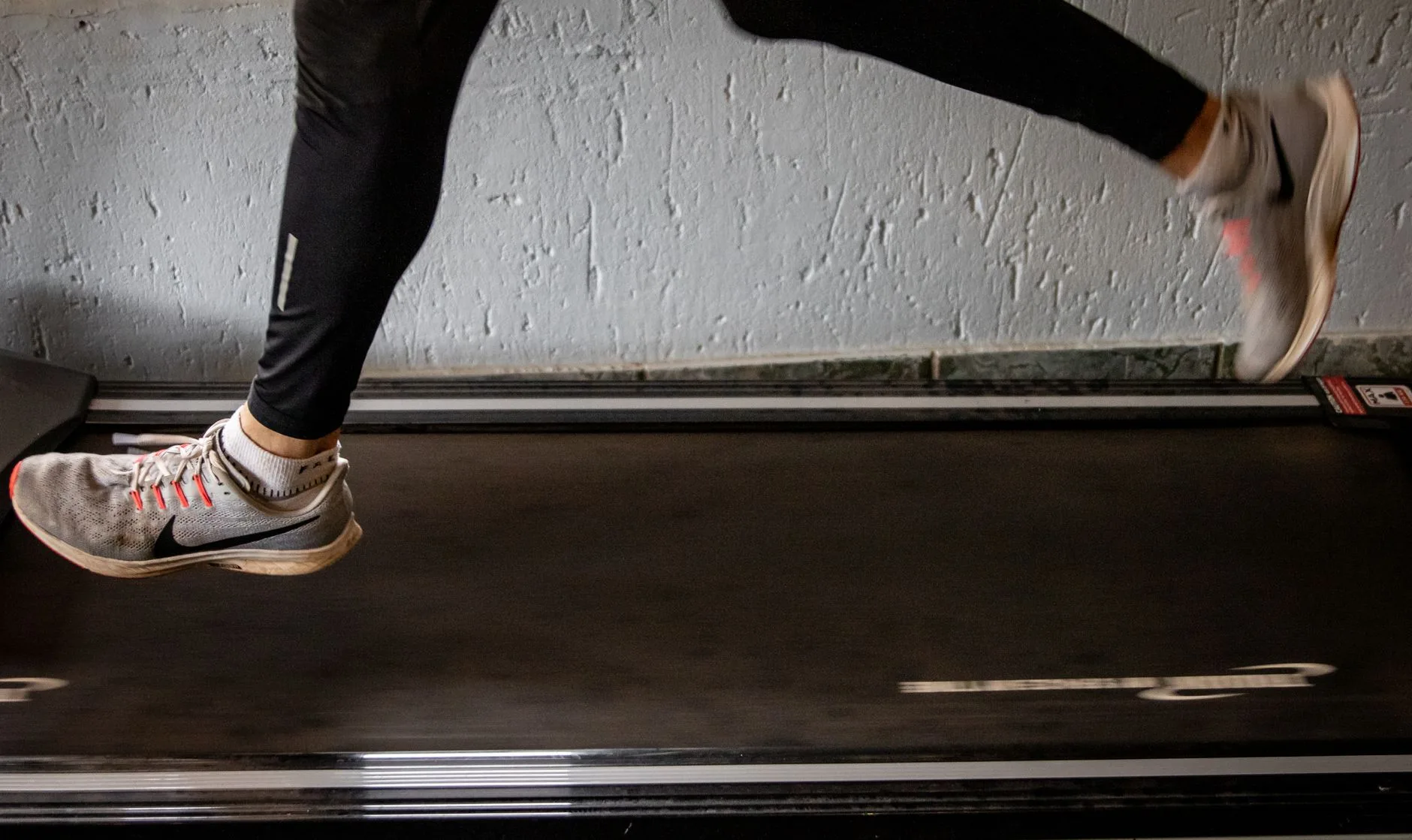
Photo by Magda Ehlers on Pexels
The treadmill vs outdoor running debate generates strong opinions, often along the lines of “real runners run outside.” This is mostly tribalism. Both forms of running are valid, both produce genuine training benefits, and most serious recreational runners use both depending on circumstances.
The more useful question is: when does each work better for you?
What the Research Shows
Studies comparing treadmill and outdoor running have found:
Physiological similarity: Heart rate, oxygen consumption, and perceived effort are very similar at the same speed on a treadmill and outdoors. Setting the treadmill gradient to 1% effectively accounts for the lack of air resistance and matches outdoor energy expenditure quite closely.
Biomechanical differences: There are measurable differences in running mechanics on a treadmill — shorter stride length, different ground contact time, slightly altered muscle activation. These differences are small for most recreational runners but become relevant if you’re training exclusively on a treadmill and then racing outdoors.
Mental difficulty: Most studies find that outdoor running feels mentally easier than treadmill running at the same pace, because of the changing environment, visual stimulation, and the natural variation in terrain and effort.
The Case for Outdoor Running
Stronger race preparation: If you’re training for road races or trail events, outdoor running is more specific. You build the proprioception (body awareness on uneven surfaces) and wind resistance adaptation that treadmill running doesn’t provide.
Mental engagement: The changing environment, fresh air, and natural variation of outdoor running is easier to sustain mentally for most people. A 60-minute outdoor run typically feels shorter than 60 minutes on a treadmill.
Free: No gym membership required. An outdoor running route costs nothing.
Vitamin D and mood: The combination of sunlight, outdoor environment, and exercise produces measurable mood benefits that indoor treadmill running doesn’t fully replicate.
Terrain variety: Trails, paths, hills, and roads engage muscles differently and more completely than the uniform surface of a treadmill belt.
The Case for Treadmill Running
Weather independence: This is the primary practical advantage. Running in ice, heavy snow, or extreme cold carries genuine injury risk (falls on ice, frostbite at extremes). The treadmill removes weather as a barrier to training consistency.
Precise pace and incline control: Treadmills allow you to set and hold exact paces — useful for pace-specific training sessions where the goal is running at a precise speed. Interval training is particularly well-suited to a treadmill: you set the pace and the machine holds it for you.
Reduced joint impact: The cushioned treadmill belt absorbs more impact than pavement. For runners coming back from injury or with joint sensitivity, the treadmill is a genuinely lower-impact option.
Safety at night: Running outdoors in the dark carries real risks — poor visibility, traffic, uneven surfaces. The treadmill allows effective evening or early morning training without these concerns.
Accessibility: For people without safe or convenient outdoor running routes (urban areas with heavy traffic, areas without pavements, certain living situations), the treadmill may be the most practical option.
When Treadmills Make Particular Sense
- Winter maintenance running: When outdoor conditions are genuinely poor (ice, snow, extreme cold), the treadmill keeps your training consistent without injury risk
- Interval and pace work: Especially useful for beginners learning what specific paces feel like, or for runners doing structured workouts where exact pacing matters
- Injury rehabilitation: Lower impact allows running through minor injuries that pavement running would aggravate
- Gym-based training: If you’re already gym-going and fitting running in, the treadmill is the practical choice
The 1% Gradient Rule
To make treadmill running equivalent to outdoor running in terms of effort, set the gradient to 1%. This accounts for the lack of air resistance on the treadmill belt. At 0% gradient, you’re running slightly easier than the equivalent outdoor pace.
For most easy runs, this doesn’t matter much. For sessions where you’re training to a specific outdoor pace (tempo runs, intervals), running on a 1% gradient is more accurate.
What Most Experienced Runners Do
Most recreational runners use a mix: outdoor running for the majority of training, treadmill for winter maintenance, bad weather, and occasional interval sessions. There’s no strong reason to commit exclusively to either.
If you run on a treadmill regularly, include outdoor runs at least once a week to maintain the biomechanical adaptations needed for road running. Treadmill-only training for several months, then a long outdoor race, can result in unexpected fatigue and form breakdown.
Summary
Neither treadmill nor outdoor running is categorically better — the right choice depends on conditions, goals, and access:
- Outdoor running is better for race preparation and mental engagement — prioritise it when conditions allow
- Treadmill running is the right call in genuinely dangerous conditions (ice, storm) and for precise pace-controlled sessions
- Set the gradient to 1% on the treadmill to accurately replicate outdoor effort
- Mix both if you can — the biomechanical variety of outdoor running combined with treadmill consistency works well for most runners
- Don’t feel guilty about using a treadmill — training consistency matters more than training surface
Next read: How to run in bad weather: race day tips