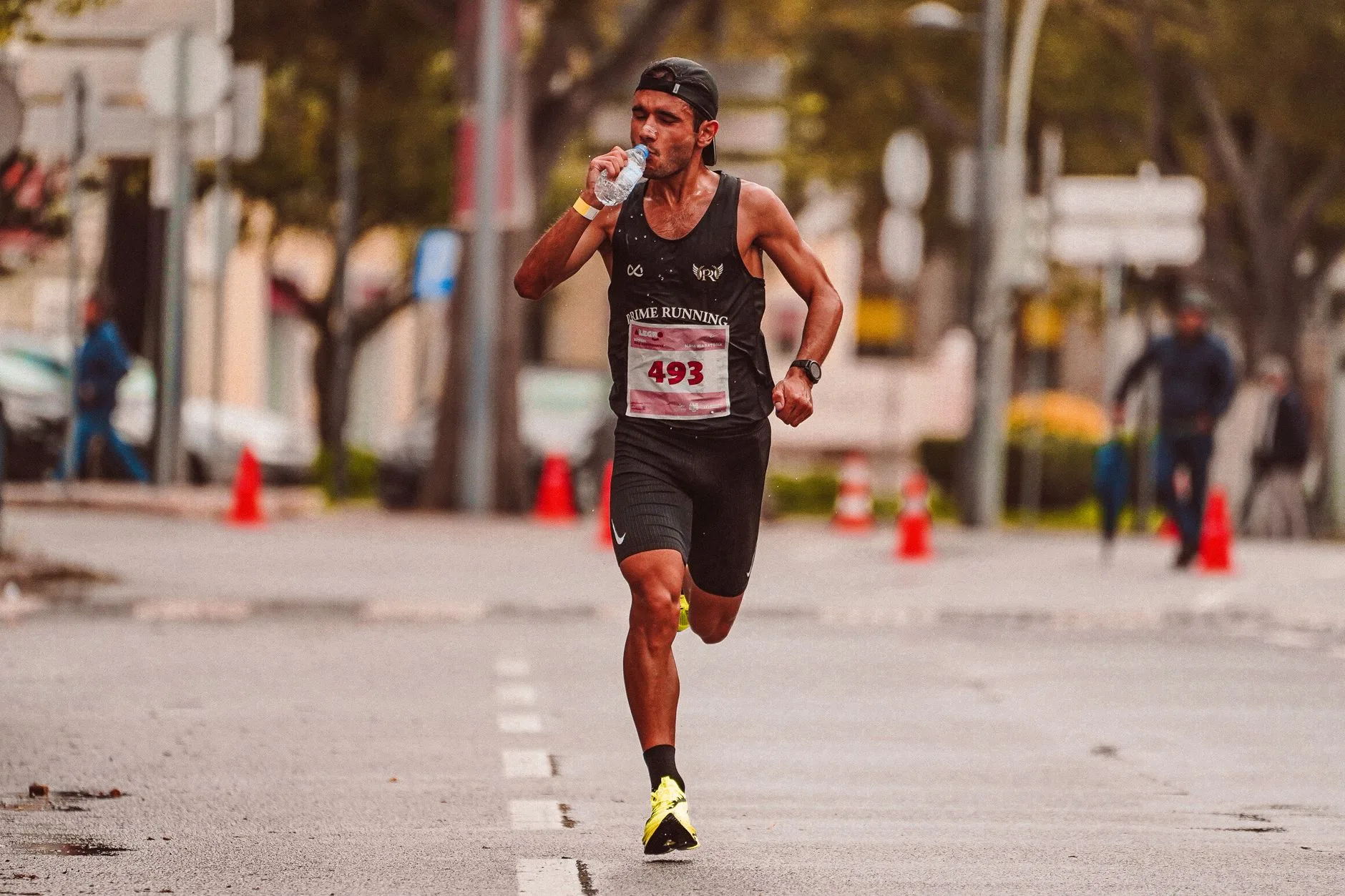
Photo by RUN 4 FFWPU on Pexels
Marathon nutrition on race day is one of the most consequential decisions you’ll make — and one of the most commonly got wrong. “Hitting the wall” (glycogen depletion causing a dramatic drop in pace, usually around miles 18–22) is almost always a fuelling failure rather than a fitness failure.
This guide covers the three phases of race day nutrition: the night before, race morning, and fuelling during the run.
Why Marathon Fuelling Is Different
The human body can store approximately 1,500–2,000 calories worth of glycogen (stored carbohydrate) in the muscles and liver. A marathon burns approximately 2,500–3,500 calories. The maths is unambiguous: you will exhaust glycogen stores before the finish line unless you fuel during the race.
The solution is to start the race with maximum glycogen (carbohydrate loading), top up continuously during the race (exogenous carbohydrates from gels/drinks), and practice this in training so the strategy works on race day.
The Night Before
Carbohydrate load:
The evening before the marathon, eat a high-carbohydrate meal that is familiar, easy to digest, and doesn’t contain excessive fibre or fat (which slow digestion and can cause GI distress the next morning).
Good options: pasta with a simple tomato sauce, rice dishes, jacket potato, bread.
Portion size: Larger than normal, but not to the point of discomfort. Some runners carb load over 2–3 days before the race by increasing carbohydrate intake across all meals — this is more effective than a single large meal the night before.
Avoid: New foods, heavy spicy dishes, excessive fibre, heavy fat loads (cheese-heavy pasta, creamy sauces), excessive alcohol. The night before a marathon is not the time for experimentation.
Hydration: Drink consistently through the day — clear or light yellow urine indicates good hydration. Don’t try to over-hydrate; the kidneys can only process a litre per hour, and excess water intake can cause hyponatraemia (dangerous low sodium, which is a real risk during long endurance events).
Race Morning
Timing: Eat 2–3 hours before the start. This allows enough time for digestion without running on an empty stomach.
What to eat:
– Oats or porridge with banana
– Toast with peanut butter and honey
– Bagel with jam
– Rice or pasta if you’ve eaten these on long training runs
Quantity: 300–500 calories of carbohydrate-rich food. Not so much that you feel heavy at the start.
Coffee: If you drink coffee regularly, have your usual amount — stopping before a race can cause withdrawal headaches. Caffeine is a genuine ergogenic aid for endurance performance (evidence rating: strong). However, first-time marathon runners who don’t regularly consume caffeine should not experiment with it on race day.
No new foods: Race morning is not the time for anything you haven’t eaten before a long training run. GI problems during a marathon are extremely unpleasant and completely avoidable.
Final top-up: If the race starts more than 1.5 hours after your main breakfast, a small snack (banana, energy bar) 45–60 minutes before the start helps maintain blood sugar.
Fuelling During the Race
When to start: Begin fuelling before you feel hungry — ideally from 45–60 minutes into the race. By the time you feel a need for fuel, you’re already depleted.
How much: 30–60g of carbohydrate per hour. Some well-trained runners can process up to 90g per hour with training (using multiple carbohydrate sources). For most first-timers, 30–45g per hour is a realistic target.
What to take:
– Energy gels: Most contain 20–25g of carbohydrate per sachet. Take one every 45–60 minutes with water (not sports drink — double-dosing sugar sources can cause GI distress).
– Sports drinks: If the race provides sports drinks at aid stations, these contribute carbohydrates — factor this into your gel timing.
– Real food alternatives: Some runners prefer dates, banana pieces, or malt loaf — all work, but require careful packaging and slower digestion than gels.
Water: Take water at every aid station, even if you don’t feel thirsty. The goal is approximately 400–800ml per hour depending on conditions and sweat rate.
Electrolytes: Sodium is the critical electrolyte lost in sweat. Many energy gels contain sodium; electrolyte tablets (High5 Zero, SiS Hydro) dissolved in water or sports drinks provide additional sodium. Don’t rely on water alone for a race over 2 hours — low sodium (hyponatraemia) is more dangerous than dehydration.
Race Day Gel Timing (Example)
For a 4-hour marathon (24 minutes per mile):
- Mile 6 (approx. 1 hour): Gel 1 + water
- Mile 12 (approx. 2 hours): Gel 2 + water
- Mile 16 (approx. 2h40m): Gel 3 + water
- Mile 20 (approx. 3h20m): Gel 4 + water (optional caffeine gel here)
- Mile 22 (approx. 3h40m): Optional final gel
Adjust to your expected finishing time and what worked in training.
Caffeine Gels
Many energy gels contain 75–100mg of caffeine. Caffeine significantly reduces perceived effort and improves endurance performance — the evidence is strong. Caffeine gels are best timed for the later miles when effort is highest and cognitive fatigue is greatest.
Take caffeine only if you’ve tested it in training. Caffeine can cause GI distress for some runners, particularly at high intensities.
Summary
Marathon nutrition is a skill that requires practice, not improvisation:
- Carbohydrate load the night before with a familiar, easy-to-digest high-carb meal
- Eat 2–3 hours before the start — 300–500 calories of familiar food
- Start fuelling at 45–60 minutes into the race — before you feel depleted
- Take 30–60g of carbohydrate per hour — one gel every 45–60 minutes with water
- Practice your race nutrition in training — gels, timing, and quantities should be tested on long runs, not for the first time on race day