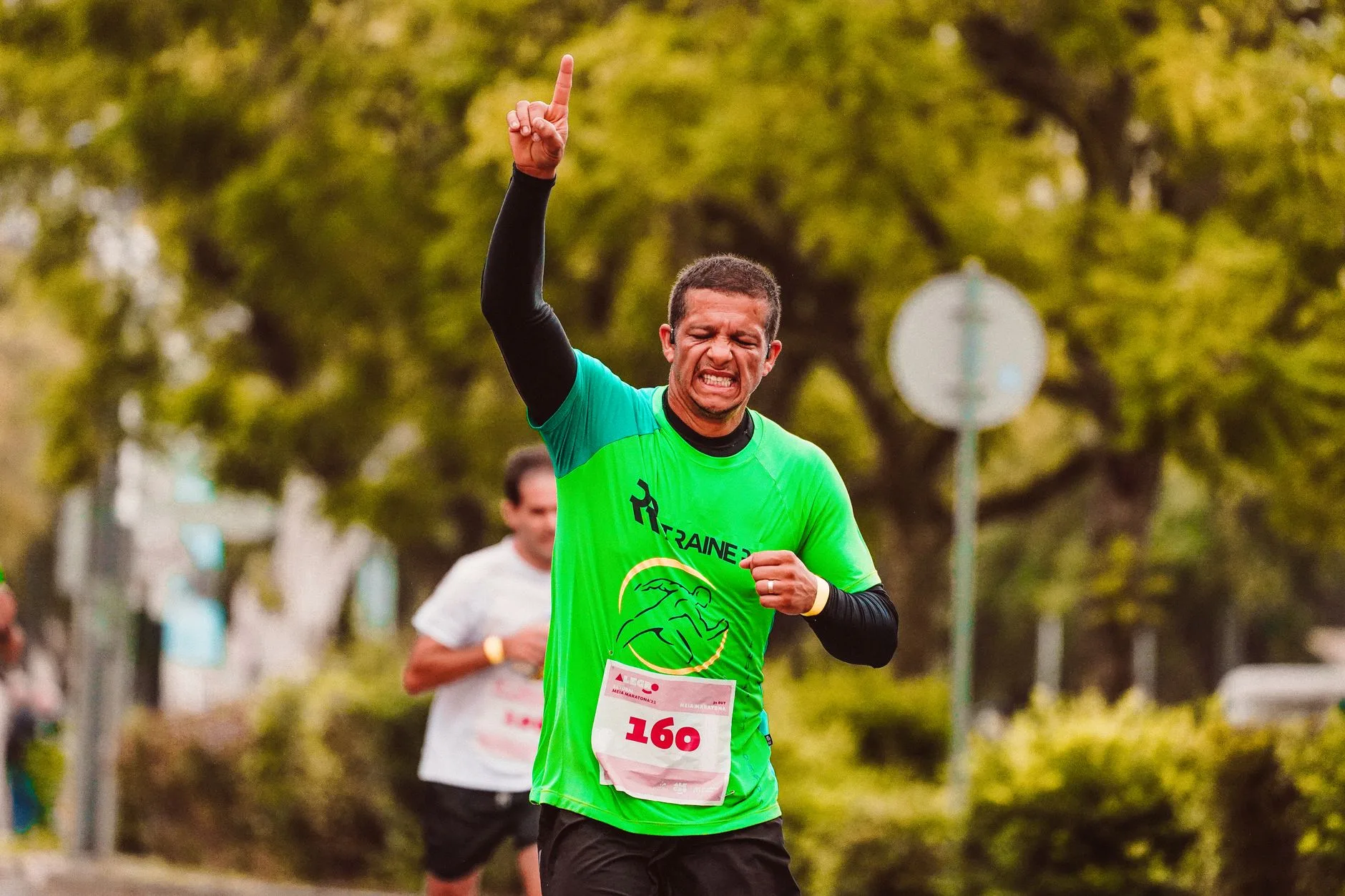
Photo by RUN 4 FFWPU on Pexels
Most runners who “hit the wall” in a marathon — that sudden collapse of pace and energy that happens around mile 18–20 — do so because of nutrition failures that happened well before the starting gun. Marathon fuelling is not just about what you eat during the race; it’s about what you do in the 3 days before, on race morning, and at precisely timed intervals throughout.
This guide covers the full nutrition strategy from pre-race carbohydrate loading to the post-race recovery meal.
Why Marathon Nutrition Is Different
Your body stores approximately 400–500g of glycogen (stored carbohydrate) in your muscles and liver — enough to fuel roughly 18–20 miles at marathon pace. When those stores run out, your body must rely increasingly on fat for energy, which is a much slower and less efficient fuel source for the pace required in a marathon. This transition is what causes the wall.
The goal of marathon nutrition is to: (1) maximise glycogen stores before the race, (2) sustain them during the race, and (3) maintain hydration and electrolytes throughout.
The Week Before: Carbohydrate Loading
Days 7–4 before the race: Normal eating. Continue your taper (reduced mileage), maintain protein intake to support muscle repair, and eat a balanced diet. No dramatic changes yet.
Days 3–1 before the race (carbohydrate loading):
Increase your carbohydrate intake to approximately 8–12g of carbohydrate per kilogram of body weight per day. For an 80kg runner, that’s 640–960g of carbohydrate daily — roughly double normal intake.
This sounds like a lot. It is. Carbohydrate loading is not the same as overeating — it’s shifting the macronutrient balance heavily toward carbohydrate while keeping total calorie intake roughly stable by reducing fat and moderately reducing protein.
What to eat:
– White rice, pasta, bread (white rather than wholegrain — easier to digest in large quantities)
– Potatoes and sweet potatoes
– Oats, cereals
– Fruit, fruit juice, sports drinks
– Banana, dates, rice cakes
What to reduce:
– High-fat foods (reduce, don’t eliminate)
– Very high-fibre foods — these cause GI discomfort and extra bathroom trips on race day
You will gain 1–3kg during carbohydrate loading. This is water weight stored with glycogen (each gram of glycogen is stored with approximately 3g of water). This is expected and correct — don’t panic.
The Day Before the Race
- Eat your largest carbohydrate-rich meal at lunch, not dinner. Eating heavily at dinner risks GI distress on race morning.
- A moderate dinner — pasta, rice, bread, simple proteins — is fine. Don’t deviate from familiar foods.
- Stay hydrated throughout the day but don’t overhydrate. Drink enough that your urine is pale yellow.
- No alcohol.
- Get a familiar dinner, not an exciting one. Race eve is not the night to try a new restaurant.
Race Morning
Breakfast: 2–3 hours before the start. Aim for 1–4g of carbohydrate per kilogram of body weight. For most runners: a bowl of porridge with banana and honey, or toast with peanut butter and jam, or a bagel with peanut butter.
Do not try anything new. Race morning breakfast should be something you’ve eaten before long runs in training.
30–60 minutes before the start: Some runners have a small additional carbohydrate snack — a banana, a gel, or an energy bar. This tops up blood glucose but should be small to avoid GI distress at the gun.
Hydration: Drink 400–600ml of water or electrolyte drink in the 2 hours before the race. Stop well-hydrated but not over-full.
During the Race: Fuelling Strategy
Start early: Don’t wait until you feel depleted to fuel. By the time you feel energy draining, glycogen is already critically low. Take the first gel at mile 4–5, before your body has asked for it.
Timing: 1 gel every 30–45 minutes throughout the race. For a 4-hour marathon, this means 5–6 gels. For a 3-hour marathon, 4–5 gels.
Carbohydrate target: 60–90g per hour. Most standard gels provide 20–25g. You may also be taking sports drinks at aid stations — account for this in your total.
Sample fuelling plan for a 4-hour marathon:
– Mile 5: Gel 1
– Mile 9: Gel 2
– Mile 13: Gel 3
– Mile 17: Gel 4
– Mile 21: Gel 5
– Mile 24: Optional final gel or sip of energy drink
Always take gels with water — not sports drink — unless using an isotonic gel (like SiS Go). Taking a gel with a sports drink provides too much carbohydrate at once and can cause nausea.
Electrolytes: Sodium loss through sweat causes cramping and fatigue. Use electrolyte tablets in your water bottle or take electrolyte gels alternating with standard gels from mile 10 onward.
Caffeine as a Performance Aid
Caffeine is one of the most evidence-supported ergogenic aids in distance running. It reduces perceived effort, delays fatigue, and improves mental focus. Most major gel brands offer caffeinated versions.
Recommended timing: one caffeinated gel (typically 75–100mg caffeine) at mile 16–18 — when fatigue is building but you still have meaningful distance remaining. Taking caffeine too early reduces its effectiveness; taking it too late means it peaks after you’ve finished.
Don’t use caffeine gels in a race if you haven’t practiced with them in training.
Post-Race Recovery Nutrition
Immediately after finishing: A sports drink or chocolate milk provides carbohydrate and protein simultaneously. The first 30–60 minutes post-race is the window of fastest glycogen replenishment.
Within 2 hours: A proper meal with significant carbohydrate and protein. Your body is in a state of accelerated absorption — nutrients taken in this window are used more efficiently for recovery than the same meal 4 hours later.
Days 1–3 post-marathon: Continue eating more than usual — your body’s repair processes run at elevated rate for several days. Protein is particularly important for muscle repair; continue adequate carbohydrate to replenish glycogen.
Summary
Marathon nutrition is as important as marathon training:
- Carbohydrate load for 3 days before the race — 8–12g of carbohydrate per kg of body weight, from easy-to-digest sources
- Eat your pre-race breakfast 2–3 hours before the start — familiar foods, 1–4g carbohydrate per kg
- Start fuelling at mile 4–5, not when you feel depleted — every 30–45 minutes throughout
- Plan for 60–90g of carbohydrate per hour — typically 3–4 gels per hour depending on size
- Practice your entire race-day nutrition plan in training — no gel brands, timing, or flavours should be new on race day
Next read: What to eat on long runs: nutrition guide