Photo by Kampus Production on Pexels
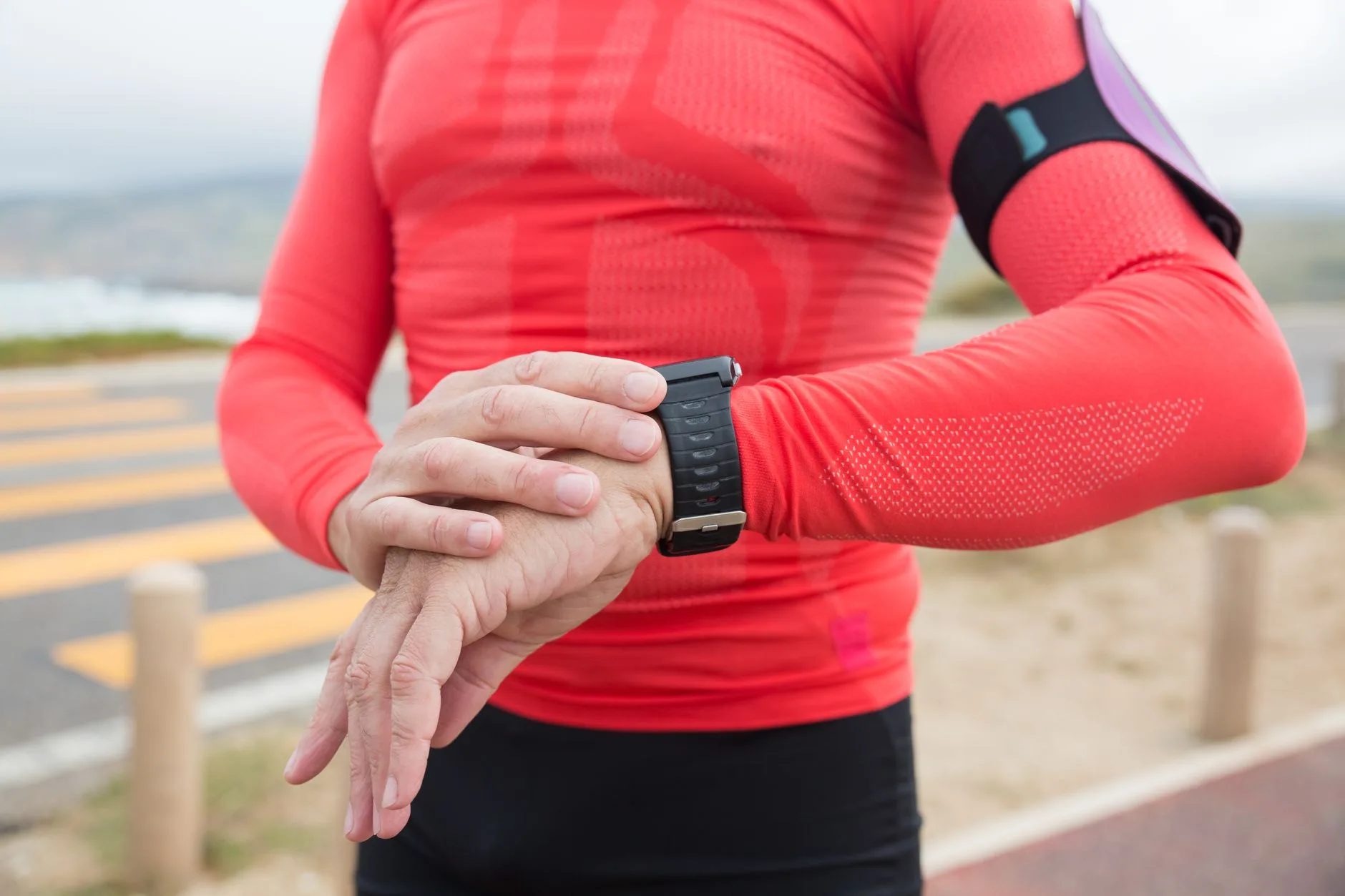
A GPS running watch tracks pace, distance, time, and heart rate automatically — no phone required. For beginner runners, it removes the friction of tracking runs manually and provides immediate feedback on effort and pace that helps you train smarter from the start.
You don’t need to spend £400 to get a useful watch. Here’s what’s worth buying at every budget.
What to Look For
GPS accuracy: All watches listed use GPS for distance and pace tracking. Quality varies — cheaper watches can drift by 5–10% on distance; better watches are accurate within 1–2%.
Heart rate monitor: Wrist-based optical heart rate is standard. Accurate enough for zone training at easy to moderate effort; less reliable at high intensity (a chest strap is more accurate for interval sessions).
Battery life: Ranges from 5 hours (basic fitness trackers) to 50+ hours (ultra watches). For most beginner runners, 10–20 hours GPS battery covers any session.
Sync and app: Garmin Connect, Apple Fitness, and Polar Flow are the main ecosystems. All sync automatically with Strava. Choose based on phone ecosystem (Apple Watch with iPhone; Garmin or Polar with Android or iPhone).
Best Running Watches for Beginners in the UK
Budget (Under £100): Garmin Forerunner 55
– Price: £100–130
– Battery: 20 hours GPS
– Features: GPS, wrist heart rate, basic training plans, recovery advisor
– Best for: Beginners who want a proper running watch without overspending
The Forerunner 55 is Garmin’s entry-level running watch and is genuinely impressive at this price. It tracks GPS distance and pace accurately, monitors heart rate, syncs with Garmin Connect (and Strava), and includes suggested daily workouts based on your fitness level. Excellent first running watch.
Budget (Under £80): Polar Pacer
– Price: £80–100
– Battery: 35 hours GPS
– Features: GPS, wrist heart rate, running power, training load
– Best for: Runners who want a longer battery life and the Polar ecosystem
The Polar Pacer punches above its price point — 35-hour GPS battery, running power metrics (how much effort you’re producing), and the excellent Polar Flow app. Lacks some smartwatch features (no notifications) but is outstanding as a pure running watch.
Mid-Range (£150–200): Garmin Forerunner 165
– Price: £170–200
– Battery: 19 hours GPS
– Features: GPS, AMOLED display, full colour maps, HRV status, race predictor
– Best for: Beginners who want a clear display and smarter recovery features
The Forerunner 165 has a bright AMOLED colour screen — much easier to read at a glance than older LED displays. Adds HRV (heart rate variability) status for morning readiness checks, and race time predictor based on your training. A significant step up in usability.
Mid-Range (£200–250): Garmin Forerunner 265
– Price: £250–290
– Battery: 24 hours GPS
– Features: GPS, AMOLED, training readiness, multi-sport, Body Battery
– Best for: Runners who want the full Garmin ecosystem and are likely to stay with the sport
Substantial step up in features — Body Battery energy monitoring, training readiness scores, and a comprehensive training load analysis that tells you whether you’re building fitness, maintaining, or overtraining. Overkill for pure beginners but worth considering if you plan to run seriously long-term.
Apple Users: Apple Watch Series 10 / SE
– Series 10: £400+
– Watch SE: £229
– Best for: iPhone users who want watch/phone integration and aren’t primarily runners
The Apple Watch SE is a reasonable running watch for iPhone users — GPS, heart rate, Strava sync, and the full Apple ecosystem. GPS accuracy and battery life (18 hours mixed use; 8 hours pure GPS) are inferior to dedicated running watches at the same price. The Series 10 improves on both. If running is your primary activity, a dedicated Garmin or Polar offers better running metrics for less money.
Do You Actually Need a Running Watch?
For many beginners: no. A free app on your phone (Strava, Nike Run Club, Couch to 5K) does most of what a watch does, and running with your phone in a running belt or armband is practical for shorter distances.
A running watch adds value if:
– You don’t want to carry your phone (safety risk, weight, inconvenience)
– You want wrist-based heart rate monitoring during runs
– You plan to run seriously long-term
A watch is not necessary to get started — start with your phone and upgrade once running is an established habit.
Comparison Table
| Watch | Price | Battery | Best for |
|---|---|---|---|
| Garmin Forerunner 55 | £100–130 | 20hr GPS | Best value entry |
| Polar Pacer | £80–100 | 35hr GPS | Budget, long battery |
| Garmin Forerunner 165 | £170–200 | 19hr GPS | Clear display, smarter insights |
| Garmin Forerunner 265 | £250–290 | 24hr GPS | Serious runner, full features |
| Apple Watch SE | £229 | 8hr GPS | iPhone ecosystem |
Summary
Best running watches for beginners in the UK:
- Garmin Forerunner 55 is the best starting point — genuinely capable running watch at an accessible price; Garmin’s ecosystem is the best in the category
- Polar Pacer is the best value for pure runners — 35-hour GPS battery and running power metrics at under £100 is remarkable
- You don’t need a watch to start running — a phone with Strava or Nike Run Club is entirely sufficient for the first months
- Apple Watch SE is the right choice only for iPhone users who want everything integrated — for pure running, a dedicated Garmin offers more for less
- Buy from a retailer with a returns policy — fit and comfort are individual; what works on a display stand may not work on your wrist for 5km
Next read: Best running apps for beginners UK