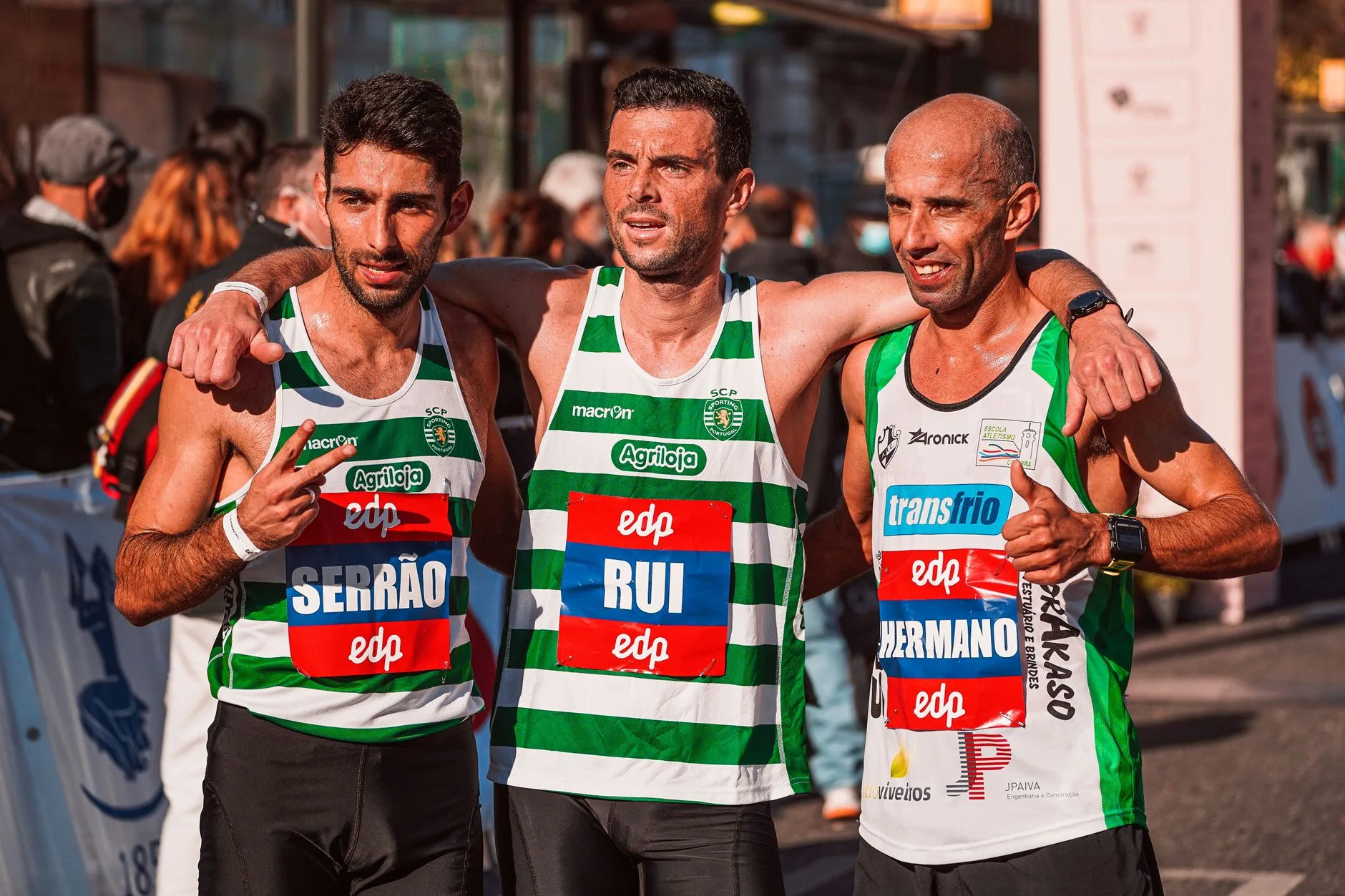
Photo by RUN 4 FFWPU on Pexels
It’s Tuesday. Three days after the marathon. Your legs have mostly stopped aching, the medal is hanging off a door handle somewhere, and you should feel proud — you finished 26.2 miles, something most people never attempt. Instead you feel flat. Bored. Slightly lost. Maybe even a bit sad, in a way that doesn’t quite make sense given what you just achieved.
This is post-marathon blues, and it’s far more common than the finish-line photos suggest. You spent 16 or 18 weeks with a single, all-consuming focus — every long run, every early alarm, every skipped pint had a purpose. Then the purpose vanished in about four hours and 21 minutes. Nobody warns you about the gap that leaves.
This isn’t weakness, and it isn’t ingratitude for what you accomplished. It’s a predictable comedown, and there are concrete things you can do about it — starting this week.
Why it happens (it’s not just “in your head”)
There’s a physiological piece to this. Marathon training raises your cortisol and adrenaline output for months, and race day itself is a huge hormonal spike — adrenaline, endorphins, dopamine, all firing at once. When that stops abruptly, your body has to recalibrate, and that recalibration can genuinely feel like low mood for a week or two. This is similar to what’s sometimes called “post-event depression” in endurance sport circles — not a clinical diagnosis, but a recognised dip.
Then there’s the structural piece. For months you had a plan telling you exactly what to do every day. That structure disappears the moment you cross the line, and a lot of people find they miss the plan more than they miss the running itself.
And there’s the identity piece, which is the one people talk about least. For a stretch of your life, you were “someone training for a marathon.” It gave conversations an easy topic, gave your calendar a shape, gave your effort a point. Now you’re just… a person again. That transition is harder than it sounds.
The timeline: what’s normal and how long it lasts
Most runners feel some version of this in the first 1–2 weeks after the race. For most people it fades naturally by week 3 or 4, especially once easy running resumes and a new routine forms. If it’s still dragging you down at 6–8 weeks with no improvement, that’s worth paying attention to — more on that below.
| Timeframe | What’s typical | What helps |
|---|---|---|
| Days 1–4 | Physical soreness, deep fatigue, a mix of pride and emptiness | Rest, sleep, no pressure to “feel amazing” |
| Days 5–14 | Restlessness, low motivation, missing the routine | Light unstructured movement, reconnecting with non-running life |
| Weeks 3–4 | Mood usually starts lifting; some boredom with easy runs | Reintroducing light structure, social runs |
| Weeks 5–8+ | Should broadly feel back to normal | If not, worth a proper look (see below) |
Let your body actually recover before you chase the next high
The instinct after the low hits is to sign up for another race immediately, to manufacture a new hit of purpose. Resist that for at least two to three weeks. Your muscles, tendons and immune system need real recovery time after 26.2 miles — the physical toll is bigger than most runners register at the time, adrenaline masks a lot of it on the day. Sports medicine guidance from the NHS generally supports the idea that mood and physical recovery are linked — you can’t expect your head to feel right if your body is still depleted.
Practically, that means: no running at all for 3–7 days (walking is fine), then easy, unstructured jogging for two weeks with no pace targets. If you’re unsure how much downtime your body genuinely needs post-race, it overlaps a lot with the general question of how many rest days runners need to recover properly — the answer post-marathon is simply “more than you think.”
Rebuild routine before you rebuild goals
The mistake a lot of runners make is trying to solve the blues by picking a new marathon and diving straight into another training block. That treats the symptom, not the cause — and it risks overtraining because your body hasn’t actually recovered yet, a trap covered in more detail in how to avoid overtraining while marathon training.
Instead, rebuild the shape of your week first, separately from any race goal:
- Week 1–2: Replace your long run slot with something social and low-key — a coffee walk, a swim, a bike ride with a friend.
- Week 3: Add back 2–3 short, easy runs with zero pace or distance targets. Run by feel.
- Week 4: Start noticing what you actually miss — is it the running, the community, the sense of progress, or the medal-worthy story? That answer shapes what comes next.
Only once your routine feels steady again should you think about a next goal — and it doesn’t have to be another marathon. A lot of runners find genuine satisfaction returning to shorter distances for a while: sharpening up with a 5k personal best plan or building general fitness with some proper base building before deciding what’s next.
Talk about the anticlimax, not just the race
Most people around you will ask about the race once, hear “yeah, it went well,” and move on. Nobody’s asking how you’re doing three weeks later when the flatness sets in. That’s normal — but it means you often have to name it yourself, to a running friend, a partner, or a club.
If you’re part of a running club or online group, this is exactly the kind of thing worth saying out loud: “I finished the marathon and now I feel a bit lost.” You will not be the only one who’s felt it, and hearing that from someone else is often the fastest route out of it. If you don’t currently have that kind of network, it might be worth exploring finding a running community — training for a shared next goal with other people fixes a lot of what the blues are actually about: loss of routine, loss of connection, loss of shared purpose.
When it’s more than the blues
There’s a difference between a temporary comedown and something that needs more attention. Watch for:
- Low mood that isn’t lifting after 6–8 weeks
- Loss of interest in things you normally enjoy, not just running
- Trouble sleeping, appetite changes, or persistent low energy beyond what training fatigue would explain
- Feeling this way after smaller races too, not just marathons — which can suggest something broader than event-specific comedown
None of this means something is wrong with you for training hard. But if these symptoms sound familiar, it’s worth speaking to your GP or looking at NHS resources on low mood and self-help. Physical training can be genuinely protective for mental health, but it isn’t a substitute for support when things go beyond a normal post-race dip.
A bad training week now doesn’t undo anything
One more thing worth saying plainly: if your first few runs back feel sluggish, slow, or just bad, that’s not a sign you’ve lost fitness or that something’s wrong. It’s completely normal after the scale of effort a marathon demands. The same logic that applies to any rough session applies here — a single bad run, or even a rough couple of weeks, doesn’t erase months of training. If you want a broader perspective on shaking off a difficult session, dealing with a bad run covers the mental side of this well beyond just the post-marathon period.
The Honest Takeaway
- Give yourself 3–7 full rest days, then two weeks of easy, unstructured running — no pace targets, no pressure to “feel great” yet.
- Don’t sign up for the next big race in week one out of restlessness. Wait until your routine feels steady again, usually 3–4 weeks out.
- Say the quiet part out loud to someone — a training partner, a club, a group chat. The blues shrink when you name them.
- If low mood is still dragging at 6–8 weeks, or it’s affecting more than just your running, treat it seriously and speak to your GP.
- When you’re ready for a new goal, it doesn’t have to be another marathon. Shorter distances, base building, or just running for its own sake for a while are all legitimate next moves.