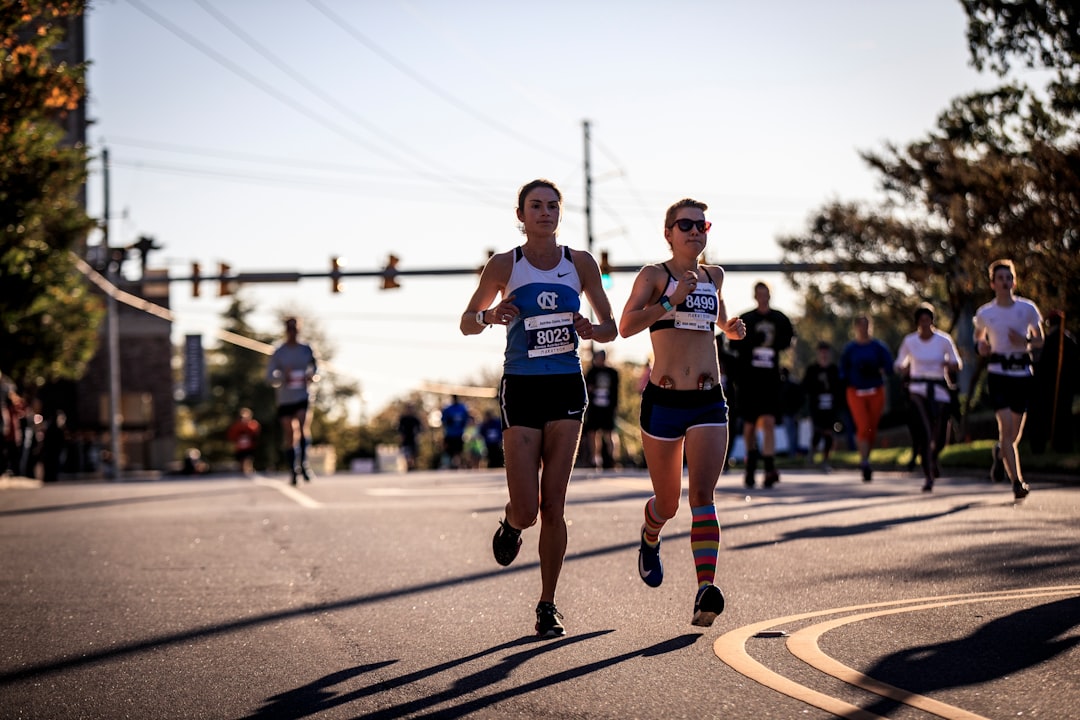
Photo by Capstone Events on Unsplash
You don’t need the most expensive shoes. You need shoes that survive 500–600 km of training without blistering your heels, causing shin splints, or breaking down at km 18 of race day.
Most runners overthink this. They chase marketing hype, get seduced by the newest cushioning tech, or assume that expensive equals better. In reality, the best half-marathon shoe is the one that fits your foot, matches your gait, and doesn’t cause pain.
Why Half-Marathon Training is Different from 5K
A 5K shoe can be minimal, responsive, and racing-focused. You’re only in it for 20–25 minutes.
Half-marathon training demands durability. You’re logging 50–70 km per week for 12–16 weeks. Your shoes need:
– Cushioning that lasts — not just at week 1, but at week 15 when the midsole has compressed
– Blister prevention — you’ll do runs over 15K where friction matters
– Support in the midfoot — long runs expose weaknesses in your arch
– Reasonable weight — 250–300g per shoe, not 180g racing flats
A marathon shoe is overkill (too heavy, too much stack). A 5K racer is underkill (will fall apart or cause injuries). The sweet spot is a “training shoe” or “daily workhorse” shoe.
The Three Shoe Types and When to Use Each
| Shoe Type | Weight | Cushioning | Best For | Examples |
|---|---|---|---|---|
| Daily Trainer | 260–320g | High | Long runs, easy runs, base building | Nike Pegasus, Brooks Ghost, ASICS Gel-Kayano |
| Racing Shoe / Tempo Trainer | 220–260g | Medium | Tempo runs, race simulation, faster workouts | Nike Vaporfly, Brooks Hyperion, ASICS Metaspeed |
| Recovery Shoe | 280–350g | Maximum | Easy recovery days, cross-training | Brooks Glycerin, New Balance Fresh Foam 1080 |
For half-marathon training, you want 1–2 pairs of daily trainers. Most runners don’t need a dedicated racing shoe or recovery shoe—a quality daily trainer does both jobs adequately.
What to Look For When Buying
1. Actual Fit, Not Size Assumption
Visit a running specialty store (not a big-box retailer) and get your gait analyzed. Bring worn-out running shoes so they can see your wear pattern. You’ll discover whether you overpronate (heel wears on the inside), underpronate (heel wears on the outside), or run neutral.
This matters because:
– Overpronation benefits from stability or motion-control shoes (firmer medial posts)
– Neutral runners can wear anything, which paradoxically makes choosing harder
– Underpronation benefits from flexible, cushioned shoes without rigid supports
2. Try Them On in the Afternoon
Your feet swell during the day. Shoes that fit at 10 a.m. can feel tight by 3 p.m. Always try shoes in the afternoon or after a short run, when your feet are closer to race-day size.
Leave about a thumb’s width (roughly 1 cm or 0.4 inches) between your longest toe and the shoe’s end. This prevents blisters on long runs.
3. Real-World Durability Data
The shoe industry claims 500–800 km of life. Realistically:
– Well-made trainers: 600–700 km
– Budget trainers: 400–500 km
– Premium racing shoes (thin midsole): 300–400 km
If you’re doing a 16-week half-marathon cycle with 60 km per week, you’ll accumulate roughly 480 km of running. A single pair of daily trainers should get you through training and race day if you buy them at the start, though you might want a second pair to rotate in weeks 10–15 for freshness.
Shoes That Actually Work for Half-Marathon Training
(No affiliate links—just honest takes.)
Best for Most Runners:
– Nike Pegasus (38 or 39): responsive, durable, affordable. The go-to workhorse for good reason.
– Brooks Ghost: cushioned, stable, less trendy. A quiet reliable choice.
– ASICS Gel-Cumulus: neutral ride, good for runners who want a balanced feel.
Best if You Overpronate:
– Brooks Adrenaline GTS: stability posts without feeling clunky.
– ASICS Gel-Kayano: supportive but still lets you feel the ground.
Best if You Underpronate:
– Saucony Ride: flexible, responsive, not overly cushioned.
– Nike Vaporfly: expensive but lasts well for fast runners.
Best Budget Option:
– New Balance 410: surprisingly good durability for the price.
The honest truth: the difference between a £80 and £160 shoe is marketing. Both can get you through half-marathon training if they fit. Don’t spend £160 on status.
How to Test Shoes Before Committing
Most running specialty stores offer a 30-day return policy. Use it.
Buy your shoes 2–3 weeks before starting training. Wear them on 3–4 easy runs (5–10K each) before doing anything serious. You’ll discover:
– Blister spots (rub, hot spots, blisters)
– Arch discomfort (too much or too little support)
– Heel slipping (common with narrow heels)
– General feel (bouncy, sluggish, responsive, clunky)
If you notice genuine pain (not just newness discomfort), return them. Don’t “run through” shoe problems. A blister at week 2 will haunt you at week 12.
The Rotation and Replacement Strategy
Weeks 1–8: One pair, worn for all runs. Accumulates 320–400 km.
Weeks 9–16: Introduce a second pair. Rotate between them every other run. This keeps midsoles fresher and spreads wear more evenly. Two shoes sharing 320 km is better than one shoe taking all 320 km at once.
Replacement timing: If you’re seeing heel breakdown, upper creasing, or midsole squishiness, replace shoes immediately. Racing in compromised shoes risks injury.
Common Shoe Mistakes Half-Marathon Runners Make
- Buying racing flats for training — they’re too light, break down quickly, and don’t have enough cushioning for 20K runs.
- Choosing shoes based on appearance — that neon colorway might look cool, but if it doesn’t fit, you’ve wasted money.
- Not replacing shoes at the right time — a shoe at 600 km doesn’t provide the same shock absorption it did at 100 km.
- Assuming bigger is safer — oversized shoes cause blisters and heel slipping. Fit matters more than room.
- Using old shoes on race day — break in new shoes, don’t race in them. But also don’t race in shoes that are 18 months old.
The Honest Takeaway
You need one good pair of daily trainers for half-marathon training. The shoe doesn’t have to be expensive or trendy—it has to fit your foot, handle 500–600 km without breaking down, and feel comfortable on long runs.
- Get a gait analysis at a specialty running store, not a big-box retailer.
- Fit is everything — a £90 shoe that fits beats a £180 shoe that pinches.
- Rotate two pairs in weeks 9–16 to extend their life.
- Test shoes on 3–4 easy runs before committing to your full training cycle.
- Replace shoes when you notice breakdown, not based on a calendar date.
The real cost isn’t the shoe price—it’s a single injury from wearing compromised shoes for too long. A new pair of trainers at week 12 is expensive. Months of physiotherapy is worse.
Sources:
– Running USA: Shoe Research and Durability Data
– British Journal of Sports Medicine: Running Shoes and Injury Prevention