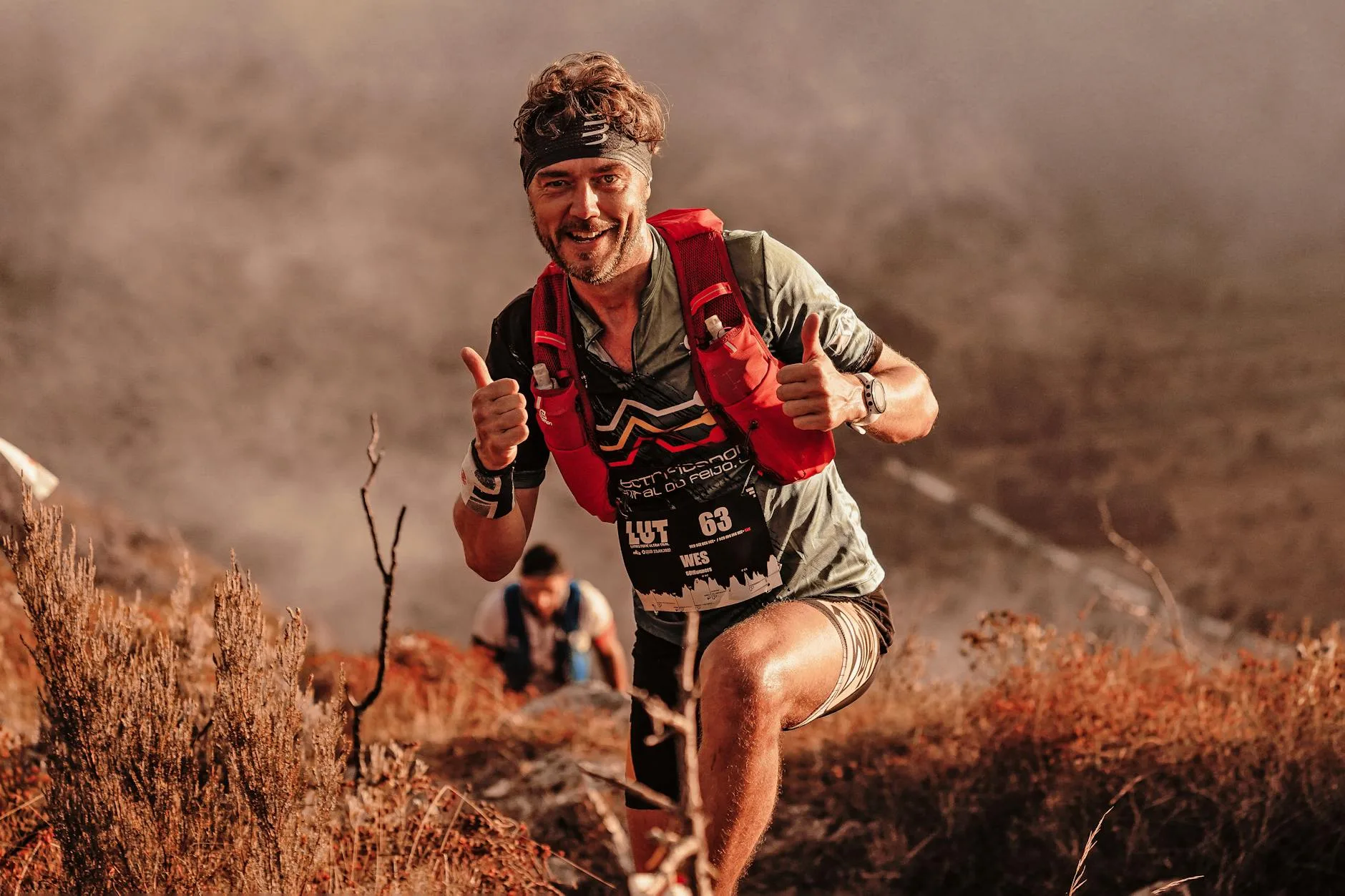
Photo by RUN 4 FFWPU on Pexels
You’ve signed up for a trail race — or you’re thinking about it — and you’re not quite sure what you’ve got yourself into. That’s completely normal. Trail running looks wild and free on Instagram, but when you’re standing at the start line wondering whether your road shoes will cut it on a muddy descent, or whether you should have trained more hills, it can feel a lot less glamorous.
The good news is that trail races are genuinely beginner-friendly if you approach them with the right expectations. Most trail events — especially 10K and half marathon distances — are full of people finishing, not racing. The atmosphere is different from road events: less clock-watching, more “let’s get through this together.” But you do need to prepare differently, and there are a few things nobody tells you until it’s too late.
This guide covers everything you actually need to know before your first trail race — from gear and terrain to pacing, nutrition and what to do on the day.
What makes trail racing different from road running
The most important shift is this: pace becomes almost meaningless on trail. A 10K trail race might take you 30–40% longer than your road 10K, not because you’re less fit, but because you’re climbing, descending, picking your footing and occasionally scrambling. Your GPS will show a slower pace. That’s fine — it’s expected.
Trail races also tend to have more climb and descent packed into shorter distances. A 10K trail race with 300m of elevation gain is a very different challenge to a flat 10K. Always check the elevation profile before race day — most event websites publish it, and it’s the single most useful piece of information you can have.
You’ll also be more mentally engaged than on a road run. You have to watch where you’re putting your feet, especially on rocky or rooty sections. This is tiring in its own way, and it’s why trail runners often feel more exhausted after shorter distances than they expect.
Gear: what you actually need (and what you don’t)
You don’t need to spend £400 to run your first trail race. But you do need the right basics.
Footwear is the priority. Trail shoes have a lugged sole that grips mud, roots and loose ground. Road shoes don’t — they’ll slide on wet descents and leave you working twice as hard. If you’re unsure about the difference, the breakdown in this comparison of trail vs road running shoes is worth reading before you buy anything.
Socks matter more than you think. Muddy, wet conditions increase blister risk considerably. A merino wool or synthetic trail sock will protect you far better than a standard cotton gym sock. If you’ve struggled with blisters in road races, check out the best running socks to prevent blisters before your first trail event.
| Gear item | Do you need it? | Notes |
|---|---|---|
| Trail shoes | Yes | Non-negotiable on wet or technical terrain |
| Trail socks | Yes | Wool or synthetic — avoid cotton |
| Hydration vest or belt | Depends | Required at most races over 15K; check race rules |
| Trekking poles | Probably not | Useful for long climbs, but overkill at 10–15K |
| GPS watch | Helpful | Useful for elevation tracking, not just pace |
| Waterproof jacket | Check race rules | Many races mandate one — check the kit list |
| Gaiters | Optional | Keep debris out of shoes; worth it on very muddy races |
Most trail races publish a mandatory kit list. Read it. Race directors enforce these rules, and turning up without a required item can mean disqualification before you’ve started.
How to train for your first trail race
If you can already run 5–8K comfortably on road, you’re not starting from zero. But trail-specific preparation does help.
Start running on uneven ground. Even a few runs per week on grass, gravel paths or parkland will start training the small stabilising muscles in your ankles and feet that trail running demands. This reduces injury risk significantly.
Introduce hills deliberately. Find a hill that takes 60–90 seconds to climb and do 4–6 repeats once a week. On the way up, shorten your stride and drive with your arms. On the way down, lean slightly forward and let your feet move quickly under you — don’t brake by leaning back. Downhill running is a skill, and practising it before race day is worth more than almost any other preparation.
Reduce your pace expectations. In training, run trails at effort rather than pace. Aim for a conversational effort on flat and rolling trail — roughly the effort where you could hold a full sentence but wouldn’t want to. On climbs, walking is not only acceptable, it’s often the faster and smarter choice. Most experienced trail runners walk steep uphills to conserve energy for the rest of the race.
An 8-week build is plenty for a first 10K trail race. If you’re targeting a trail half marathon, 12 weeks gives you enough time to build your long run and get comfortable on varied terrain. You don’t need a specific trail training plan — a standard road plan with 2–3 of your runs moved off-road will do the job.
Pacing strategy for trail racing
Forget your road pace entirely. Trail racing is run on effort, not numbers.
A useful approach: rate your effort out of 10, and aim to stay at 6–7 on flat and rolling sections, dropping to 4–5 on steep climbs (where walking is absolutely fine) and no higher than 7–8 on runnable descents. Most first-timers go out too hard on the early flat sections and pay for it when the real climbing begins.
The classic trail pacing mistake is running every step that feels runnable, including the hills. A 12–15% gradient is worth walking. You won’t lose much time, and you’ll arrive at the top with energy to keep running instead of stopping to catch your breath.
Check whether your race has any long climbs in the first third — these are often where first-timers blow up. If you know a 200m climb is coming at kilometre 3, take the first couple of kilometres easier than feels necessary.
Nutrition and hydration on the trail
For races under 90 minutes, you probably don’t need to eat anything during the race. Start well-fuelled (a normal breakfast 2–3 hours before) and you’ll be fine.
For anything over 90 minutes, take a gel or real food at the 45-minute mark and every 30–45 minutes after that. Many trail races have aid stations with food — bananas, boiled potatoes, crisps — which your body may actually prefer to gels mid-race. Don’t eat something new on race day; trial whatever you plan to use in training first.
Hydration is more variable than on road because of varying temperature and elevation. A 500ml soft flask in a hydration vest handles most races under 2 hours. For longer or hotter races, 1–1.5L is sensible. Check whether your race has mandatory minimum hydration capacity — some do.
Running in the heat covers hydration and pacing adjustments in warmer conditions, which applies directly to summer trail races.
Race day: what to expect and how to handle it
Arrive early. Trail race starts are often in fields or car parks with no mobile signal and confusing signage. Give yourself 30–45 minutes before the start to register, use the facilities, warm up and get to the start line without rushing.
Study the course map. Trail races are waymarked, but markings can be hard to spot when you’re tired and concentrating on your footing. Know roughly where the major turns are and how many aid stations to expect. Some races also have cut-off times at checkpoints — confirm these before you race so you know what you’re working with.
Start further back than you think you need to. Trail race starts are often narrow, especially on singletrack. Going out hard in a bottleneck is stressful and pointless. Start conservatively, settle into your effort, and let the runners who went out too fast come back to you later.
Walking is not failure. Experienced trail runners walk. Steep climbs where you’d break into zone 4 or 5 effort are worth walking briskly — you’ll often be faster than the runners jogging past you, and you’ll recover more quickly. On a technical descent, slow down enough to be safe. A twisted ankle at kilometre 4 is nobody’s idea of a race.
How to handle nerves on race day
Pre-race nerves are real, and trail racing adds its own layer — unfamiliar terrain, technical challenges, the possibility of getting lost or falling. This is normal.
The most reliable fix is preparation: know the course, have your kit sorted the night before, eat a familiar breakfast, and remind yourself that finishing is the goal — not a particular time. The trail running community is generally welcoming and non-competitive at the back of the pack. People help each other out, share food at aid stations and cheer each other on. It’s a different culture to road racing in the best way.
If race day anxiety tends to hit you hard, managing race day nerves effectively covers some practical, evidence-based strategies that work whether you’re racing on road or trail.
The Honest Takeaway
- Check the elevation profile before anything else. A hilly 10K trail race is harder than a flat half marathon. Know what you’re signing up for and train specifically for it — hill reps, not just easy miles.
- Get trail shoes before race day. Don’t assume your road shoes will cope with wet or muddy terrain. They won’t, and you’ll spend energy staying upright that you need for everything else.
- Run to effort, not pace. Trail pace is irrelevant. Aim for conversational effort on the flats, walk the steep climbs without guilt, and control your descent speed on technical ground.
- Practice your nutrition in training. For races under 90 minutes you probably don’t need anything mid-race, but for longer events, test your gels or food choices before race day. Trail aid station food can be a lifesaver — but don’t try anything new on the day.
- Finishing your first trail race is the win. Don’t go in trying to replicate your road pace or beat your road time. The goal is to come out the other side having run trails, navigated the terrain and enjoyed it — because if you enjoy it, you’ll come back, and that’s when the real improvement begins.
Next read: Trail running shoes vs road shoes: key differences explained