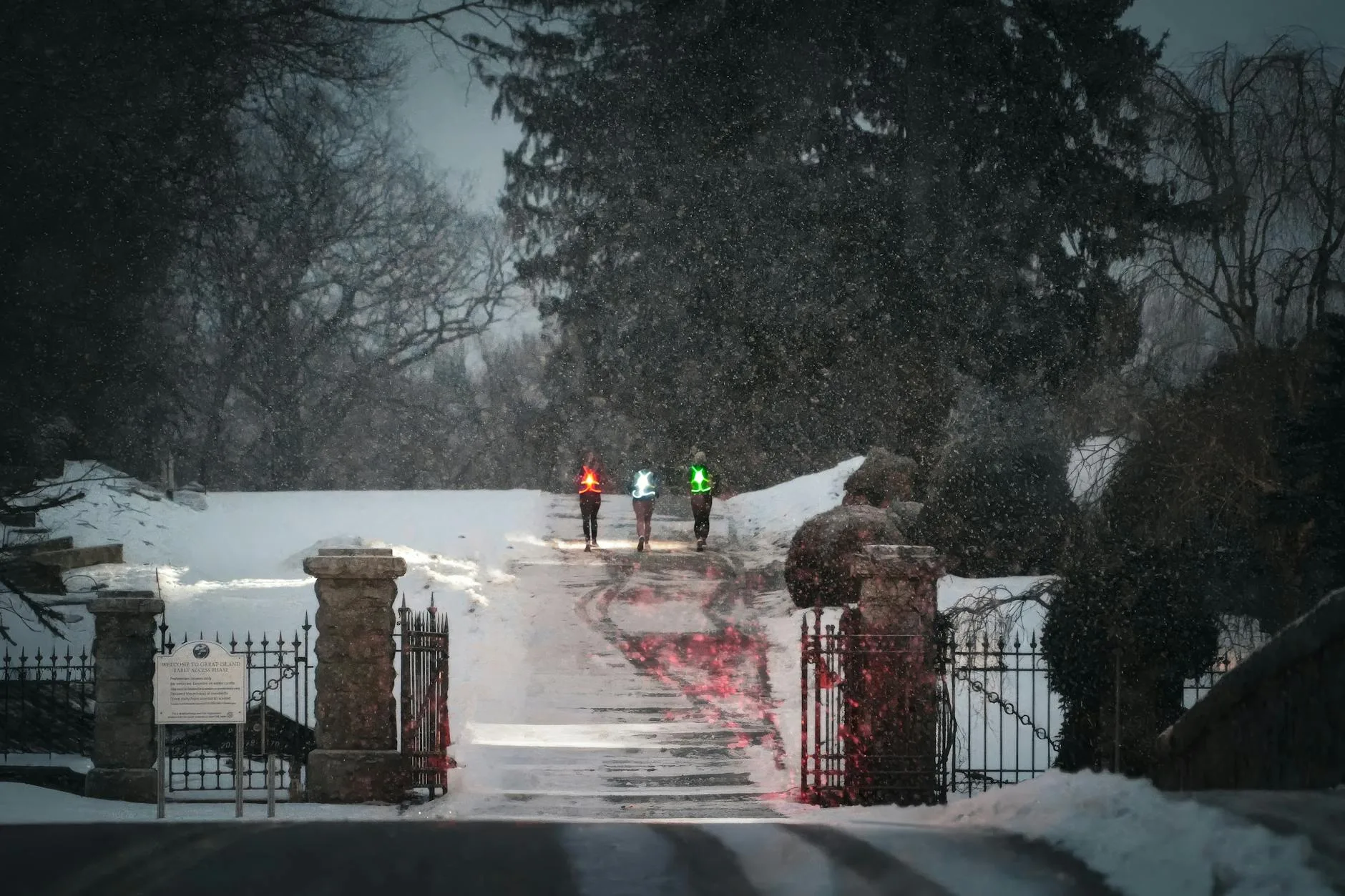
Photo by Cara Denison on Pexels
It’s 6am. Or 5:30pm after work. Either way, it’s dark. The clocks went back weeks ago and won’t go forward again until March. If you want to keep running through winter — and you do, because stopping for four months is not a plan — you’re going to be running in the dark. That’s just the reality.
The good news is that running at night or before dawn is genuinely manageable with the right setup. The less good news is that “just wear something bright” is not enough. There are real risks — visibility, footing, personal safety — and a few things that can go wrong if you haven’t thought them through. This article will help you run through winter with confidence rather than anxiety.
Whether you’re three weeks into the Couch to 5K program and worried about losing your momentum, or you’re mid-training block with a spring race in mind, the same principles apply. You don’t need to spend a fortune. You do need to make a few deliberate choices.
Visibility is your first priority — and “reflective” isn’t enough
Most runners assume that a reflective strip on their jacket does the job. It doesn’t — not really. Reflective material only works when a light source (like a car’s headlights) hits it directly. In the dark, between streetlights, you’re essentially invisible.
What actually works is active lighting: gear that emits its own light. A chest-mounted running light or a head torch puts you on equal footing with cyclists and makes you visible from 100–150 metres in most conditions. Clip-on LED lights for your front and back are a cheap, lightweight alternative — look for ones that offer a flashing mode, which is more noticeable than a steady beam.
A useful rule: be lit from at least two angles. Front and back as a minimum. Side visibility matters too if you’re running alongside traffic.
What about high-vis clothing? Yes, wear it — but treat it as a supplement to lights, not a replacement. Fluorescent yellow or orange reads well in the grey half-light of dawn or dusk. In actual darkness, it does very little without a light source illuminating it.
The Royal Society for the Prevention of Accidents (RoSPA) consistently highlights that pedestrian visibility is one of the primary factors in road collisions during winter months. Don’t assume drivers can see you.
Head torches: worth the investment
If you only buy one piece of kit for winter running, make it a head torch. A decent running-specific one sits differently to a hiking torch — lighter, less bounce, more balanced around your head.
You don’t need to spend a lot. Here’s a quick breakdown:
| Budget | What to expect | Good for |
|---|---|---|
| Under £20 | 100–200 lumens, basic strap, short battery life | Lit roads, occasional use |
| £20–£50 | 200–400 lumens, rechargeable via USB, more secure fit | Regular off-road or unlit paths |
| £50–£100 | 400–1000+ lumens, reactive lighting, long battery | Trail running, unlit rural routes |
| Over £100 | High-end reactive models (e.g. Petzl NAO) | Serious off-road, fast paces |
For most everyday runners doing road or mixed-terrain routes 3–4 times a week, a £25–£40 rechargeable head torch is genuinely enough. Charge it before each run — it takes less than two hours via USB — and you won’t be caught short.
Keep the beam angled slightly downward. Pointing it straight ahead at eye level will dazzle oncoming pedestrians and cyclists, which is both antisocial and unhelpful for your own footing.
Route planning: familiar beats adventurous in the dark
This is the one area where winter genuinely does require you to adjust your habits. A route you know well in daylight will feel different at night — kerbs are harder to judge, puddles are invisible, uneven paving becomes a trip hazard.
A few practical guidelines:
- Run routes you know. Now isn’t the time to explore. Save new terrain for daylight.
- Stick to lit paths where possible. Park paths that are well-lit during commuting hours may be pitch black by 9pm — check before you assume.
- Watch your footing pace. On unlit or uneven surfaces, slow down by 15–30 seconds per kilometre compared to your usual pace. Your reaction time to surface changes is slower when you can’t see them coming.
- Run against traffic on roads without pavements (i.e. facing oncoming cars). This is standard advice but frequently ignored — it means you can see and react to vehicles.
- Avoid headphones that fully block sound, or at minimum keep one ear free. Bone conduction headphones are worth considering for exactly this reason.
Personal safety: the practical stuff no one likes to talk about
Running alone in the dark carries different considerations depending on who you are, where you run, and how isolated your route is. This isn’t about fear — it’s about being practical.
Tell someone where you’re going. A quick message — “running the canal path, back by 7:15” — takes ten seconds and matters if something goes wrong.
Share your live location. Apps like Strava Beacon or the “share location” feature in WhatsApp let someone track your run in real time. This is worth setting up before you need it.
Carry your phone. You probably do already, but make sure it’s charged. A dead phone is useless in an emergency.
Run with someone when you can. Even one other person changes the risk profile significantly. If your schedule allows it, a running club that does winter morning sessions can make dark running feel much more manageable — socially and practically.
Trust your gut. If a route feels unsafe on a given night — poor lighting, a badly parked van blocking your usual path, an area you’re not sure about — take a different route without overthinking it. Being sensible isn’t being paranoid.
Dressing for dark winter runs
You’re dealing with two things simultaneously: cold temperatures and low visibility. They don’t always want the same solution — thick layers can be hard to make reflective, and some hi-vis gear is thin.
The basic layering principle for 2–10°C (which covers most UK winter running):
- Base layer: lightweight, moisture-wicking (not cotton — it stays wet)
- Mid layer (if needed, below 5°C): a light thermal or running-specific fleece
- Outer layer: a wind/water-resistant running jacket with reflective detailing
If you’re unsure where to start on the jacket front, there’s a solid breakdown in our guide to the best running jackets for wet and cold weather.
For your extremities: gloves below 7°C, a buff or light hat below 5°C. Cold hands and ears affect your focus more than you’d expect. Running tights with reflective strips are available from most brands and make a genuine difference at road crossings.
One thing to avoid: overdressing to the point where you’re sweating heavily within ten minutes. You’ll feel cold when you stop, and damp kit loses insulation fast. As a rule, dress as if it’s 5–8°C warmer than the actual temperature — your body heat will do the rest.
Cold and dark combined: what changes about your warm-up
Cold muscles in the dark need a proper warm-up, more than a summer morning run does. Your tendons and ligaments are stiffer in cold weather, and the research supports this — the British Journal of Sports Medicine has published multiple studies linking cold-weather exercise with higher soft tissue injury rates when warm-up protocols are skipped.
Don’t sprint out of the door. Spend 5 minutes walking briskly before you begin running — this is enough to raise muscle temperature meaningfully. If you’re doing any kind of speed work, do it indoors first (high knees, leg swings, hip circles) and push your first kilometre pace back by 30–45 seconds compared to your goal pace.
If you’re training through winter for a spring race and wondering how to structure those sessions safely, the advice on base building for runners applies well here — winter is often the best time to build aerobic foundations rather than push intensity.
What to do when motivation disappears
Dark, cold, tired — sometimes the combination just wins, and that’s not a failure. But there are a few things that make it easier to actually get out the door:
- Lay out your kit the night before, lights included. Decision fatigue is real at 6am.
- Commit to five minutes. Tell yourself you only have to run for five minutes. Most of the time you’ll keep going once you’re moving.
- Change your expectations for winter runs. Easy, regular running at conversational pace (roughly 5:30–6:30/km for most everyday runners) does more for your fitness than three brilliant runs followed by two weeks of avoidance.
- Track your consistency, not your pace. Celebrate the fact that you ran, not how fast.
Winter running requires a mental adjustment as much as a physical one. The people who come out of February in good shape are usually the ones who kept showing up at an easy pace, not the ones who pushed hard and then got injured or burned out.
The honest takeaway
- Active lighting beats passive reflection every time. A rechargeable head torch (£25–£40) and a clip-on rear LED are the two most impactful things you can buy for dark running.
- Run routes you know, especially off-road. Surface hazards you’d spot in daylight are invisible at night — slow down by 15–30 seconds per kilometre on unlit paths.
- Tell someone where you’re going. A text takes ten seconds. Use Strava Beacon or WhatsApp live location if you run solo regularly.
- Dress in layers you can light up. Reflective running jackets and tights work when combined with active lights — not instead of them.
- Warm up properly before cold runs. Five minutes of walking plus some dynamic drills before you pick up pace. Cold muscles are more injury-prone, and adding dark and uneven ground makes that worse.
Running in the dark in winter is one of those things that sounds worse than it is. Once you’ve got the kit sorted and a few sensible habits locked in, a 6am run under streetlights or headtorch can be genuinely peaceful — quieter than daytime, no crowds, just you getting it done. That’s worth preserving.