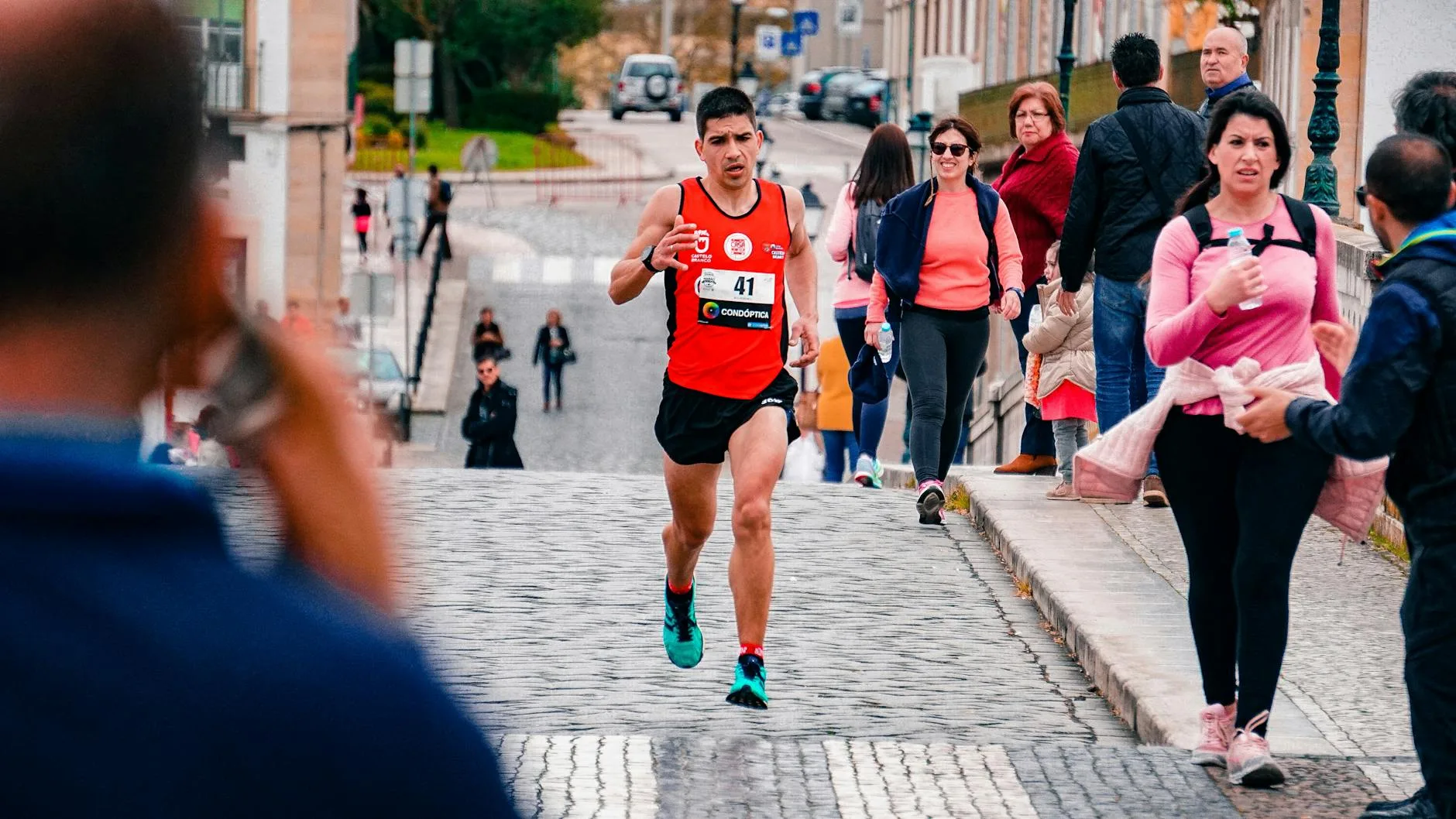
Photo by RUN 4 FFWPU on Pexels
You’ve trained for months. You’re at the start line, feeling good. Then, somewhere around kilometre 8, your stomach starts gurgling. By kilometre 12, you’re scanning the route for a portable toilet. By the finish, you’re not sure whether to be proud of your time or relieved you made it without incident.
Runner’s stomach — the umbrella term for nausea, cramping, bloating, diarrhoea, and the sudden desperate need to find a bush — affects somewhere between 30% and 50% of distance runners during races. It’s not just a marathon problem. It can hit you in a 10K, a half marathon, even a parkrun if conditions align badly enough. And it’s not a sign that you’re weak or unprepared. It’s a physiology problem, and it has practical solutions.
This article will walk you through why it happens, what you can actually do about it before race day, and how to manage your fuelling and routine so your gut stops being the unpredictable variable in your racing.
Why your stomach rebels when you run
When you run hard, your body redirects blood away from your digestive system toward your working muscles. At race pace — especially if you’ve gone out faster than you trained — blood flow to the gut can drop by up to 80%. Your digestive system, now running on reduced supply, doesn’t handle its normal workload well. Food doesn’t move through properly. Gas builds. Stomach lining becomes irritated.
Add to this the mechanical impact of running (your organs are literally bouncing up and down with every stride), the stress hormone cortisol, race-day nerves, and whatever you ate three hours ago, and you have a recipe for chaos.
The higher your intensity relative to your fitness level, the worse it gets. That’s worth remembering: if you go out too fast in a race, your gut pays the price before your legs do.
The main triggers — and how common each one is
Not all GI problems come from the same source. Knowing which pattern fits your experience helps you target the right fix.
| Trigger | What it causes | How common |
|---|---|---|
| Going out too fast | Nausea, cramps, vomiting | Very common |
| Eating too close to race start | Bloating, stitches, cramps | Very common |
| High-fibre foods the day before | Urgency, loose stools | Common |
| Gels or sports drinks without practice | Nausea, diarrhoea | Common |
| Dehydration | Cramping, nausea | Common |
| Overhydration (drinking too much plain water) | Sloshing, nausea, hyponatraemia | Less common but serious |
| Caffeine sensitivity | Urgency, loose stools | Varies by individual |
| Race-day anxiety | Urgency before and during race | Very common |
Most runners have one or two main culprits. The process of identifying yours is mostly trial and error during training — which is why your long runs are your testing ground, not race day.
Sort out your pre-race eating window
The timing and content of your pre-race meal matters more than most runners realise. The general guidance is to eat your last proper meal 2.5–3 hours before your race start. For early morning events, that might mean a 5:30am alarm for a 7am gun — not ideal, but your stomach will thank you.
What you eat matters too. You’re not looking for anything complex or new. You want easily digestible carbohydrates, low fat, low fibre.
What tends to work well:
– White toast or a bagel with a thin spread of peanut butter or honey
– Porridge with banana (test this in training — some runners find oats sit heavy)
– White rice with a little salt
– A small bowl of cereal with semi-skimmed milk
What to avoid in the 24 hours before:
– High-fibre vegetables (broccoli, beans, lentils, cabbage)
– Spicy food
– High-fat meals
– Alcohol
– New foods you’ve never eaten before a run
If you’re building toward a longer event, the article on carbohydrate loading before a marathon covers the specifics of what to eat in the 48–72 hours before race day — including why some traditional carb-loading approaches can actually make GI issues worse.
Practice your race fuelling in training — every single time
This is the non-negotiable one. If you’re planning to take gels, chews, or sports drinks during a race, you need to have used them on training runs at race pace. Not just once. Multiple times.
Gels contain concentrated carbohydrates — often 20–25g per sachet — and many contain caffeine or artificial sweeteners that your gut may not tolerate under stress. Taking a gel for the first time at kilometre 18 of a marathon is a gamble you almost certainly lose.
The rule is simple: nothing new on race day. Same brand, same flavour, same timing as what you practised in training.
For timing, a rough guide:
– 10K: Most runners don’t need a gel. Water at the mid-point is enough.
– Half marathon: Consider one gel around 45–55 minutes in if you’re running for over 90 minutes.
– Marathon: Aim for a gel every 30–40 minutes from around 45 minutes in, depending on your pace and tolerance.
Always take gels with water, not sports drink — mixing concentrated carbohydrate sources increases the osmotic load in your gut and is a reliable way to make yourself feel terrible.
Hydration: not too little, not too much
Dehydration impairs digestion, increases perceived effort, and can cause cramping. But overdrinking during a race — especially plain water — is genuinely dangerous and also a common cause of nausea and that uncomfortable sloshing sensation.
The current guidance from sports science research supports drinking to thirst rather than following a fixed schedule, particularly for recreational runners. If you’re running at 5:30/km on a cool day, you won’t need as much fluid as someone running 6:30/km in summer heat.
A few practical points:
– Sip at aid stations rather than gulping. Drinking 200–300ml quickly while your heart rate is elevated is a shortcut to nausea.
– If you’re running for more than 90 minutes in warm conditions, electrolytes matter. Plain water dilutes sodium; an electrolyte tablet or sodium-containing drink helps replace what you lose in sweat.
– Practice drinking from cups on the move in training if you’re targeting a race with open-cup aid stations. It sounds minor, but it’s a skill.
Manage your pre-race nerves (they directly affect your gut)
The gut-brain connection is real and well-documented. Anxiety triggers the release of stress hormones that accelerate gut motility — which is why so many runners are sprinting to the toilet before a race even starts.
This is normal. It’s not a sign something is wrong. But you can work with it rather than against it.
Give yourself time on race morning to use the toilet before you leave, and again when you arrive at the venue. Don’t arrive so late that you’re rushing. Allow at least 30 minutes of buffer between arriving and your warm-up.
Some runners find that a consistent pre-race routine — same breakfast, same warm-up, same timing — reduces anxiety simply because nothing is unfamiliar. The body learns the pattern and settles. For practical strategies on calming pre-race nerves without affecting your performance, the guide to managing race day nerves is worth a read before your next event.
Race pace and pacing discipline
Going out too fast is one of the most overlooked causes of GI problems in recreational runners. When your pace outstrips your aerobic fitness, your body treats it as a near-emergency — blood gets pulled hard from the digestive system, and the gut responds badly.
If you’re targeting a 2:05 half marathon, that means holding around 5:55/km. Going through the first 5K at 5:30/km because of the crowd and the adrenaline might feel manageable. But your gut often knows before your legs do.
The fix is pacing discipline from the gun. Wear a GPS watch. Know your target kilometre splits. Let faster runners go. The NHS guidance on exercise and gastrointestinal health notes that sustained moderate-intensity exercise is far better tolerated by the digestive system than sudden high-intensity effort — which is exactly what your opening kilometres become when you go out too fast.
The Honest Takeaway
- Nothing new on race day. Your gel brand, your breakfast, your hydration strategy — all of it needs to be tested in training, multiple times, at race-effort pace.
- Eat 2.5–3 hours before your race start. Keep it simple: low fat, low fibre, familiar carbohydrates. This single change fixes a lot of GI issues for a lot of runners.
- Drink to thirst, not to a fixed plan. Sip at aid stations. Take gels with water only. Use electrolytes on runs over 90 minutes in warm conditions.
- Pace yourself properly from the start. Going out 15–20 seconds per kilometre too fast doesn’t just cost you at the finish — it triggers the physiological response that causes nausea and cramping miles before you blow up.
- Your long runs are your testing ground. Replicate race-day conditions — same food timing, same gels, similar intensity — so race day holds no surprises. If something causes issues in training, it will cause worse issues on race day.
Next read: How to fuel during a marathon with gels