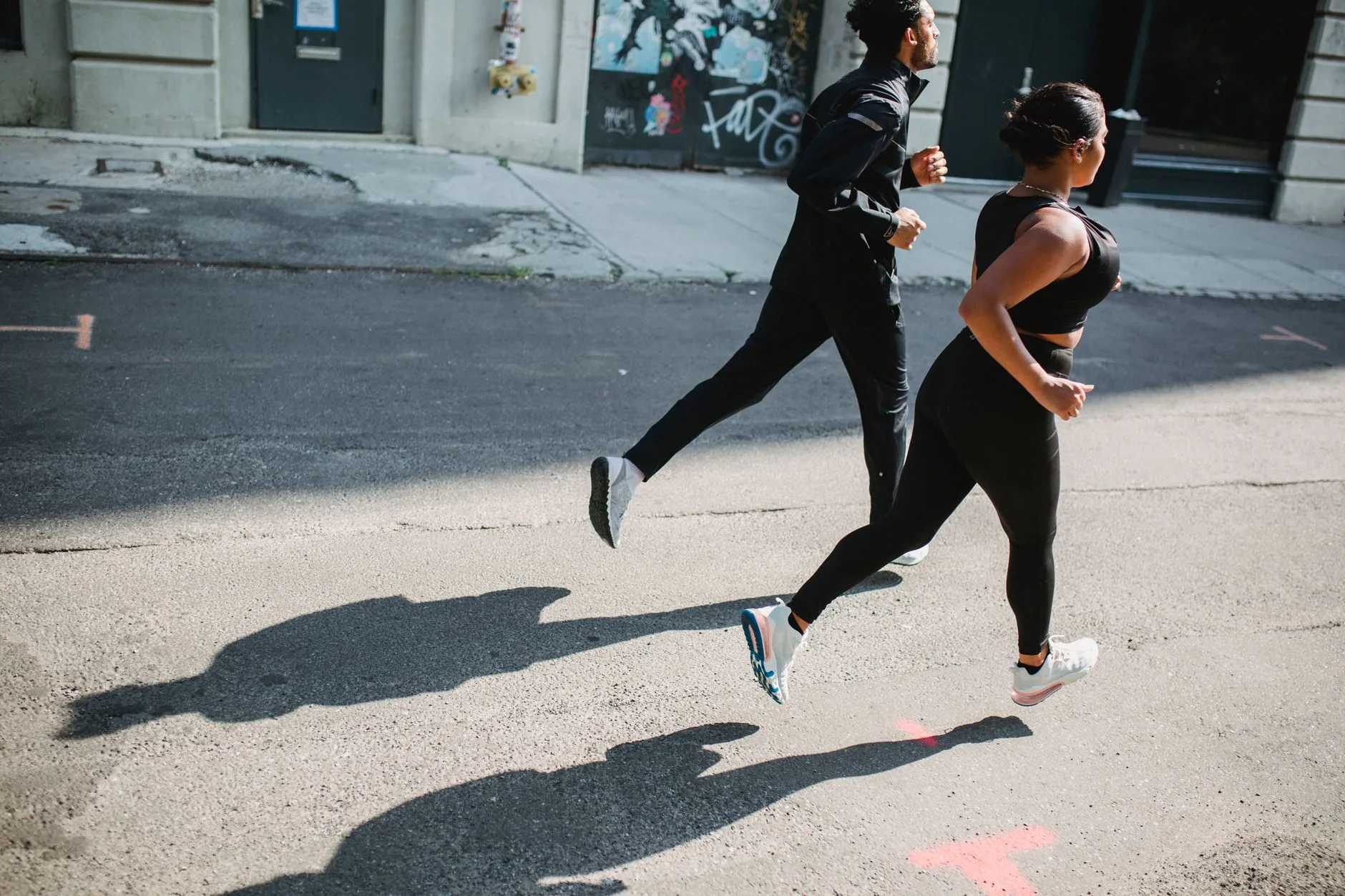
Photo by Ketut Subiyanto on Pexels
You’ve probably watched a YouTube video or read an article that told you your running form is “wrong.” Maybe it mentioned heel striking like it’s a crime, or showed you a video of an elite marathoner and suggested you should move like that. Then you went out for your next run, tried to fix three things at once, felt awkward and slow, and gave up by kilometre two.
That’s the usual story with running form advice, and it’s why most of it doesn’t stick. Form tweaks that work are small, specific, and done one at a time — not a full rebuild of how you move. You’re not trying to look like a Kenyan marathoner. You’re trying to run the same distance with slightly less effort and slightly less wear and tear on your knees.
This isn’t about aesthetics. Efficient form means you use less oxygen and less muscular effort to hold a given pace — which, in practice, means your easy runs feel easier and your race pace feels more sustainable. It also tends to reduce injury risk, though no single fix eliminates that risk entirely. Below are the changes that actually move the needle, in the order most runners should tackle them.
Start with cadence, not foot strike
The foot strike debate (heel vs midfoot vs forefoot) gets most of the internet attention, but it’s largely the wrong place to start. Changing where your foot lands without changing anything else often just moves the stress from one joint to another — knees to calves and Achilles, for instance.
Cadence — how many steps per minute you take — is a better lever. Many recreational runners sit somewhere between 150 and 165 steps per minute. Research and coaching consensus (not a hard rule, but a useful guideline) suggests nudging that up by around 5–10% often improves efficiency and reduces the kind of overstriding that leads to heavy heel strikes and higher impact forces.
How to check yours: run for one minute at your normal easy pace, count how many times your right foot hits the ground, multiply by two. That’s your cadence.
How to adjust it: don’t try to consciously count steps for 40 minutes, you’ll lose your mind. Instead:
– Use a metronome app or your watch’s cadence alert set 5–8% above your current number
– Pick a playlist with that BPM and just run to the beat
– Do this for short reps first — 3 x 3 minutes within an easy run — rather than the whole session
A higher cadence naturally shortens your stride and encourages your foot to land closer to under your body, rather than reaching out ahead of it. That’s the overstriding fix, achieved sideways, without you having to think about foot strike at all.
Fix the lean, not the arms
Posture advice usually gets reduced to “stand up straight,” which isn’t quite right for running. What you actually want is a slight forward lean from the ankles — not the waist — so gravity is doing a bit of the work of propelling you forward instead of your legs fighting to catch up with an upright torso.
A simple cue: imagine a string pulling you gently forward from your sternum, with your whole body — not just your shoulders — tilting slightly. If you’re bending at the hips (a common compensation when runners get tired), you’ll know because your lower back starts to ache on longer runs.
Arm swing matters less than people think, but two things are worth checking:
– Elbows bent around 90 degrees, swinging front to back, not crossing your body
– Shoulders down and relaxed, not up around your ears — tension in your upper body bleeds energy you need for your legs
This becomes most relevant in the last third of a long run or race, when fatigue causes your form to collapse. If you’ve done the warm-up drills that reinforce good posture patterns before you’re tired, you’re more likely to hold onto them when it counts — this is one reason a proper warm-up routine matters beyond just avoiding injury.
Strength work that actually changes your stride
Form cues only get you so far if the muscles supporting that form aren’t strong enough to hold it for the duration of your run. This is the part most “running form” articles skip, because it’s less glamorous than talking about stride mechanics.
The two areas worth your limited gym time:
Glutes — weak glutes are strongly linked to knee collapse (where your knee drifts inward on landing), which shows up as runner’s knee or IT band pain. Twice a week:
– 3 sets of 12–15 single-leg glute bridges per side
– 3 sets of 10 lateral band walks
Calves and feet — your lower leg absorbs a huge amount of force on every stride. Weak calves are a common factor in Achilles issues and shin splints. Twice a week:
– 3 sets of 15 single-leg calf raises per side (progress to doing them off a step for extra range)
You don’t need an hour in the gym. Fifteen minutes, twice a week, consistently, beats an occasional 45-minute session you can’t sustain. If your week is already full, this is the kind of work that fits into a wider cross-training routine rather than replacing a run.
The foot strike question, finally
Now that cadence and strength are in place, here’s the honest answer on foot strike: there is no single correct way to land. Elite runners land on everything from heel to forefoot depending on pace and individual mechanics. What matters more than where your foot lands is where it lands relative to your hips.
| Pattern | What it means | When it’s a problem |
|---|---|---|
| Heel strike, foot under hips | Normal, efficient at easy pace | Not a problem on its own |
| Heel strike, foot ahead of hips (overstriding) | Braking force with every step | Yes — linked to higher injury risk and slower pace |
| Midfoot/forefoot, foot under hips | Common at faster paces | Not a problem |
| Forced forefoot strike at easy pace | Often unnatural, high calf load | Can cause Achilles and calf strain |
If your cadence work has already pulled your foot strike closer to under your body, you may not need to think about this at all. If you’re still curious about minimalist or barefoot-style running as a way to naturally shift foot strike, it’s worth reading up properly before switching — the transition needs to be gradual, and barefoot running comes with real trade-offs that aren’t right for everyone.
How to actually practice this without ruining your runs
Trying to fix your cadence, posture, and strength all in one 10k easy run is how people end up injured or just miserable. Sequence it instead:
- Weeks 1–2: Cadence drills only — 3 x 3 minutes per run at your target cadence, rest of the run normal
- Weeks 3–4: Add posture cues, specifically on the last 10 minutes of your easy runs when you’re starting to fatigue — this is when bad habits creep in
- Ongoing: Strength sessions twice a week, independent of your running schedule
The goal with all of this is that form improvements eventually require zero conscious thought. You’re not going to think about your cadence during a 10k race — you’re building the pattern now so it’s automatic later, the same way base building isn’t really about this week’s run, it’s about what your legs can handle in eight weeks.
One more thing worth saying plainly: none of this works if you’re building these changes on top of a body that’s exhausted. Form tends to deteriorate first and most obviously on tired legs, in your last session of a heavy week, or during a recovery run you’ve turned into something harder than it should be. Knowing the actual difference between an easy run and a recovery run — and respecting it — does more for your form than any cue list.
What efficient form feels like, not just looks like
It’s worth saying what you’re aiming for, because it’s rarely what people expect. Efficient running doesn’t feel powerful or athletic in the moment. It feels quiet. Your feet make less noise on the ground. Your breathing settles into a rhythm faster. You’re not bouncing — there’s minimal vertical movement, most of your energy goes forward, not up.
If you finish an easy run and your calves and lower back are the main things you notice, that’s useful information — it often points to overstriding or a posture collapse, not just “normal tiredness.” Pay attention to where fatigue shows up; it tells you more than any form video will.
The Honest Takeaway
- Start with cadence, not foot strike — aim for a 5–10% increase using a metronome app, in short reps within easy runs, not the whole session at once
- Fix posture with a slight forward lean from the ankles, and check it specifically in the last 10 minutes of runs when you’re tired, because that’s when it breaks down
- Add two short strength sessions a week focused on glutes and calves — 15 minutes is enough if you’re consistent
- Don’t chase a “correct” foot strike — check whether your foot lands under your hips, not what part of it touches down first
- Change one thing at a time over two-week blocks; trying to fix everything in a single run is the fastest way to abandon all of it
Next read: Base building for runners: what it is and why it matters