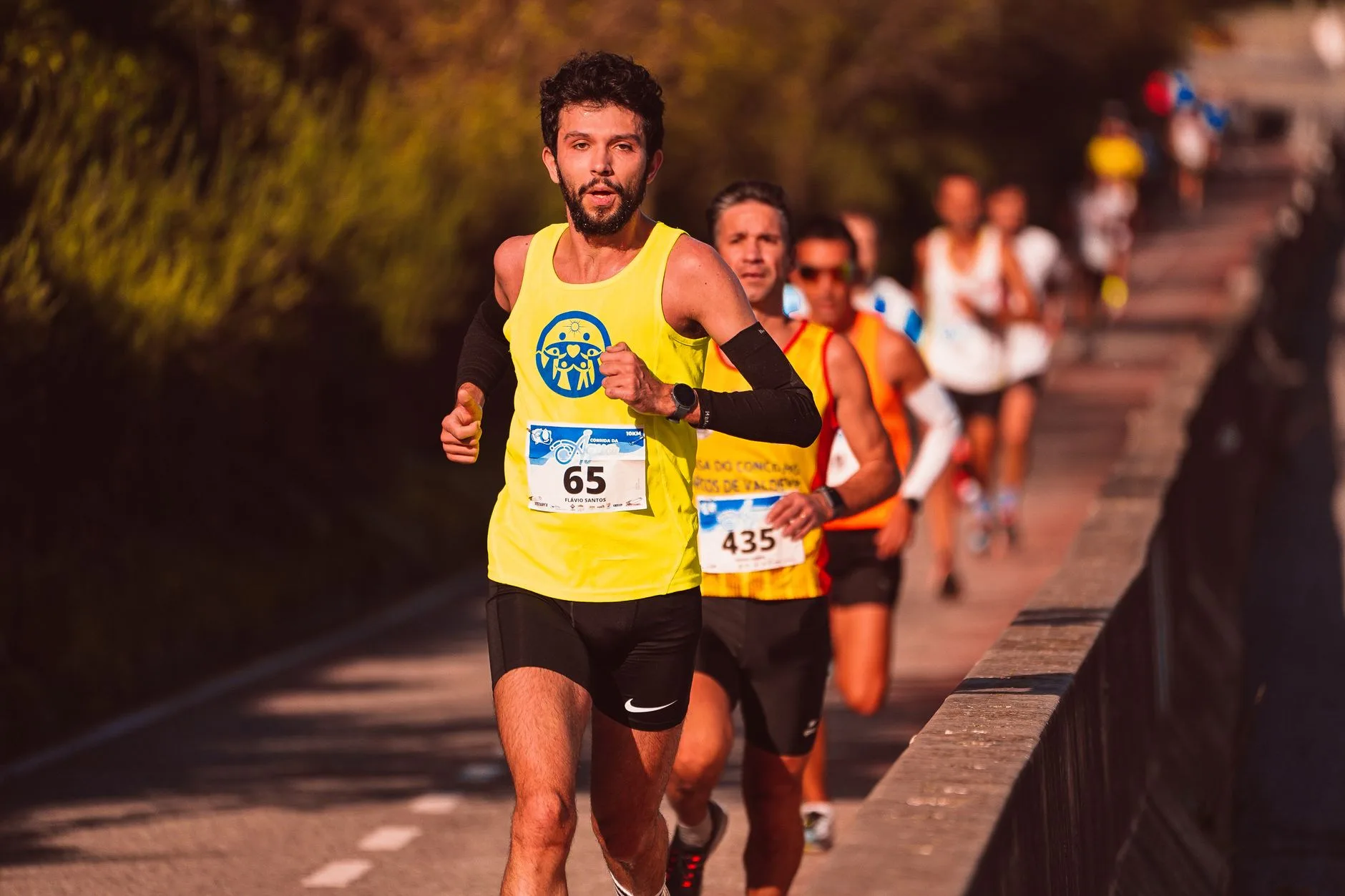
Photo by RUN 4 FFWPU on Pexels
You ran 10k this morning before work, then sat at a desk eating the same lunch you’d eat on a Sunday when you did nothing. Or the opposite — you had a rest day and still demolished a plate of pasta “because you’re a runner.” Neither is wrong, exactly. But neither is doing you any favours either.
Most runners either eat the same way every single day regardless of training load, or they overcomplicate it with macros and apps and end up more anxious about food than they are about their next race. The actual answer is simpler than either extreme: your body needs meaningfully more fuel on the days you train hard, and meaningfully less on the days you don’t. Not wildly different diets — just sensible adjustments to carbohydrate, a bit more protein attention around sessions, and less second-guessing.
This isn’t about optimising every gram. It’s about not sabotaging a 6am tempo run with an empty tank, and not lying awake at 11pm feeling bloated because you ate a marathon-week dinner on a day you walked to the shops and back.
The core idea: carbs follow training, protein stays steady
Carbohydrate is the nutrient that should move the most depending on what your legs are doing. Protein and fat stay relatively consistent day to day — your muscles need repair material whether you ran or not, and fat supports hormones and general health regardless of training load.
Here’s the rough shape of it:
| Training day (run + maybe strength) | Rest day | |
|---|---|---|
| Carbohydrate | Higher — fuels the session and refills glycogen | Lower — you’re not burning through stored glucose at the same rate |
| Protein | Same, prioritised post-run | Same |
| Fat | Slightly lower around the run itself (digests slowly) | Can be a bit higher — more room in the “calorie budget” |
| Total food volume | More, especially around the session | Less, but not drastically less |
This isn’t a strict science — it’s a general tilt. A recovery jog of 5km doesn’t need the same fuelling as a 20-mile long run. The adjustment should scale with the session, not just whether a run happened at all.
What to actually eat on a training day
On days with a run — especially anything over 45 minutes, a tempo session, or intervals — your main job is getting enough carbohydrate in before and after, without overthinking the exact grams.
Before a morning run (if you eat): a banana, a slice of toast with honey, or a small bowl of oats 60–90 minutes out. If you’re running first thing and can’t stomach food, that’s fine for anything under an hour — just make sure the next meal isn’t skipped too.
After the run, within 60–90 minutes: this is the window that actually matters, not because of some magic metabolic window, but because you’re hungry, your muscles are primed to restock glycogen, and waiting until 3pm to eat properly tends to lead to either overeating later or just feeling flat all afternoon. A realistic post-run plate: eggs on toast, a bagel with peanut butter, or a wrap with chicken and rice. Roughly a 3:1 or 4:1 ratio of carbs to protein works well for most people, though you don’t need to measure it — a meal that has an obvious carb source and an obvious protein source is doing the job.
For longer sessions (90+ minutes): you’ll likely need fuelling during the run itself, not just after. That’s a separate topic — if you’re building towards a half marathon or marathon, carbohydrate loading in the days before race day works on the same principle, just scaled up.
Rest of a training day: keep carbs present at each meal — rice, pasta, bread, potatoes, oats — rather than loading it all into one meal and going low-carb the rest of the day. Your body refills glycogen stores over many hours, not in one sitting.
What to actually eat on a rest day
Rest days aren’t “eat less because you’re lazy today” — they’re “eat appropriately because your legs aren’t burning 600–900 extra calories.”
The mistake most runners make isn’t eating too much on rest days — it’s eating the same on rest days as they did the day before a 15-mile long run. You don’t need three slices of toast and a big bowl of pasta if you walked the dog and did some admin.
Practical shifts for a rest day:
- Swap one carb-heavy side (rice, extra bread, pasta) for more vegetables or a side salad
- Keep protein at roughly the same level — eggs, chicken, fish, lentils, Greek yoghurt — because muscle repair from yesterday’s run is still happening
- Don’t skip meals to “compensate” — under-eating on rest days just leaves you running on fumes for tomorrow’s session
- If you’re doing strength training or cross-training on your rest-from-running day, treat that more like a light training day, not a true rest day
This is also a good day to not think about food as a performance tool at all. Eat meals you enjoy, at normal portions, without the mental overlay of “earning” or “burning off” anything.
Protein: the one thing that doesn’t swing much
A lot of runners under-eat protein, full stop — training day or not. The general guidance for endurance athletes sits around 1.2–1.6g of protein per kilogram of bodyweight per day, which for a 65kg runner is roughly 78–104g daily. That’s not a huge amount if you spread it across three meals plus a snack: a 70kg runner having Greek yoghurt at breakfast, chicken at lunch, and fish or tofu at dinner is usually most of the way there without any tracking.
This number doesn’t drop much on rest days. Muscle repair from Tuesday’s hill session is still happening on Wednesday, even if Wednesday is your rest day. If you’re also doing strength work — which most runners should be, 1–2 times a week, to protect against injury — protein needs stay steady or slightly higher, not lower. For specifics on what and when, this breakdown of protein foods and timing for runners is worth a proper read if you’ve never thought about it beyond “protein shake, maybe.”
Hydration doesn’t take a day off either
Fluid needs shift with sweat loss, not with whether you trained. A hot, humid 10k will cost you far more fluid and sodium than a 5km jog in October, and that difference matters more than whether it’s technically a “training day” on your calendar. On rest days, you still need regular water intake — don’t assume no run means no hydration effort required.
If you’re sweating heavily in sessions or training in heat, plain water often isn’t enough to replace sodium losses — that’s where electrolyte drinks earn their place, though for most easy runs under an hour, water is genuinely fine. The NHS has sensible, non-faddy guidance on general fluid and diet needs that applies whether you ran today or not.
A realistic day-by-day example
Here’s what this looks like for an everyday runner — not an elite, not someone eating from Tupperware all day.
Tuesday — tempo run (40 min), 7am before work:
– Pre-run: half a banana
– Breakfast after run: porridge with berries and a scoop of peanut butter
– Lunch: chicken, rice, roasted veg
– Snack: Greek yoghurt and a handful of nuts
– Dinner: pasta with turkey mince and tomato sauce
Wednesday — rest day:
– Breakfast: eggs on one slice of toast with spinach
– Lunch: big salad with tuna, chickpeas, olive oil dressing, smaller portion of bread
– Snack: apple and a bit of cheese
– Dinner: salmon, new potatoes (smaller portion than Tuesday), green beans
Notice what changed: not the protein, not the overall structure of “three meals plus a snack” — just the carb volume and portion sizes nudging down slightly. Nobody’s suffering on Wednesday. Nobody’s bloated on Tuesday.
If you’re newer to structured training and still working out how food fits around your week, it’s worth revisiting this alongside your actual training plan — whether that’s a beginner 5k plan or something longer — because fuelling needs scale with session length and frequency, not just vaguely with “being a runner.”
The Honest Takeaway
- On training days, eat a clear carb source at every meal and prioritise the 60–90 minutes after your run — a banana and peanut butter sandwich beats nothing.
- On rest days, don’t cut food drastically — just dial carb portions down slightly and let protein stay where it is.
- Keep protein around 1.2–1.6g per kg of bodyweight every single day, training or not — this is the number most runners under-shoot.
- Hydration needs track with sweat and heat, not your training calendar — a hot rest day can need more fluid than a cool, easy run.
- Don’t build elaborate rules around this. If your meals roughly follow this shape most of the week, you’re ahead of the vast majority of runners who either eat identically every day or overthink it into a second job.