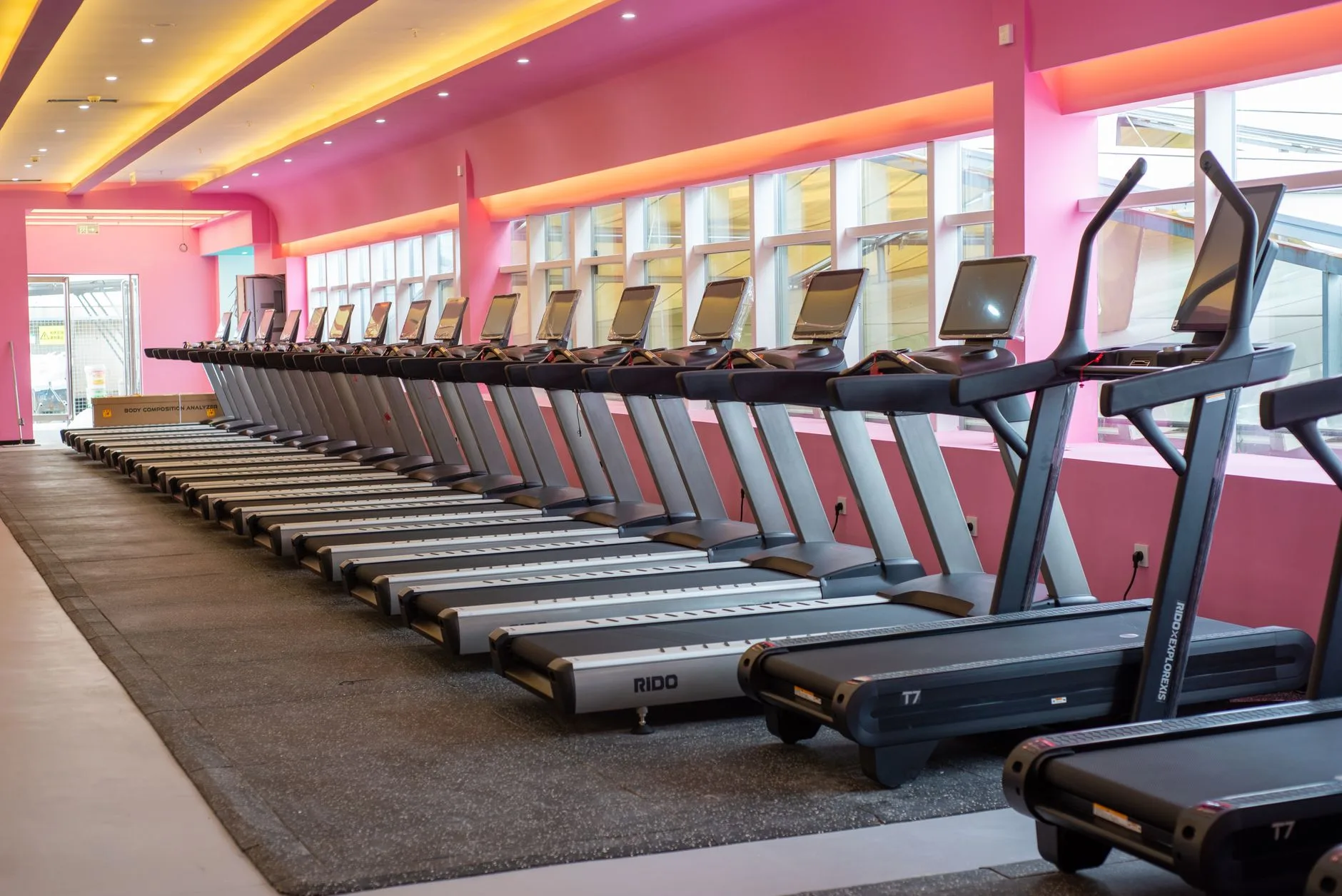
It’s January, it’s dark at 6pm, and you’re staring at a treadmill in the corner of the gym wondering if the run you’re about to do “counts.” Or maybe it’s July, you’re mid-marathon block, and the thought of another humid 10k outside makes you want to quit running altogether. Either way, you’ve landed on the same question a lot of us ask at some point: is the treadmill actually equivalent to running outside, or are you just pretending?
Short answer: it depends what you’re training for, and the differences are smaller than the internet makes them sound — but they’re not zero either. This isn’t a “treadmills are fake running” piece, and it isn’t a “treadmills are exactly the same, stop worrying” piece either. Both extremes are wrong, and both make people feel bad for choices that are often perfectly sensible.
Let’s go through what actually changes when you move indoors, what stays the same, and how to use whichever option fits your actual week — not the idealised week you wish you had.
The physical differences: what really changes
The biggest practical difference is the belt. When you run outside, you push yourself forward over static ground. On a treadmill, the belt moves under you, which means your legs do slightly less propulsive work per stride. Most runners find they need to run 10–15 seconds per km faster on a treadmill than outdoors to produce the same subjective effort — this is roughly in line with the commonly cited “add a 1% incline to simulate outdoor running” adjustment many coaches use.
There’s also air resistance. Outside, you’re pushing through air the whole time, which adds a small but real energy cost, especially at faster paces or in wind. A treadmill eliminates this entirely, which is part of why effort feels different even at the “same” pace on the display.
Then there’s surface and terrain. Treadmills are flat, consistent, and cushioned. Roads and trails are not — cambers, potholes, kerbs, and constant micro-adjustments in stride all add up. This is a double-edged sword: treadmills are kinder on your joints in one sense (no surprise terrain), but they also don’t train the stabiliser muscles and proprioception that uneven ground demands.
Pace accuracy: who’s actually lying to you
This is where a lot of frustration comes from. GPS watches are not perfectly accurate — they can be off by 1–3% depending on satellite signal, tree cover, and tall buildings, so your “5:30/km pace” outside might genuinely be 5:24 or 5:36. Treadmills, on the other hand, are mechanically consistent but need calibration — an uncalibrated or worn belt can be off by a similar margin in the other direction.
Neither is lying to you exactly. Both have error bars. If you’re chasing a specific pace for a race, the more useful habit is to train by effort and breathing, not just the number on the display, and use time-based or perceived-effort checks alongside pace.
| Factor | Treadmill | Outdoor |
|---|---|---|
| Pace accuracy | Consistent but needs calibration | GPS drift of 1–3% is normal |
| Effort at “same” pace | Feels easier (no air resistance, belt assist) | Feels harder — add ~1% incline indoors to match |
| Joint impact | Lower, consistent surface | Variable — can be harder on uneven trails |
| Weather dependency | None | Full exposure — heat, wind, rain, ice |
| Mental demand | Can feel longer, repetitive | Scenery and variability break up the time |
| Race specificity | Lower — no terrain, no crowd, no pacing judgement | Higher — closer to actual race conditions |
Calorie burn and cardiovascular effort
Because treadmill running requires slightly less work per stride, calorie burn at a matched pace tends to be a touch lower than outdoor running at that same pace — though the gap shrinks or disappears if you add a 1% incline. Your heart rate response is the more honest indicator here: most runners see their heart rate sit a few beats lower on a treadmill at an identical pace, which is the clearest sign the effort genuinely is slightly easier, not just psychologically.
If you’re using running for weight management, this matters less than people think. The difference is small compared to total weekly volume, consistency, and what you eat. If you want the full picture on this, it’s worth reading about whether running actually helps you lose weight rather than fixating on treadmill-vs-outdoor calorie counts.
Injury risk: the real pattern, not the myth
The popular belief is “treadmills are safer, roads destroy your knees.” The evidence doesn’t support such a clean split. Treadmills do remove variable terrain, which can reduce certain acute injury risks (rolled ankles, trip hazards). But the repetitive, identical stride pattern on a treadmill — same surface, same impact angle, thousands of times in a row — can actually increase overuse injury risk for some runners, particularly if you’re increasing volume quickly.
Outdoor running varies your stride naturally due to cambers and surface changes, which some physios argue distributes load more evenly across the body over time. Neither surface is inherently “safer” — training load, progression speed, and recovery matter far more. If you’re nursing something like Achilles tendon pain, the softer, more consistent treadmill surface can sometimes be the more sensible short-term choice while you rebuild tolerance, but it’s not a guaranteed fix.
When the treadmill is genuinely the better call
There are real scenarios where treadmill running isn’t a compromise — it’s the smarter decision:
- Ice, extreme heat, or air quality warnings. Running on ice risks a fall that could sideline you for months. Running in 32°C+ heat without acclimatisation risks heat illness. The treadmill isn’t “cheating” here — it’s risk management.
- Precise interval sessions. If your session calls for 6 x 800m at 4:15/km with 90 seconds recovery, a treadmill removes the guesswork. No traffic lights, no uneven pacing, no watching your watch to hit exact splits.
- Early starts in winter darkness. If the alternative to treadmill running is not running at all, the treadmill wins every time. Consistency beats purity.
- Returning from injury. The predictable surface and ability to stop instantly if something feels wrong makes it a genuinely good rehab tool, something worth considering if you’re managing Achilles tendinopathy and need controlled, low-risk sessions.
When outdoor running matters more
If you’re training for a specific race, especially anything beyond 10k, some outdoor running isn’t optional — it’s practice for the actual event. You need to practise:
- Pacing judgement without a belt doing it for you. Races don’t have a console telling you your exact speed at all times (unless you’re staring at your watch, which has its own problems).
- Fuelling and hydration logistics on the move — drinking from a cup while running, handling gels at pace, which you can read more about in terms of race-day execution in guides on 10k race day tips.
- Mental resilience through boredom and discomfort that isn’t solved by changing the incline button. Long outdoor runs build a different kind of toughness than a climate-controlled 90 minutes indoors.
- Terrain-specific strength — hills, cambers, and uneven ground build stabiliser strength that transfers directly to race-day resilience, particularly over marathon distance.
A reasonable rule for anyone training for a half marathon or marathon: at least your weekly long run should be outside whenever conditions allow, even if your mid-week sessions move indoors for convenience or weather.
A practical weekly split that actually works
For most runners juggling work, family, and a training plan — whether that’s a 12-week half marathon plan or marathon training — this split tends to work well:
| Session type | Best environment | Why |
|---|---|---|
| Easy/recovery runs | Either | Effort-based, environment matters less |
| Interval/tempo sessions | Treadmill (if precision matters) or outdoor flat loop | Depends on your pacing confidence |
| Long run | Outdoor, where possible | Race specificity, mental practice |
| Hill sessions | Outdoor or treadmill incline | Both work; outdoor is more specific |
| Bad weather days | Treadmill | Risk management, not weakness |
The Honest Takeaway
- Treadmill running isn’t “fake” and outdoor running isn’t automatically superior — they train slightly different things, and both have a place in a sensible week.
- If you train primarily on a treadmill, add a 1% incline to roughly match outdoor effort, and don’t panic if your outdoor pace feels slower for the same heart rate — that’s expected, not a fitness decline.
- Keep your long run outside whenever weather and safety allow, especially once you’re past 10k distance and building toward a half marathon or marathon.
- Use the treadmill without guilt for ice, heatwaves, precise interval work, or early dark mornings — the goal is getting the run done, not scoring purity points.
- Whichever you choose tomorrow morning, run by effort and breathing as much as by pace on the display — both GPS and treadmill numbers have a margin of error you’re better off not obsessing over.