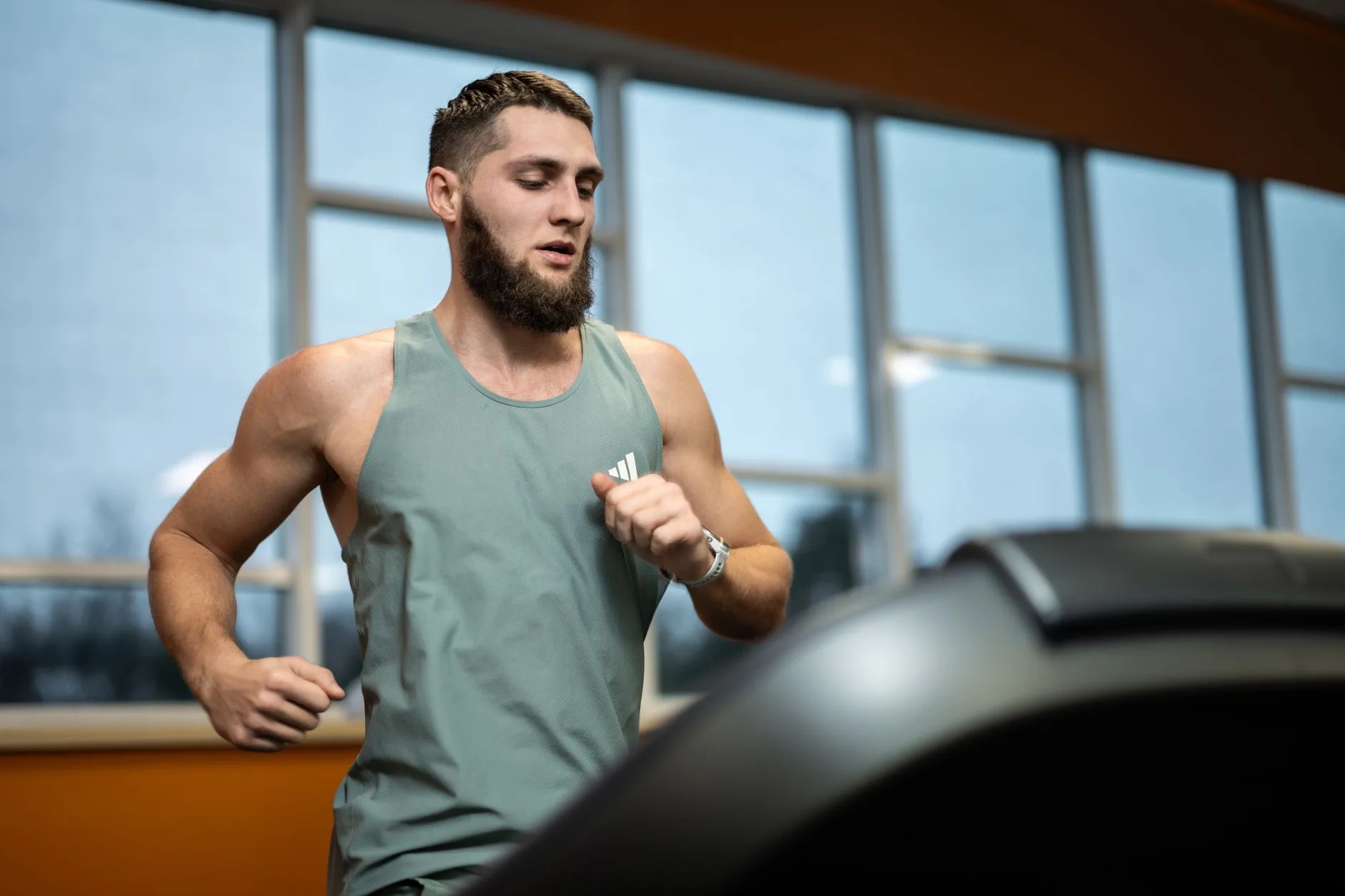
Photo by Ярослав Левченко on Pexels
Running and muscle building are often treated as opposites — one for cardio, one for strength. The reality is more nuanced. Running does build and maintain certain muscles, but it’s not an efficient route to significant muscle mass, and doing too much of it can actively interfere with muscle building goals.
What Muscles Does Running Work?
Running primarily loads the following muscles:
Quadriceps: Front of the thigh. Absorb impact at foot strike and provide power during the push-off phase. Running downhill particularly challenges the quads eccentrically.
Hamstrings: Back of the thigh. Drive hip extension during the running stride. Key for speed; a common injury site for faster runners.
Calves (gastrocnemius and soleus): Absorb impact and provide propulsive force at toe-off. The soleus in particular handles significant load during long-distance running.
Glutes (gluteus maximus and medius): Hip extension and pelvis stabilisation. Weak glutes are associated with many common running injuries (IT band syndrome, runner’s knee).
Hip flexors: Lift the leg during the forward swing phase. Often tight in runners who also sit for extended periods.
Core: Stabilises the torso and pelvis during the gait cycle. Weak core contributes to inefficiency and injury.
Does Running Build Muscle Mass?
For people new to running or returning after a break: yes, running causes muscle adaptation. Muscles that were previously underloaded respond to the new stimulus with hypertrophy (growth) and strength gains — particularly in the legs and calves.
For experienced runners or people already active: the muscle-building stimulus from running becomes progressively smaller as the muscles adapt. Long-distance easy running at the same pace week after week provides minimal additional hypertrophy stimulus to adapted muscles.
The honest answer: Running builds and maintains muscle in beginners and in the muscles that work hardest (calves, to some extent quads). For significant muscle mass gains, progressive resistance training is far more effective.
Which Types of Running Are Best for Muscle?
Hill running: Running uphill engages the glutes, hamstrings, and calves more forcefully than flat running. The concentric (shortening) muscle action against gravity provides a more significant hypertrophy stimulus than flat terrain.
Downhill running: Increases eccentric (lengthening under load) quad activation — the type of muscle action most associated with muscle damage and subsequent growth. Causes significant delayed-onset muscle soreness (DOMS) in runners unaccustomed to it.
Sprints and intervals: Short, high-intensity efforts recruit fast-twitch muscle fibres that slow steady-state running doesn’t. Sprint training produces greater lower-body muscle adaptation than long slow distance.
Slow long-distance running: The least effective type of running for muscle building. Primarily improves aerobic efficiency and mitochondrial density without significant hypertrophy.
Does Running Interfere with Muscle Building?
For people whose primary goal is building muscle mass, excessive running can be counterproductive. Two mechanisms:
Caloric competition: Building muscle requires a caloric surplus. Long-distance running burns significant calories — if not adequately replaced, the body may catabolise (break down) muscle for fuel rather than building new tissue.
Interference effect: Combining endurance training with resistance training in the same sessions, or with too little recovery between them, reduces the anabolic (muscle-building) signalling from resistance training. Running activates AMPK (energy-sensing pathway); resistance training activates mTOR (muscle-building pathway). Excessive endurance work can blunt mTOR signalling.
Practical implication: if muscle building is the priority, keep running volume low (2–3 shorter runs per week), ensure adequate protein intake (1.6–2.2g per kg of bodyweight), and maintain a caloric surplus.
Protein and Fuelling
Muscle is built from protein. Runners who want to maintain or build muscle should eat sufficient protein:
- General recommendation: 1.6–2.0g protein per kg of bodyweight per day
- For heavier training: Up to 2.2g/kg
A 75kg runner should aim for approximately 120–165g of protein daily.
Post-run protein within 2 hours of finishing supports muscle repair and adaptation. 20–40g of protein (a chicken breast, Greek yogurt, or protein shake) is a practical target.
Inadequate protein is the most common reason runners struggle to maintain muscle — particularly those running high mileage without paying attention to nutrition.
Running and Muscle Loss
Long-distance running does not cause muscle loss in well-nourished runners — this is a persistent myth. However:
- Severely underfuelled running (common in runners who also restrict calories) can cause muscle catabolism
- Very high mileage combined with low protein intake is the scenario most likely to reduce muscle mass
- Elite marathon runners are lean partly because they train extensively, not because running inherently destroys muscle
Run adequate mileage for your goals, eat enough protein, and don’t significantly under-eat — muscle loss from running is then not a concern.
Summary
Does running build muscle?
- Yes, in beginners and in the primary running muscles (calves, glutes, quads) — but the stimulus is smaller than resistance training
- Hill running and sprints build more muscle than flat easy running — higher muscle recruitment and eccentric loading
- For significant muscle gains, add resistance training — running complements it but doesn’t replace it
- Eat enough protein — 1.6–2.0g per kg of bodyweight is the evidence-based range for runners wanting to maintain or build muscle
- Running doesn’t cause muscle loss in well-nourished runners — the issue is caloric deficit combined with high mileage, not running itself
Next read: Heart rate zones for running explained