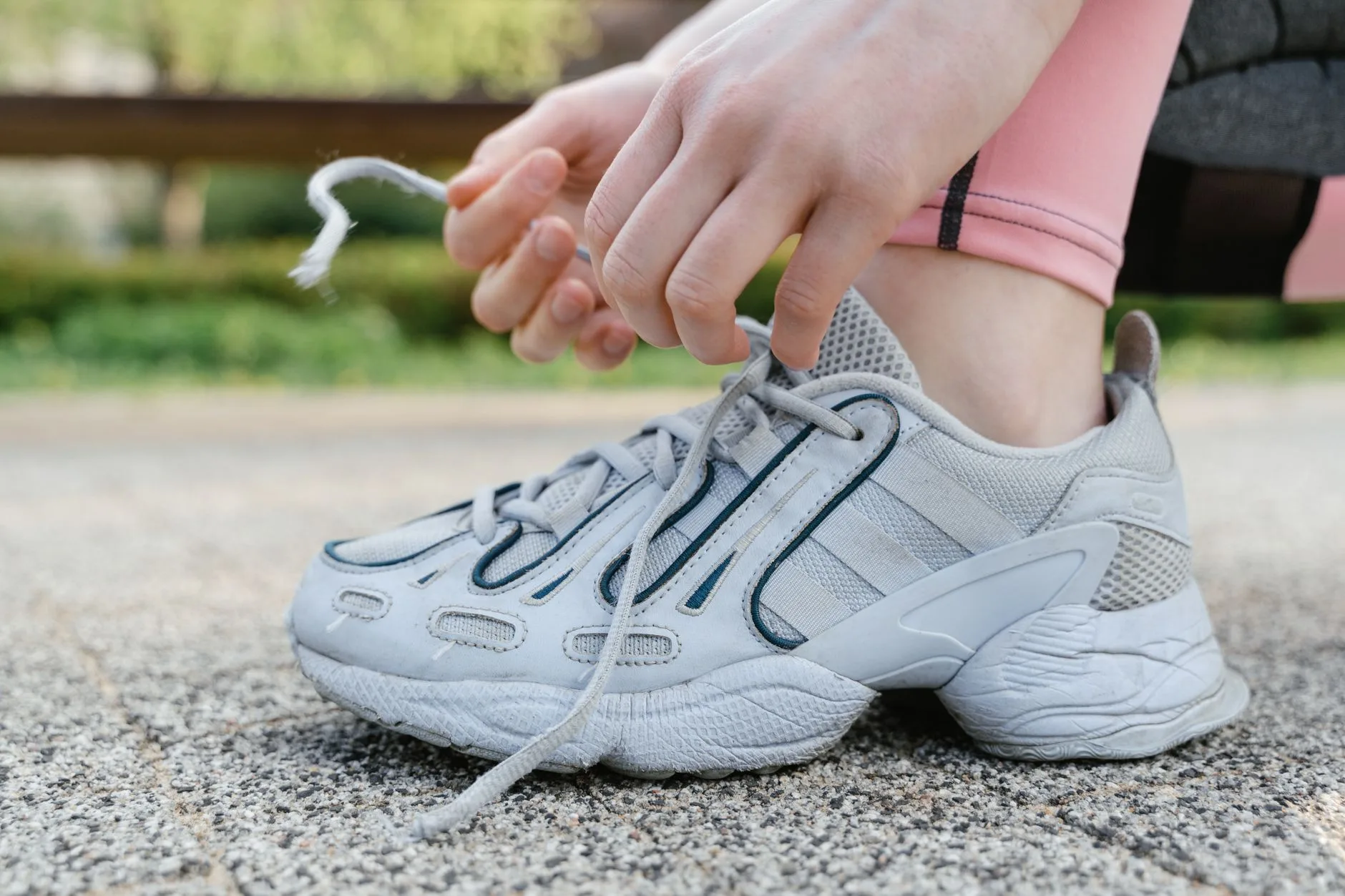
Photo by MART PRODUCTION on Pexels
Flat feet — technically called pes planus or low-arched feet — are extremely common. Approximately 20–30% of people have them to some degree, and many run without any problems at all. The key is understanding what flat feet actually mean for running, and what shoe features are (and aren’t) relevant.
What Are Flat Feet?
Flat feet means the arch of the foot makes full or near-full contact with the ground when standing. In runners, this often (but not always) correlates with overpronation — the foot rolls excessively inward during the gait cycle.
The important distinction: flat feet and overpronation are not the same thing. You can have flat feet without significant overpronation. And overpronation can cause problems or none at all, depending on individual biomechanics.
Do Flat Feet Cause Running Injuries?
Flat feet themselves don’t inevitably cause injuries. Many elite runners have low arches and run without problems. What matters is how load is distributed during the gait cycle — and this depends on biomechanics, foot strength, and training load, not just arch height alone.
The overpronation associated with flat feet can contribute to specific injuries if excessive:
– Runner’s knee (patellofemoral pain)
– Shin splints (medial tibial stress syndrome)
– Plantar fasciitis
– Achilles tendinopathy
But these injuries have multiple causes. Flat feet are one possible contributing factor, not an automatic injury sentence.
What Shoes Work for Flat Feet?
Traditionally, flat-footed runners were directed toward motion control or stability shoes with pronounced arch support and medial post features to control pronation. The current evidence suggests a more nuanced approach.
Stability shoes: The most commonly recommended category for mild to moderate overpronation. They include a firmer foam section (often visible as a different colour in the midsole) on the medial (inner) side that reduces excessive inward roll. Not as rigid as motion control; suits most flat-footed runners.
Motion control shoes: The most supportive category — rigid, heavier, and designed for severe overpronation. A small proportion of flat-footed runners genuinely need these. Most don’t.
Neutral shoes: Appropriate for flat-footed runners who don’t overpronate significantly. Arch height alone doesn’t determine whether you need a stability shoe — watch your gait, not just your arch.
The best approach: Get a gait analysis at a specialist running shop. A trained staff member watching you jog for 30 seconds tells you far more about whether you overpronate than any arch shape assessment.
Specific Shoes Worth Considering (UK Availability)
Asics Gel-Kayano 31: Long-running stability workhorse. Consistent support, good cushioning, widely available. From £130.
Brooks Adrenaline GTS 24: The bestselling stability shoe globally. Excellent for mild to moderate overpronation. From £130.
New Balance Fresh Foam 860v14: Stability with a more modern, cushioned feel. Good for runners who find traditional stability shoes too rigid. From £125.
Saucony Guide 17: Lighter stability option. Good for runners who want support without the weight of a traditional stability shoe. From £120.
HOKA Arahi 7: HOKA’s stability shoe — maximalist cushioning combined with J-Frame technology for overpronation control. Popular with flat-footed runners who want high cushioning. From £140.
All available at Wiggle, Running4Women, Up and Running, Sweatshop, and direct from brand websites.
Gait Analysis: The Essential First Step
Don’t buy running shoes for flat feet without a gait analysis. Here’s why: the appropriate shoe for a flat-footed runner who mildly overpronates is different from the appropriate shoe for a flat-footed runner who overpronates severely, and different again from one who doesn’t overpronate despite low arches.
Where to get one: Specialist running shops — Up and Running, Sweatshop, Runners Need, Run 4 It, your local independent running shop — offer free gait analysis as part of the shoe-buying process. They’ll watch you jog on a treadmill (some use video analysis), assess your pronation level, and recommend appropriate shoes.
This service is free and takes 10–15 minutes. It’s the single most useful thing you can do before buying running shoes.
Insoles and Orthotics
Custom orthotics from a podiatrist provide bespoke arch support and correction. They’re most beneficial for runners with significant biomechanical issues that standard stability shoes don’t fully address.
Off-the-shelf insoles: Products like Superfeet Green, Sole Footbeds, and Powerstep Pinnacle provide more support than the standard insole that comes with running shoes. A worthwhile option if you want additional arch support without the cost of custom orthotics.
Custom orthotics: From a podiatrist, typically £150–400. Worth considering for persistent injury related to overpronation that hasn’t resolved with appropriate footwear.
Strengthening the Foot and Arch
Shoe selection addresses external support. Internal support — the strength of the foot’s intrinsic muscles and the posterior tibialis tendon — matters equally.
Key exercises:
– Towel toe curls: Scrunch a towel with your toes. 3 × 20 repetitions.
– Short foot: While seated, shorten the foot by pulling the ball of the foot toward the heel without curling the toes. Activates the intrinsic foot muscles. 3 × 10, hold 5 seconds.
– Calf raises: Single-leg calf raises strengthen the gastrocnemius and soleus, which support the arch indirectly. 3 × 15–20 each leg.
These don’t replace appropriate footwear but build the foot’s capacity to handle running load over time.
Summary
Running shoes for flat feet in the UK:
- Get a gait analysis first — flat feet don’t automatically mean you need stability shoes; an assessment shows what you actually need
- Stability shoes (not motion control) suit most flat-footed runners — Brooks Adrenaline GTS and Asics Gel-Kayano are the benchmark options
- HOKA Arahi is the best choice for runners who want high cushioning with stability support
- Strengthen your feet and calves — intrinsic foot muscle exercises build the arch’s internal support, reducing long-term reliance on shoe technology
- Replace shoes every 300–500km — worn-out midsoles lose their support properties even if the upper still looks fine
Next read: Do running insoles help performance and injury prevention?