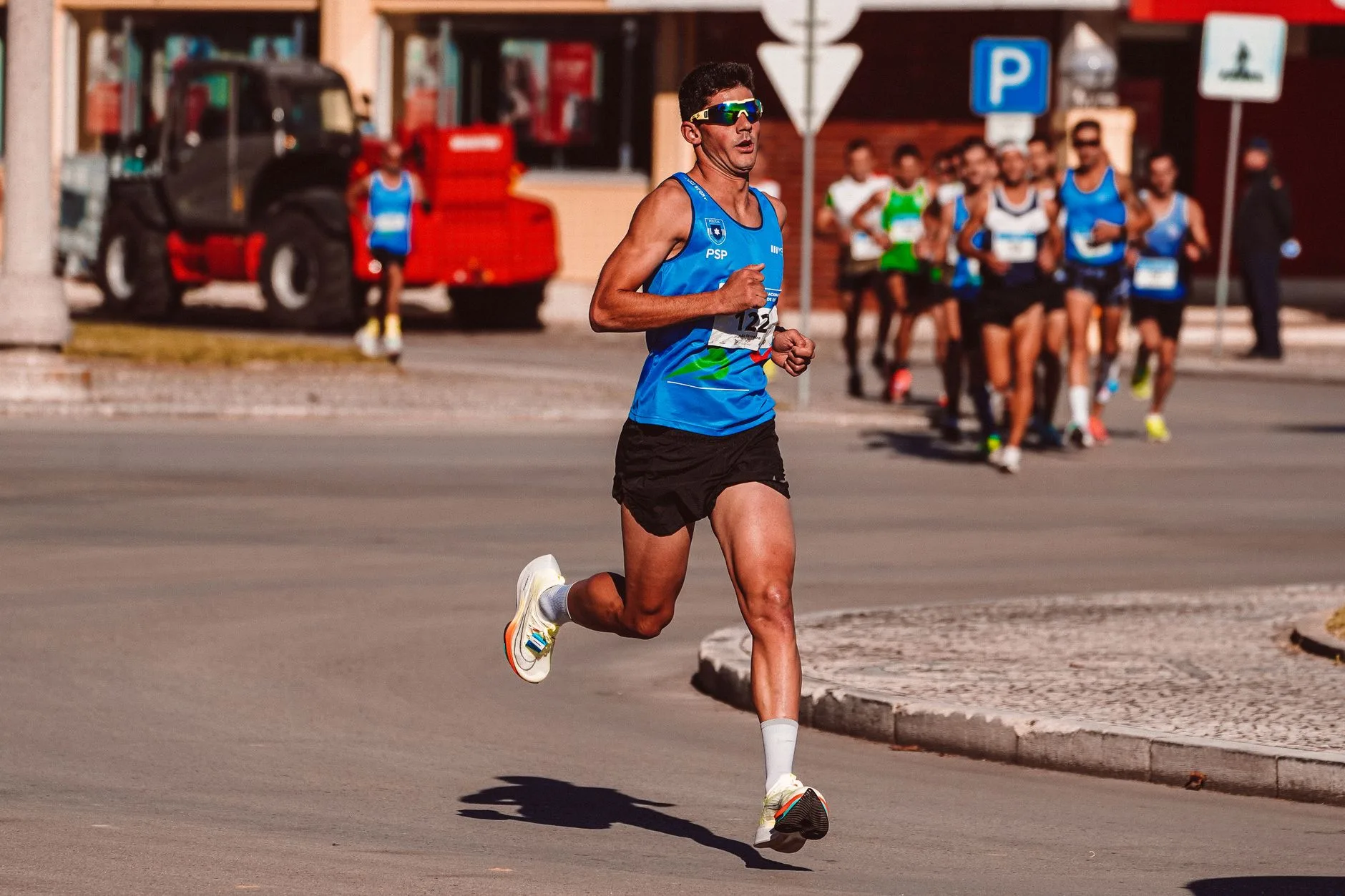
Photo by RUN 4 FFWPU on Pexels
You’ve trained for weeks. Race morning arrives, the gun goes off, and somehow you run your first kilometre 30 seconds faster than anything you’ve practised. It feels easy. Everyone around you is moving, the adrenaline’s doing its thing, and slowing down feels wrong. Then at some point — maybe 6k, maybe mile 10 — it stops feeling easy at all.
This is the single most common mistake in racing, at every level, from first-timers to people who’ve run a dozen marathons. It’s not about fitness. It’s about pacing. And the frustrating part is that pacing isn’t complicated — it’s just hard to do when your body is full of nervous energy and 2,000 other people are sprinting past you in the first 400 metres.
This guide isn’t about perfecting your pacing down to the second. It’s about avoiding the big, costly mistakes that turn a good training block into a miserable last 20% of a race. If you can do that, you’ll finish stronger, enjoy it more, and probably run a faster time than you would have by going out hard.
Why pacing goes wrong (and it’s not your fault)
Races are loud, crowded, and full of adrenaline — none of which exist on your Tuesday evening training runs. Your body genuinely feels different on race day. Heart rate is elevated before you’ve even started. Everyone around you is moving at paces that have nothing to do with your plan. The result: most runners go out 10–20 seconds per kilometre faster than they intend to, without realising it, because “easy” doesn’t feel like 10k-race-pace-minus-30-seconds when there’s a crowd carrying you forward.
The fix isn’t willpower. It’s having a number in your head before you start, and a plan for the first kilometre that assumes you’ll want to go faster than that number.
Work out your actual target pace first
You can’t pace a race you haven’t thought about. Before race day, work out a realistic target finish time based on your training — not your hopes. A decent way to do this: take your pace from a recent hard training run or a tune-up race and use a pace calculator, or go simpler — look at your long run pace and add roughly 15–30 seconds per km for marathon effort, or 5–15 seconds per km for a half marathon.
If you’re following a structured plan — like a 12-week half marathon training plan or an 8-week 10k plan — your long runs and tempo sessions should already be giving you a realistic sense of sustainable effort. Trust that data over race-day optimism.
Here’s a rough pacing breakdown by distance, assuming an even-effort approach:
| Distance | Typical mistake pace | Smarter approach |
|---|---|---|
| 5K | Sprint first km, fade hard by km 4 | First km 5–10 sec/km slower than target, push last km |
| 10K | Fast first 2–3k, survive the rest | Even pace throughout, slight negative split if it feels good |
| Half marathon | Bank time early, hit the wall at 16k | First 5k conservative, settle into rhythm by 8k |
| Marathon | Go out at 10k pace, blow up at mile 18–20 | First 10k at or slightly slower than goal pace, no exceptions |
The first kilometre rule: run it slower than feels necessary
This is the single highest-leverage piece of advice in this entire guide. In your first kilometre, run 10–15 seconds per km slower than your goal pace. It will feel too slow. That’s the point. The adrenaline and crowd will naturally push you faster than you think, so starting deliberately conservative usually just means you end up at roughly the right pace anyway.
If you’re using a GPS watch, don’t stare at instant pace — it jumps around too much in dense crowds and under bridges. Look at average pace per kilometre instead, and make your decisions off that.
Even effort beats even pace — especially on hills and in heat
Beginners often get fixated on hitting identical splits every kilometre. That’s a reasonable goal on a flat, cool course. But real courses have hills, wind, and weather, and effort should stay steady even when pace can’t.
On an uphill, slow down and let your pace drop rather than matching the effort of the flat section — you’ll pay for it later if you don’t. On the downhill after, let gravity help a little, but don’t sprint it; braking hard on your quads on a long descent is a classic way to wreck your legs for the second half.
In heat, a wall of effort you were planning for the flat 15°C forecast simply isn’t available to you at 22°C. Research on exercise in the heat (see NHS guidance on exercising safely in hot weather) consistently shows that heart rate and perceived effort rise even at the same pace — so adjust your target down rather than forcing a number that isn’t realistic that day.
Mid-race: the part nobody prepares you for
Somewhere in the middle third of any race — 5k in a 10k, 10–12k in a half, 16–20 miles in a marathon — the excitement wears off and it just becomes work. This is normal. It is not a sign that something has gone wrong.
A few concrete things that help:
- Break the race into chunks. Instead of thinking “I have 8k left,” think “I just need to get to the next water station” or “I’ll reassess at 15k.” Smaller targets are mentally easier to hold onto than the full remaining distance.
- Check your form, not just your watch. Relax your shoulders, unclench your jaw, check your arm swing isn’t getting wild. Tension wastes energy.
- Use other runners strategically. If someone’s moving at a pace that matches your plan, tuck in near them rather than constantly checking your watch. It’s one less decision to make.
- Fuel on schedule, not when you feel like it. If your plan says a gel every 45 minutes, take it then — not when you’re already flagging. By the time you feel low on energy, you’re already behind on fuelling. For specifics on race-day nutrition timing, it’s worth reading up on carbohydrate loading before a marathon, even for shorter races the fuelling principles carry over.
The last 20%: when it’s okay to finally let go
Here’s the payoff for all that restraint: once you’re into the last 20–25% of the race — the final 5k of a half marathon, say, or the last 1k of a 5K — and you’ve paced it well, you should have something left. This is where you’re allowed to pick it up.
If you’ve gone out conservatively and it’s gone to plan, you’ll likely find the last section feels better than the middle, not worse. That’s the sign of a well-paced race, and it’s also usually when the fastest finish times happen — a slight negative split (second half faster than the first) is a strong indicator of smart racing, not just good luck.
If instead you’re grinding through the last 20% just trying to survive, that’s useful information for next time — not a personal failure. Pacing is a skill you build over multiple races, not something you nail on your first attempt. For practical, specific advice on race morning logistics around this stage, check out 10k race day tips for a personal best.
Walk breaks are a pacing strategy, not a failure
If you’re planning run-walk intervals — common and completely legitimate for first-timers or anyone chasing a finish rather than a specific time — pacing still applies. Walking isn’t the opposite of pacing; it’s a tool within it.
The key is deciding your walk breaks in advance (e.g. 1 minute walking every 9 minutes running) and sticking to that plan regardless of how good or bad you feel at any given point, rather than improvising breaks only when you’re already struggling. Planned breaks keep your overall effort controlled. Improvised ones are usually a sign pacing has already gone wrong earlier in the race.
The Honest Takeaway
- Write down your target pace per kilometre or mile before race day, and run your first kilometre 10–15 seconds slower than that number — every single time, no matter how good you feel.
- Use average pace on your watch, not instant pace, and check it every kilometre rather than every few seconds.
- Adjust effort for hills, wind, and heat — a steady number on your watch means nothing if the effort behind it keeps changing.
- Fuel and hydrate on a schedule you decided beforehand, not reactively once you’re already struggling.
- Expect the middle of the race to feel like work. That’s normal. Save your judgement about how the pacing went until you’re past the finish line, not at kilometre 8.
Next read: First 10k race day: what to expect and how to handle it