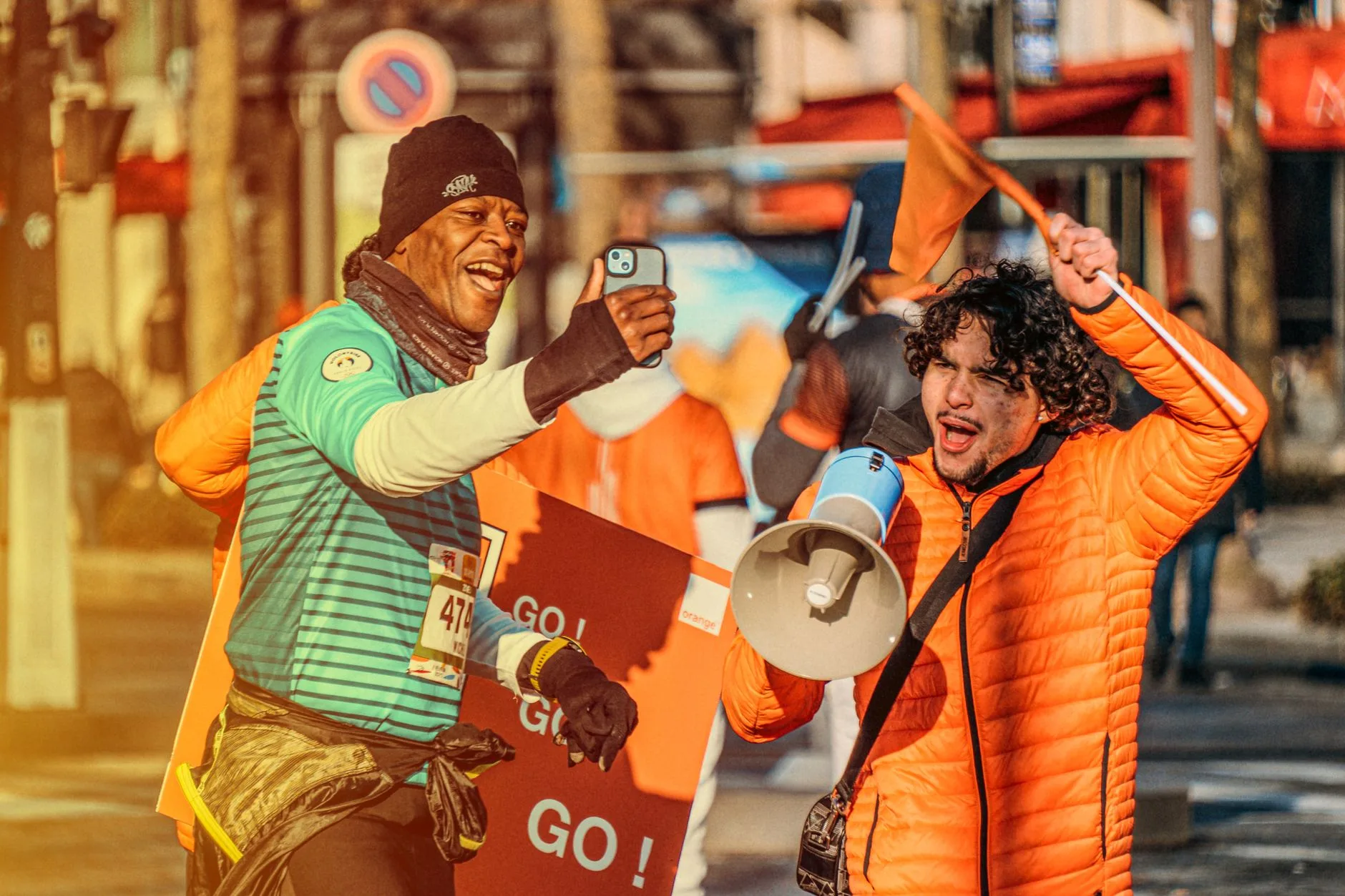
Photo by Abdelmoughit LAHBABI on Pexels
You’ve got the entry confirmation email sitting in your inbox, the flights or Eurostar tickets booked, and a growing sense that you should probably start actually training soon. The Paris Marathon in April is one of the most popular first marathons in Europe for good reason — it’s flat-ish, it’s scenic (you run past the Eiffel Tower, through the Bois de Vincennes, along the Seine), and it has a reputation as a “fast” course. That reputation is only half true, and it’s the half that catches a lot of first-timers out.
This guide isn’t about hyping up how magical the Champs-Élysées start line feels (it does feel good, for what it’s worth). It’s about the practical stuff nobody tells you until you’re standing in the cold at 7:30am wondering where the toilets are, or hitting cobblestones at kilometre 35 with legs that have nothing left.
Is Paris actually a beginner-friendly marathon?
Yes, mostly. The course has very little elevation gain — around 100m total across the whole 42.2km, mostly in the first half through the Bois de Boulogne and Bois de Vincennes. There’s no single brutal hill like Boston’s Heartbreak Hill. But “flat” doesn’t mean “easy,” and it doesn’t mean “smooth.”
Two things surprise first-timers most:
- The cobblestones. There are stretches, particularly near Place de la Concorde and around the Louvre, where you’re running on old cobbled surfaces. They’re uneven, they can be slippery if it’s rained, and by the point you hit them (often past halfway), your form is already starting to fray. This is exactly the kind of thing that turns a manageable ache into a genuine problem — if you’ve had any hip flexor pain or Achilles issues in training, cobbles will find it.
- The crowding early on. Paris caps entries around 55,000–60,000 runners, and the first 5km can feel genuinely congested, especially if you’re seeded in a slower corral than your actual pace. Don’t panic about your early splits being slow — you’ll get room to run properly after the first couple of kilometres.
When to start training (and what if you’re already behind)
If race day is 16 weeks out, you’re in good shape — a structured 16-week marathon training plan is the standard runway for a first marathon, and it gives you time to build a real aerobic base before the harder long runs stack up.
If you’re inside 12 weeks and you’ve been running consistently at 3–4 times a week already, you can still get there — you’ll just compress the base-building phase and lean more heavily on long runs and consistency than on speedwork. If you’re inside 8 weeks and haven’t run more than 10km in one go, be honest with yourself: this might be a “finish and enjoy it” race rather than a time-goal race. That’s a completely legitimate way to run a marathon. Nobody at the finish line is checking your training log.
Pacing: the mistake almost everyone makes
The single biggest reason first-time Paris Marathon runners blow up isn’t the cobblestones or the crowds — it’s going out too fast because the flat course and downhill start feel deceptively easy. The first 5km actually has a gentle net descent, and adrenaline plus a fast-feeling surface means people run 10-15 seconds per km faster than their planned pace without realising it.
Here’s a rough pacing guide based on target finish times:
| Target finish time | Pace per km | Pace per mile | Half marathon split |
|---|---|---|---|
| 3:30 | 4:59/km | 8:01/mile | 1:45:00 |
| 4:00 | 5:41/km | 9:09/mile | 2:00:00 |
| 4:30 | 6:24/km | 10:19/mile | 2:15:00 |
| 5:00 | 7:07/km | 11:28/mile | 2:30:00 |
| 5:30 | 7:49/km | 12:37/mile | 2:45:00 |
The pattern worth noticing: your second half should be roughly even, or a few minutes slower than your first — not dramatically slower. If you’re 10+ minutes slower in the second half, that’s the wall talking, and there’s a decent chance it started with a first 10km that felt “too easy to be this pace.” If you want more detail on why that happens and how to actually avoid it, it’s worth reading up on hitting the wall in a marathon before race week, not during it.
Fueling on the course
Paris has aid stations roughly every 5km, offering water, and at several points, energy drinks, bananas, and oranges. That’s less frequent than some US marathons, so don’t assume you can wing it without your own plan.
Practical numbers: aim for 30–60g of carbohydrate per hour from around the 45-minute mark onwards, which usually means one energy gel every 30–40 minutes, plus water at most aid stations. Practice this exact routine on your long runs — race day is not the moment to try a new gel brand. If you haven’t nailed down your carb-loading approach in the days before, carbohydrate loading before a marathon is worth reading properly, because getting it wrong (too little, or too much too late) causes as many DNFs as poor training does.
Race weekend logistics that actually matter
- Expo and bib collection: Usually held at Porte de Versailles, typically Thursday to Saturday before the race. Go early in the week if you can — Saturday afternoon queues can eat two hours of your pre-race rest.
- Getting to the start: The race starts on the Champs-Élysées near the Arc de Triomphe. Metro lines get packed on race morning; plan to arrive at least 90 minutes before your wave.
- Baggage drop: Available, but it’s a walk from where buses/metro drop you, and queues form. Wear a throwaway layer you’re happy to lose if the bag drop line is too long.
- Weather: April in Paris ranges from 5°C to 20°C, and it can genuinely go either way on the same race weekend across different years. Check the forecast the week before and pack layers you can discard — don’t commit to shorts-and-vest until race morning.
- Toilets: Fewer portaloos near the start than you’d expect for 55,000 runners. Queue early, or use facilities at a nearby café before you reach the corrals.
What to actually pack
Beyond the obvious kit, a few things first-timers forget:
- Vaseline or an anti-chafe balm for underarms, thighs, and anywhere your kit rubs — cobblestone-length races are long enough for chafing to become a real problem by kilometre 30. If you’ve been caught out before, it’s worth reading what anti-chafe products actually hold up over 4+ hours of movement.
- A throwaway bin bag or old jacket for the start corral wait, which can be 45+ minutes in the cold.
- Blister plasters, even if you’ve never blistered in training — race-day adrenaline and slightly different pacing than your long runs can create new pressure points. Blister prevention the night before matters more than most people think.
Comparing Paris to other first-marathon options
If you’re still deciding whether Paris is the right choice for your debut, here’s how it stacks up against other popular first marathons:
| Factor | Paris | Typically flatter/smaller options |
|---|---|---|
| Course profile | Flat overall, some cobbles | Varies — check locally |
| Field size | ~55,000 (crowded early km) | Often 5,000–20,000 |
| Weather risk | Moderate (April swings) | Depends on season |
| Atmosphere | High — landmark-heavy route | Usually quieter |
| Beginner suitability | Good, with pacing discipline | Often easier to control pace |
None of this means Paris is a bad choice — it’s a genuinely good one. It just means “flat
Next read: 16-week marathon training plan for beginners