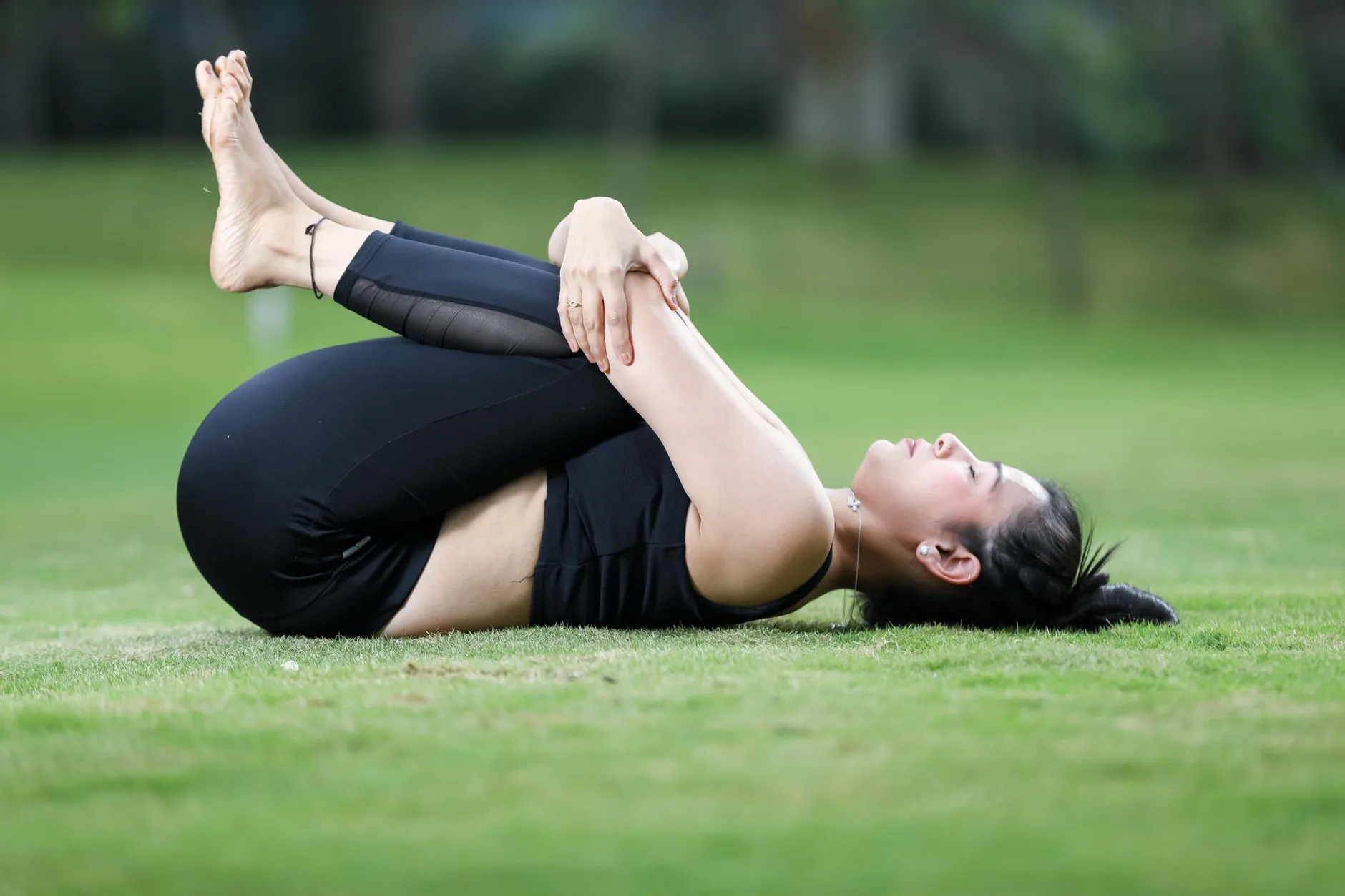
Photo by Anil Sharma on Pexels
Your hips feel like they’ve been in a cast all day. Your hamstrings have a permanent, low-grade tightness that no amount of stretching before a run seems to shift. And somewhere between the school run, work, and your training plan, “do some yoga” has been sitting on your to-do list for about three months, unmoved.
Here’s the honest version: you don’t need 90 minutes on a mat, a subscription to a studio, or the ability to touch your toes. Yoga for runners isn’t about flexibility for its own sake — it’s about undoing what running does to your body. Running is repetitive, forward-only, and mostly in one plane of motion. It shortens your hip flexors, tightens your calves, and does nothing for your thoracic spine or your ankles’ range of motion sideways. Fifteen to twenty minutes of the right poses, two or three times a week, addresses exactly that — no chanting required.
This isn’t a replacement for your training plan or your warm-up before running. It’s a specific tool for a specific job: restoring range of motion in the joints running keeps stiff, and giving your nervous system a genuine down-shift on easy days.
Why runners specifically need this (and static stretching alone doesn’t cut it)
Static stretching — holding a hamstring stretch for 30 seconds before a run — has a fairly weak evidence base for injury prevention, and doing it cold can actually reduce short-term power output. That’s not an argument against stretching. It’s an argument for doing it at the right time, in the right way.
Yoga poses held for longer (60–90 seconds), done when your muscles are warm — ideally after a run, or on a separate day — work differently. They combine a static stretch with controlled breathing, which helps your nervous system tolerate the stretch rather than reflexively resisting it. Over weeks, this genuinely does improve range of motion, particularly in the hips and ankles, which are the two areas most runners are stiffest in and least aware of.
The other underrated part: yoga forces you to notice asymmetry. Most runners have one hip tighter than the other, or one calf that never fully releases. You won’t spot that jogging. You will spot it holding pigeon pose for 90 seconds and feeling one side scream while the other feels fine.
The 8 poses that actually matter for runners
You don’t need a 40-pose sequence. These eight cover the areas running abuses most: hip flexors, hamstrings, calves, glutes, and the thoracic spine (which gets ignored constantly and affects your arm swing and breathing mechanics).
| Pose | Targets | Hold time | Best timing |
|---|---|---|---|
| Low lunge (Anjaneyasana) | Hip flexors, psoas | 60–90 sec each side | Post-run, rest day |
| Pigeon pose | Glutes, piriformis, hip rotators | 60–90 sec each side | Post-run, evening |
| Downward dog | Calves, hamstrings, shoulders | 45–60 sec, 2–3 rounds | Warm-up (dynamic) or post-run |
| Standing forward fold | Hamstrings, lower back | 60 sec | Post-run only, never cold |
| Reclined figure-4 | Glutes, IT band area | 60 sec each side | Any time, even in bed |
| Thread the needle | Thoracic spine, shoulders | 45 sec each side | Rest day, desk break |
| Supine spinal twist | Lower back, obliques | 45–60 sec each side | Evening, wind-down |
| Child’s pose | Full-body release, breathing reset | 60–90 sec | End of every session |
A note on pigeon pose specifically: if you’ve got any Achilles or knee sensitivity, ease into it gently and don’t force the front shin flat — a slight bend is fine. If you’re managing Achilles tendinopathy, skip deep ankle-loading positions like a full downward dog hold and stick to the hip-focused poses instead.
A realistic 15-minute routine (not a studio class)
Here’s a sequence that fits in after a run, on the living room floor, without a mat if you don’t have one:
- Child’s pose — 60 seconds, just breathing
- Low lunge — 90 seconds each side
- Pigeon pose — 90 seconds each side
- Downward dog — 3 rounds of 45 seconds, pedalling the heels
- Standing forward fold — 60 seconds, knees soft
- Reclined figure-4 — 60 seconds each side
- Supine spinal twist — 60 seconds each side
- Child’s pose — 90 seconds to finish
Total time: roughly 15–17 minutes. Do this twice a week and you’ll notice a difference in hip mobility within about three to four weeks — not overnight, but not months either.
When to actually do this (because “sometime this week” never happens)
The people who stick with this don’t add it as a separate session — they attach it to something already scheduled. Two realistic slots:
- Straight after an easy run or recovery run, while you’re still warm. This is genuinely the best time — your muscles are pliable and you’re not going anywhere fast afterwards.
- As part of a rest day, in the evening, as a wind-down. This works well for the nervous-system side of things — slow breathing before bed genuinely helps some runners sleep better, which matters more for recovery than most people realise. If sleep is your actual bottleneck, it’s worth reading about how much sleep runners need to recover properly alongside this.
What doesn’t work well: doing yoga cold, immediately before a hard session, expecting it to replace your dynamic warm-up. Save the long static holds for after training, not before a tempo run.
What yoga won’t fix
Being honest here matters more than being enthusiastic. Yoga won’t fix a genuine biomechanical issue — a hip that’s tight because of weak glutes needs strengthening, not just stretching. It won’t replace strength training; a runner with weak glute medius won’t solve that with pigeon pose, they need banked side steps and single-leg work. And it’s not a substitute for proper cross-training if you’re trying to build aerobic fitness on non-running days.
It also won’t undo the damage of ignoring pain. If something hurts during a pose — sharp, not a stretch sensation — stop. Yoga should feel like tension releasing, not injury in progress.
Do you need a class, an app, or neither?
Studio yoga classes marketed at runners are often just general vinyasa flow with a few hip openers thrown in. They’re fine if you enjoy the format, but they’re not more effective than doing the eight poses above at home. Free options like YouTube “yoga for runners” sequences (Yoga With Adriene has a well-known one) work just as well for most people, and cost nothing.
If you’re someone who needs structure to actually show up, an app with a timer and voice guidance might genuinely help you stick with it — that’s worth more than the “correct” studio experience. If you’re someone who does better with zero friction, just do the eight-pose list above from memory. Both are legitimate. Neither is more “real” yoga than the other.
The NHS’s general exercise guides cover the basics of yoga’s benefits for flexibility and stress if you want a plain, non-marketed overview before deciding whether to commit time to it.
The Honest Takeaway
- Do the eight poses above for 15 minutes, twice a week, straight after an easy run — that’s the entire commitment, not an hour-long class.
- Hold poses 60–90 seconds when warm, not cold, and never force a stretch that produces sharp pain rather than tension.
- This complements your training, it doesn’t replace strength work — tight hips from weak glutes need strengthening, not just stretching.
- Give it three to four weeks before judging whether it’s working. Flexibility gains are gradual, not a one-session fix.
- If you’re managing an existing issue like Achilles or hip pain, modify the poses that load that area rather than skipping yoga altogether.
Next read: Pair yoga with proper mobility work using these warm-up exercises before running