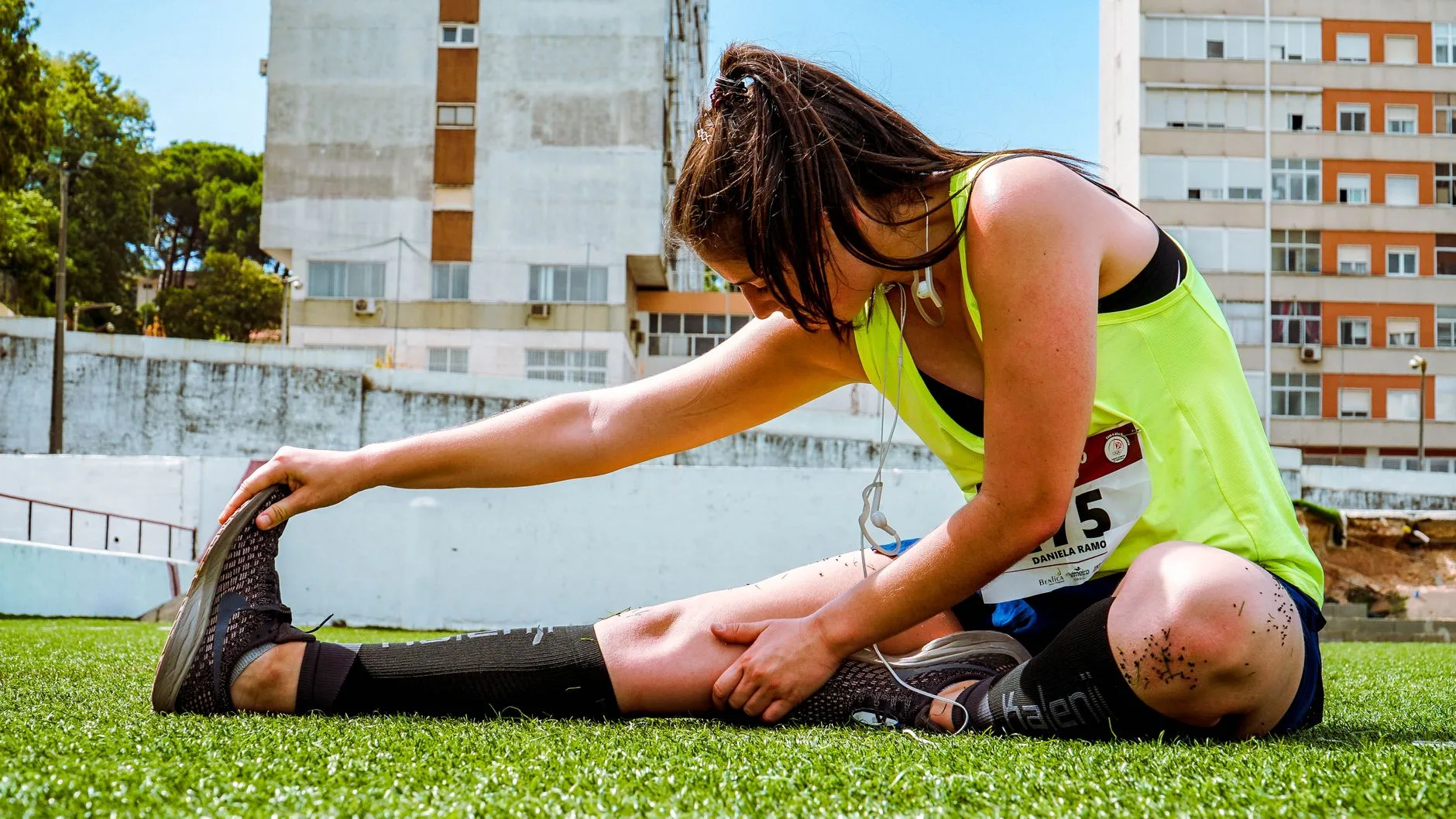
Photo by RUN 4 FFWPU on Pexels
That dull, bruised ache along the front or inside of your shin — the one that starts about ten minutes into your run and makes you wince going downstairs the next morning — has a name you already know. Shin splints (medial tibial stress syndrome, if you want the full clinical version) are one of the most common running injuries, and also one of the most mismanaged. People either stop running entirely for six weeks out of fear, or they grit their teeth and run through it, which almost always makes it worse.
Here’s the uncomfortable truth: there’s no 48-hour fix. Anyone promising you’ll be pain-free and back to full mileage in three days is selling something. But there is a reliable, evidence-based path that gets most runners running again within 2–4 weeks, and — more importantly — stops the whole cycle repeating itself every autumn when you ramp up mileage.
This article covers what actually works, in what order, and why so many runners get stuck in a loop of rest-return-reinjure.
What’s actually happening to your shin
Shin splints are an overuse injury — repeated stress on the tibia and the muscles/connective tissue attached to it, faster than your body can repair. It’s not a single event like a sprain. It’s an accumulation, usually from one of three things: a sudden jump in mileage, a change in surface (lots of road after months on trail, or vice versa), or worn-out shoes that aren’t absorbing impact the way they used to.
It sits on a spectrum. Mild cases are soreness that fades as you warm up. Left unaddressed, that can progress toward a tibial stress fracture — which is a completely different injury with a completely different timeline (think 6–12 weeks of no impact, not 2–4). This is the single biggest reason not to push through shin splints: you’re not being brave, you’re risking turning a 3-week problem into a 3-month one.
Red flag check: if the pain is in one very specific pinpoint spot (you could cover it with a fingertip) rather than a diffuse area 5–10cm long, or if it hurts to hop on one leg, or it’s there even when you’re not running — see a physio or GP before doing anything else. That pattern suggests possible stress fracture, not shin splints.
The first 72 hours: calm it down
This isn’t about heroics. It’s about reducing the inflammatory load so the tissue can actually start repairing.
- Stop running on it for now. Not forever — just until the acute pain settles. Usually 5–10 days for mild cases.
- Ice for 15 minutes, 2–3 times a day if it feels hot or acutely sore. This isn’t magic healing, it’s pain management, and that’s fine.
- Ibuprofen or paracetamol can help short-term for pain, but don’t use them to mask symptoms so you can keep training — that’s exactly the trap that turns this into a longer injury. The NHS has sensible guidance on managing shin splints that’s worth a read if you want the baseline medical view.
- Keep moving, just not on the shin. Swimming, cycling, or the elliptical keep your cardio fitness ticking over without the repetitive impact. This matters more than people think — losing all your aerobic base while you wait is demoralising and unnecessary.
What you shouldn’t do: stretch aggressively into the pain, foam roll directly over the bone (it’s bone, not muscle — rolling the calf and tibialis anterior around it is fine), or decide the answer is a completely different pair of shoes bought in a panic on day two.
Rebuilding strength: the part people skip
Shin splints recur in roughly a third of runners who get them once — and the reason is almost always the same: people rest until pain is gone, then go straight back to their old mileage. Pain-free isn’t the same as strong enough. You’ve addressed the symptom, not the mechanism.
The muscles that matter here are the tibialis anterior (front of shin, lifts your foot) and tibialis posterior (inner ankle/arch support), plus your calves and glutes, which control how your shin absorbs load with every stride.
A simple strength circuit, done 3x a week, even on rest days:
| Exercise | Sets x Reps | What it targets |
|---|---|---|
| Toe raises (heel on ground, lift toes) | 3 x 20 | Tibialis anterior |
| Calf raises (straight leg) | 3 x 15 | Gastrocnemius |
| Calf raises (bent knee) | 3 x 15 | Soleus |
| Single-leg balance, eyes closed | 3 x 30 sec | Ankle stability |
| Glute bridges | 3 x 15 | Hip/glute control |
| Side-lying leg raises | 2 x 15 per side | Hip abductors |
This isn’t glamorous work and it won’t feel like “training.” That’s fine — it’s maintenance, not glory. Most runners who do this consistently for 4–6 weeks report the ache doesn’t come back even as mileage climbs.
Returning to running: the graded way back
This is where most people blow it. They feel 80% better and jump straight back into their old weekly mileage. Don’t.
A reasonable return-to-run framework:
- Days 1–3 back: Run/walk, 1 minute running / 2 minutes walking, 20 minutes total, on a soft surface if possible (grass, trail, track — not concrete pavement).
- If pain-free the next day: increase to 3 minutes running / 1 minute walking, same 20-minute total.
- Week 2: continuous easy running, but cap total weekly mileage at 50% of what you were doing before the injury.
- Week 3–4: increase mileage by no more than 10% per week, and only increase mileage OR intensity in a given week, never both.
If pain returns at any stage, that’s not failure — it’s useful information. Drop back one stage, give it 3–4 more days, and try again slower. This is normal and doesn’t mean you’re reinjuring badly, it means your tissue needs more time at that load.
Fix the actual cause, not just the symptom
Shin splints rarely appear in isolation — they’re usually a signal about something upstream. Go through this checklist honestly:
- Mileage jump: did you increase weekly distance by more than ~10% in the weeks before symptoms started? This is the single most common trigger.
- Shoe age: anything over 500–600km is losing cushioning, even if it looks fine. If you can’t remember buying them, that’s your answer.
- Surface change: sudden switch to concrete/road from trail or treadmill increases impact load significantly.
- Cadence: overstriding (long steps landing heel-first well ahead of your body) increases shin loading. Aiming for a cadence of 170–180 steps per minute, slightly higher than feels natural at first, often reduces this.
- Footwear mismatch: if you overpronate significantly, generic neutral shoes may not be giving your tibialis posterior the support it needs — worth reading up on running shoes for overpronation if this sounds like you.
If you’re building back into a training block — say prepping for a 10K or half marathon — resist the urge to make up for lost time by cramming sessions back in. A sensible 10K training plan for intermediate runners already has recovery weeks built in; use those weeks as your buffer rather than adding extra volume on top.
Warm-up and cool-down: the 5 minutes that actually matter
A proper dynamic warm-up before running reduces shin loading in the early, unadapted minutes of a run — which is exactly when shin splints tend to flare. This isn’t about static stretching the night before; it’s about activating the muscles that’ll be doing the work.
Two minutes of ankle circles, walking lunges, and high knees before you even start running makes a measurable difference, and takes less time than finding your other glove. If you want a fuller routine, there’s a solid breakdown of warm-up exercises for runners that covers this properly.
When to actually see someone
If you’ve done the rest-strength-graded-return cycle properly for 3 weeks and you’re still getting pain at the same intensity as week one, that’s the point to see a physio, not push through alone. It might not be straightforward shin splints — it could be compartment syndrome, a biomechanical issue a trained eye needs to assess, or early-stage stress fracture that didn’t show the classic pinpoint pain pattern. A proper gait assessment costs less than another failed training block and a longer layoff.
The Honest Takeaway
- Rest for 5–10 days minimum before any running — pain going away after two days doesn’t mean the tissue has healed, just that it’s quiet.
- Strength work (toe raises, calf raises, glute bridges, 3x/week) isn’t optional extra credit — it’s the part that actually prevents recurrence.
- Return to running at 50% of your old mileage and increase by no more than 10% a week — recurrence almost always comes from rushing this step, not from the original injury itself.
- Check your shoes’ mileage and your cadence — both are boring, unglamorous, and also the two most common root causes.
- If pain persists past 3 weeks of doing everything right, get it looked at properly rather than guessing for another month.
Next read: Best warm-up exercises before running