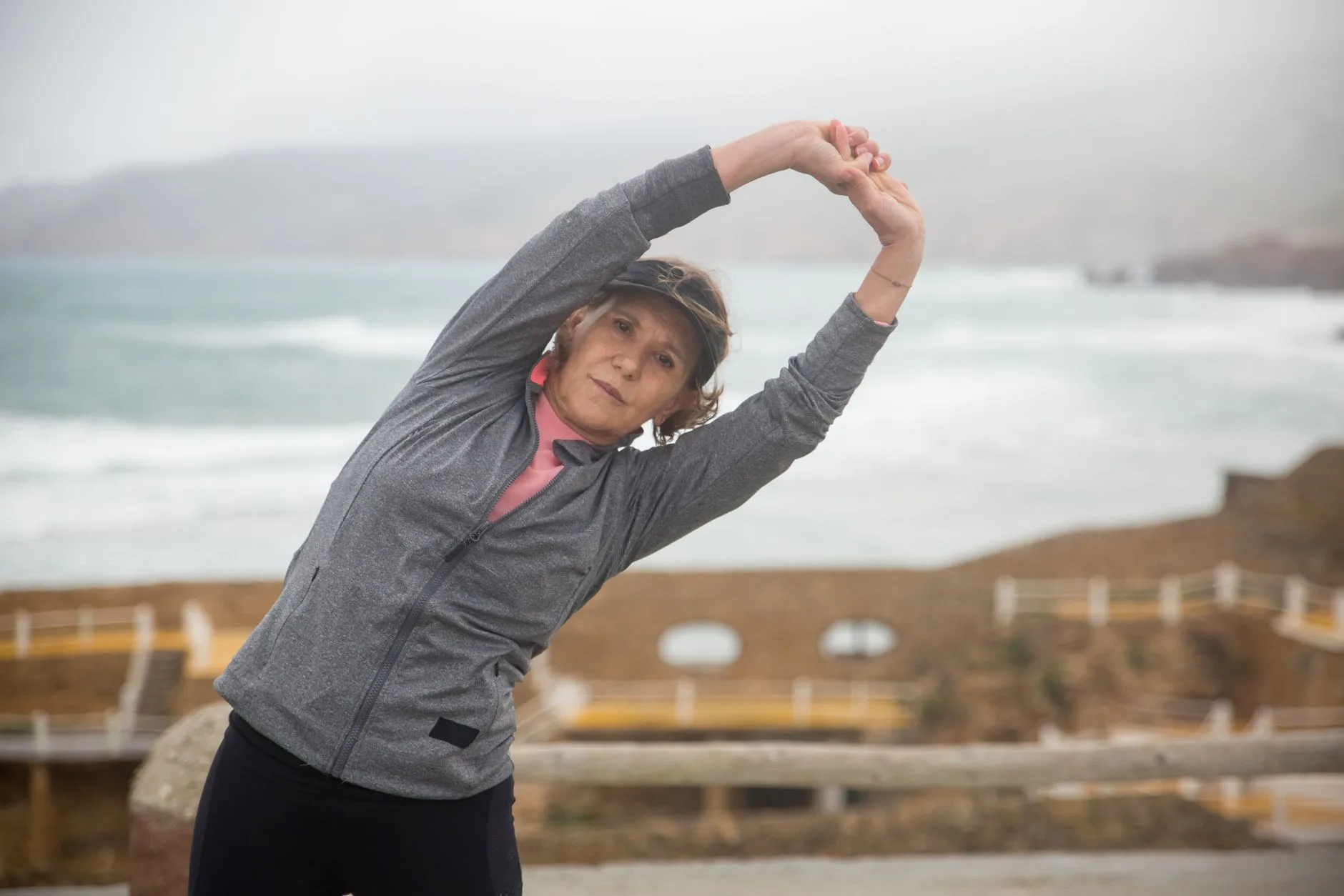
Photo by Kampus Production on Pexels
Why your knees hurt more than they used to
Something changes somewhere around 50. Not dramatically — you’re not suddenly a different runner overnight — but the recovery from a hard session takes longer, the calf niggle that used to disappear in two days now hangs around for a week, and you’ve started wondering whether that ache in your hip is “just getting older” or something you should actually deal with.
Here’s the part nobody tells you clearly enough: a lot of what feels like ageing is actually muscle loss, and muscle loss is one of the few things you have real control over. From your mid-30s onwards, you lose roughly 3–8% of muscle mass per decade if you do nothing about it, and that rate accelerates after 50. Running alone doesn’t stop this. Running is repetitive, low-force, and mostly works the same muscle groups in the same plane of movement. It doesn’t build the strength, power, or bone density you need to keep running well into your 60s and 70s.
Strength training does. Not “should probably think about it” strength training — actual, structured, twice-a-week strength training, done consistently, for the rest of your running life. This isn’t about looking a certain way or chasing a six-pack. It’s about still being able to run at 68 without your knees vetoing the plan.
What actually changes in your body after 50
Three things matter here, and they explain why generic “core work” advice misses the point.
Muscle mass and power drop faster than strength. You lose the ability to produce force quickly before you lose raw strength. This is why older runners often say their legs “feel heavy” rather than weak — it’s a power problem, not just a strength one. Power is what lets you push off the ground efficiently and recover if you stumble on a kerb.
Bone density declines, especially after menopause for women. Running is weight-bearing, which helps, but resistance training adds a stimulus that running alone doesn’t — direct mechanical loading through weights that builds bone in the hips and spine, the two areas most at risk of osteoporosis. The NHS advice on osteoporosis is clear that strength and weight-bearing exercise together do more than either alone.
Tendons get stiffer and less tolerant of sudden load. This is the practical reason your Achilles or hamstring flares up more easily than it did at 35. Tendons adapt slowly — slower than muscle — so the strength work that protects them needs to be progressive, not sporadic. If you’re already dealing with tendon trouble, it’s worth reading about Achilles tendinopathy and whether you can keep running alongside anything below.
None of this is a reason to stop running or to panic. It’s a reason to add something specific.
The three things your strength routine needs to cover
Not every strength session needs to hit all three, but your weekly routine should, over the course of a fortnight.
- Lower body strength — squats, lunges, step-ups, deadlifts (or their easier variants). This is the foundation. Weak glutes and quads are behind a huge share of runner knee pain.
- Single-leg stability — running is a series of single-leg landings, not a two-legged sport. Single-leg work exposes and fixes imbalances that double-leg exercises hide.
- Power and reactivity — small hops, step-downs, or light plyometrics. This is the bit most over-50 programmes skip entirely, and it’s the bit that keeps your stride from feeling flat.
A realistic twice-a-week routine
You don’t need a gym membership or 90 minutes. Two sessions a week, 30–40 minutes each, done consistently for 12 weeks, will move the needle more than four sporadic sessions squeezed in over a month.
| Exercise | Sets x Reps | Why it matters |
|---|---|---|
| Bodyweight or goblet squat | 3 x 10–12 | Builds quad and glute strength for hills and late-race fatigue |
| Bulgarian split squat | 3 x 8 per leg | Single-leg strength, directly mirrors running mechanics |
| Romanian deadlift (dumbbells or kettlebell) | 3 x 10 | Hamstrings and glutes — the muscles most runners under-train |
| Standing calf raise (progress to single-leg) | 3 x 15 | Protects the Achilles and calf against overuse injury |
| Side-lying clamshell or banded lateral walk | 2 x 15 per side | Hip stability, reduces knee tracking issues |
| Plank or dead bug | 3 x 30 seconds | Trunk control for maintaining form when tired |
| Low box step-ups (progress to jump step-ups) | 2 x 8 per leg | Introduces power and reactivity safely |
Start with bodyweight or light dumbbells for the first two to three weeks. Add load gradually — an extra 2–2.5kg every two weeks is plenty. The goal isn’t to max out; it’s to make the exercise feel hard by the last two reps of each set, every time.
If gym equipment isn’t your thing, resistance bands and a couple of dumbbells at home cover almost everything above. This overlaps naturally with what we’ve written about cross training for runners and what actually helps — strength work is arguably the single most useful form of cross training for anyone over 50.
How to fit it around your running week
This is where most well-intentioned plans fall apart. You don’t need to add two extra sessions on top of your current running — that’s how injuries happen. Instead, restructure the week slightly:
- Easy run days: fine to add a short strength session afterwards, when muscles are warm.
- Rest days: ideal for strength — it’s genuinely restorative for your running, not something competing with recovery.
- Never before a hard interval or long run session: tired legs and speed work don’t mix well, and you’ll under-perform both.
A typical week might look like: Monday strength, Tuesday easy run, Wednesday intervals, Thursday strength, Friday rest, Saturday long run, Sunday easy run or rest. If your week doesn’t allow that structure — because you’ve got a job, kids, or simply don’t have the energy for six sessions — two runs and two strength sessions is a perfectly legitimate week. Consistency over months matters more than density in any given week, something worth remembering if you’re also mapping out how many rest days runners actually need.
What to expect and when
Be realistic about the timeline. Strength adaptations happen faster than most people think in the first month — largely nervous system efficiency, not new muscle — which is why you’ll feel noticeably stronger by week 3 or 4. Actual muscle and tendon remodelling takes longer: expect meaningful changes in bone density and tendon resilience over 6–12 months, not weeks.
What you’ll likely notice first:
- Hills feel less punishing by week 4–6
- Post-long-run soreness reduces by week 6–8
- Old niggles (that stubborn hip flexor or hamstring tightness) settle down by week 8–12, assuming you’re addressing the root cause and not just symptoms — see our piece on hip flexor pain when running if that’s a recurring issue for you
What won’t happen: you won’t get “bulky.” Two sessions a week of moderate resistance training doesn’t build significant muscle mass in the way bodybuilding programmes do — that requires far higher volume and calorie surplus than most runners maintain or want.
Common mistakes runners over 50 make with strength training
Doing only bodyweight exercises forever. Bodyweight squats are a fine starting point, not an endpoint. If you can do 20+ reps easily, you need external load to keep progressing.
Skipping the power work out of caution. Small hops and step-downs feel risky, but done at low volume with good form, they’re what maintains the springiness in your stride. Avoiding them entirely accelerates the “heavy legs” feeling, not the opposite.
Treating strength as optional when busy. It’s usually the first thing cut from a packed week, which is understandable but backwards — the strength sessions are protecting the running sessions, not competing with them.
Not warming up properly before lifting. Five minutes of light cardio and dynamic movement before strength work matters just as much here as it does before a run — the same principles from our guide to warm-up exercises before running apply directly.
The NHS guidance on strength and flexibility exercises recommends muscle-strengthening activity at least two days a week for adults, which lines up almost exactly with the routine above — this isn’t a niche running trend, it’s baseline adult health advice that runners over 50 particularly benefit from.
The Honest Takeaway
- Start with two 30-minute strength sessions this week — squats, split squats, deadlifts, calf raises, and a plank. Bodyweight is fine to begin with; add dumbbells within a month.
- Put strength sessions on easy-run or rest days, never immediately before intervals or a long run.
- Give it 8–12 weeks before judging results. The first few weeks feel like nothing is happening — that’s normal, not failure.
- If you’ve got a specific niggle (Achilles, hamstring, hip flexor), address the strength work that targets that area specifically, not just a generic routine.
- This isn’t a temporary fix before you “get back to just running.” For runners over 50, strength training is now part of running — as permanent a fixture as your shoes.
Next read: Does running build muscle on its own?