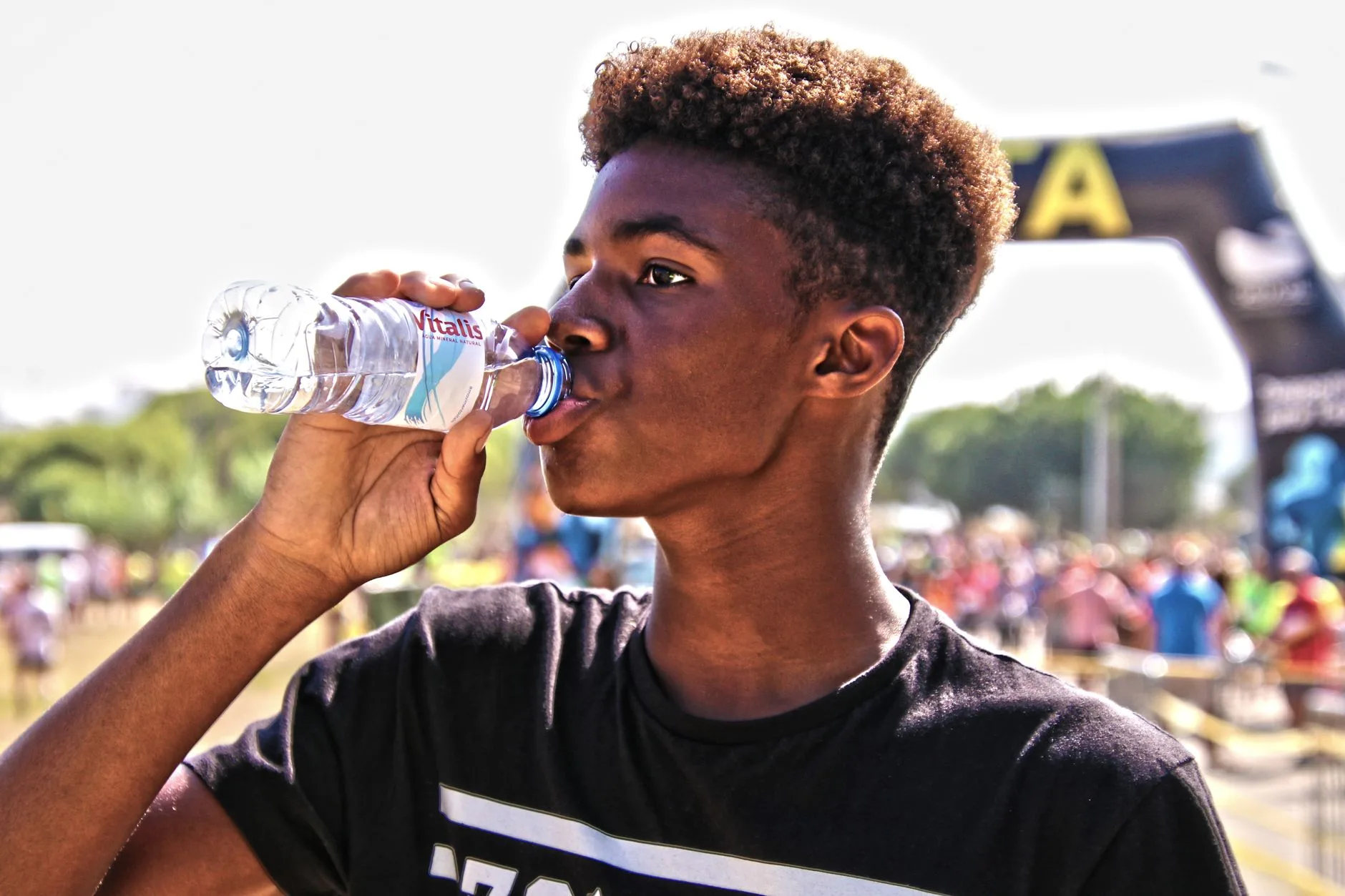
Photo by RUN 4 FFWPU on Pexels
You know the run. Eight minutes in, your t-shirt is already soaked, your mouth feels like sandpaper, and the pace that felt fine in March now has your heart rate through the roof. It’s not you getting unfit over winter. It’s July doing what July does — and most runners handle it badly, either by panic-drinking a litre of water before they head out, or ignoring the problem until they’re sat on a kerb feeling dizzy.
Hydration in summer running isn’t complicated, but it is specific. Generic advice like “drink more water” doesn’t tell you anything useful at 6am when you’re deciding whether to carry a bottle for a 45-minute run. What follows is the actual mechanics of staying hydrated when it’s hot — before, during and after — calibrated for people running 5Ks and half marathons, not ultramarathons in Death Valley.
Why Summer Running Dehydrates You Faster Than You Think
When it’s hot, your body sweats more to cool itself down — that part’s obvious. What’s less obvious is how much more. A runner who loses 500ml of sweat an hour in cool weather can easily lose 1–1.5 litres an hour once temperatures climb past 25°C, especially with humidity thrown in. Humidity is the sneaky one: sweat only cools you if it evaporates, and in humid air it just sits on your skin, soaking your shirt and doing nothing useful.
This matters because a fluid loss of just 2% of your body weight — about 1.4kg for a 70kg runner — is enough to measurably slow you down and raise your perceived effort. You don’t need to be severely dehydrated to feel terrible. You need surprisingly little.
If you want the full breakdown of symptoms and risk factors, our piece on dehydration while running covers that in detail — worth a read if you’ve ever finished a summer run with a pounding headache.
Before You Run: The 2-Hour Rule
Don’t drink a pint of water five minutes before you leave the house. It won’t absorb in time and you’ll spend the first mile needing a toilet. Instead:
- 2–3 hours before: 400–600ml of water or a weak electrolyte drink
- 20–30 minutes before: another 150–250ml if it’s a hot morning
- Check your urine colour, not the clock. Pale straw yellow is the target. Dark yellow means you started the day behind.
This matters more in summer because most people are already mildly dehydrated from the night before — bedrooms get hot, sleep gets worse, and you wake up already in a fluid deficit before you’ve laced up.
During the Run: How Much, and When
For runs under 45 minutes in moderate heat, you probably don’t need to carry fluid at all — rehydrating properly afterwards is enough. Past that, here’s a rough framework:
| Run duration | Fluid strategy | Notes |
|---|---|---|
| Under 45 min | None needed during run | Hydrate well before/after |
| 45–75 min | 150–250ml total, sipped | Handheld bottle or planned water fountain stop |
| 75 min–2 hrs | 500–750ml total, split into sips every 15–20 min | Add electrolytes if sweating heavily |
| Over 2 hrs | 500–1000ml per hour, electrolytes essential | Plan a route with refill points |
These are starting points, not laws. Heavy sweaters — the ones who finish runs with white salt lines on their shirt — need more fluid and significantly more sodium than someone who barely sweats. If you’re training for a longer event, it’s worth testing your own sweat rate: weigh yourself before and after a 60-minute run without drinking anything. Every kilogram lost is roughly a litre of sweat.
Water Isn’t Always Enough — Here’s When You Need Electrolytes
Plain water replaces fluid but not the sodium, potassium and chloride you lose through sweat. For a 30-minute parkrun, that doesn’t matter. For a 90-minute long run in 28°C heat, it does — drinking only water can actually dilute your remaining sodium and make things worse, a condition called hyponatremia. It’s rare in everyday runners but it’s a real risk in long, hot efforts with excessive plain water intake.
Rule of thumb: if your run is under an hour, water’s fine. Past an hour in real heat, add electrolytes — either through a sports drink, electrolyte tablets, or salty snacks beforehand. We’ve done an honest comparison of electrolyte drinks for runners if you want to see which ones are worth the money and which are just flavoured sugar water.
Adjust the Run, Not Just the Drink Bottle
Hydration strategy only gets you so far if you’re still trying to hit your winter pace in summer heat. The honest move is to slow down — 30–60 seconds per km slower than your normal easy pace is completely reasonable once it’s over 24°C. Your heart rate will be higher for the same pace regardless of how hydrated you are; that’s basic physiology, not a fitness failure.
Practical adjustments that actually help:
- Run before 7am or after 7pm — the difference between a 9am run and a 6am run in July can be 8–10°C.
- Choose shaded or tree-lined routes over open roads or exposed trails.
- Wear light-coloured, breathable kit, and a proper cap — not just any hat. Our guide to running caps for summer heat explains what actually keeps you cooler versus what just looks the part.
- Carry fluid rather than relying on route planning if your run is longer than 45 minutes — a handheld bottle or vest (see our running backpack guide for long-run options) beats hoping a shop will be open.
After the Run: Rehydration Isn’t Optional
This is the step most people skip. You finish, you feel fine, you have a coffee and get on with your day — then three hours later you’ve got a headache and zero energy. Post-run rehydration should aim to replace roughly 125–150% of the fluid you lost, because you’ll continue losing fluid through sweat and urine for a while after you stop.
The simplest way to estimate this without obsessing over numbers: weigh yourself before and after a run on a hot day. For every kilogram lost, drink about 1.2–1.5 litres over the following few hours — not all at once. Add a pinch of salt or an electrolyte tablet if the run was long or particularly sweaty.
Know the Warning Signs Before They Become a Problem
Mild dehydration feels like unexplained fatigue, a slightly faster-than-normal heart rate, and a dry mouth that water doesn’t quite fix. That’s your cue to stop pushing pace and start focusing on fluid. More serious heat illness — dizziness, confusion, nausea, or stopping sweating altogether despite the heat — is a different category entirely and means stopping the run immediately, finding shade, and cooling down. The NHS has clear guidance on recognising heat exhaustion and heatstroke that’s worth knowing before summer training ramps up, not during it.
The Honest Takeaway
- Drink 400–600ml two to three hours before a summer run, and check your urine colour that morning — not just your watch.
- Skip fluid during runs under 45 minutes; sip 150–750ml during longer ones depending on duration and heat.
- Switch to electrolytes, not just water, for anything over an hour in real heat — plain water alone can dilute your sodium on long hot runs.
- Accept a slower pace in summer. It’s not a fitness problem, it’s a thermostat problem, and your body is doing exactly what it’s supposed to.
- Rehydrate properly afterwards — roughly 1.2–1.5 litres per kilogram of body weight lost — rather than assuming you’ll catch up by tomorrow.
Next read: Learn the warning signs in our dehydration while running guide