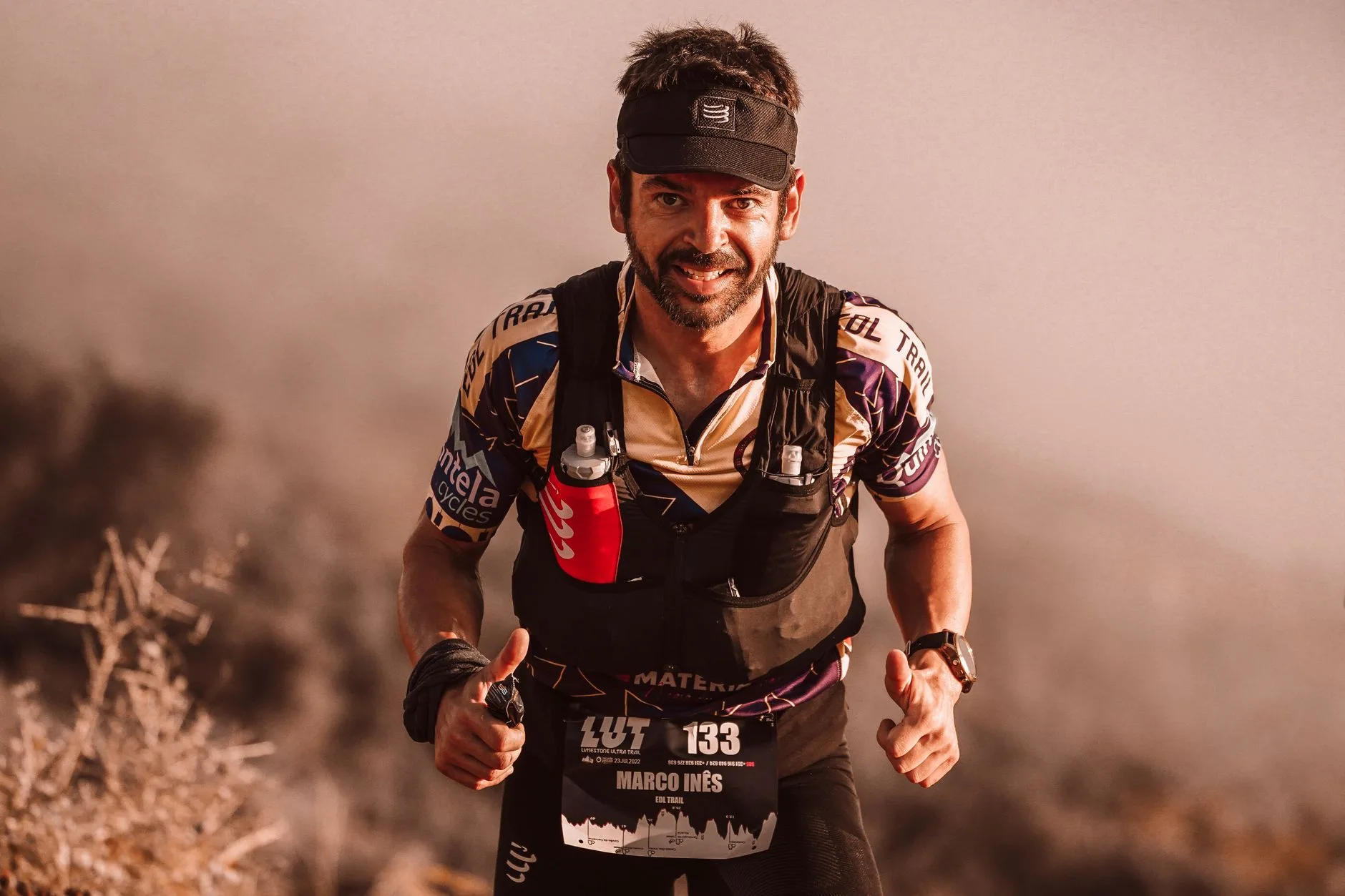
Photo by RUN 4 FFWPU on Pexels
You’ve run a marathon, maybe two. Or you’ve been eyeing a 50K trail race and thinking “how much harder can it really be than 26.2?” The honest answer: it’s not just harder, it’s different. Ultramarathon training isn’t marathon training with extra miles bolted on. It’s a different skill set — walking strategically, eating real food on the move, managing your feet for 8+ hours, and getting comfortable being uncomfortable for a very long time.
If you’re reading this, you’ve probably already decided you’re doing one. Good. This isn’t about talking you out of it or convincing you it’s some mythical test of human endurance — it’s a long day outdoors with a specific, learnable set of demands. Most of what goes wrong in a first ultra isn’t lack of fitness. It’s untested nutrition, undertrained feet, and pacing that assumes marathon rules apply when they don’t.
This guide covers what actually matters for a first 50K or 50-mile: how to build the weeks, how to train your gut and your feet, and what to do differently on race day than you would in a marathon.
How ultramarathon training differs from marathon training
The biggest shift is this: ultras are rarely won or lost by VO2 max. They’re decided by whoever manages fuelling, fatigue, and problem-solving best over the longest stretch of time. Training reflects that.
- Time on feet matters more than pace. A 4-hour training run at an easy shuffle teaches your body and mind more than a fast 90-minute tempo run.
- Back-to-back long runs (a long run Saturday, another the next day on tired legs) matter more in ultra training than in marathon prep, because they simulate cumulative fatigue — which is the actual enemy on race day, not raw speed.
- Walking is a strategy, not a failure. Most ultra finishers, including fast ones, walk the climbs. Practising a run-walk rhythm in training (e.g. run 9 minutes, walk 1, or walk every uphill) isn’t a compromise — it’s standard practice.
- Elevation and terrain train specifically. If your race has 2,000m of climbing, flat road runs won’t prepare your quads for the descents, which is where most DNFs quietly begin.
If you’ve done a 16-week marathon training plan before, you already have a base to build from — this isn’t starting from zero, but it is a different training emphasis.
How long you need to prepare
For a first 50K, most everyday runners need 16–20 weeks, assuming you can already comfortably run 3–4 hours (i.e. you’ve done at least one marathon or have a solid half marathon base). For a first 50-mile, give yourself 20–24 weeks.
If you’re coming from a shorter running background — say, you’ve only raced half marathons — don’t skip the base building phase. Rushing straight into long ultra-specific sessions on an undercooked aerobic base is the single most common injury trigger in first-time ultra runners.
A sample weekly structure
There’s no single “right” plan, but here’s a realistic week for someone training for a 50K, running 4–5 days a week with a full-time job:
| Day | Session | Purpose |
|---|---|---|
| Monday | Rest or 30 min easy cross-training | Recovery |
| Tuesday | 50–60 min easy run, hilly if possible | Aerobic base + terrain adaptation |
| Wednesday | Strength session (30–40 min) + short easy run | Durability |
| Thursday | 45 min moderate effort with some climbing | Strength-endurance |
| Friday | Rest | Recovery |
| Saturday | Long run — 2.5–3.5 hrs, run-walk pacing | Time on feet |
| Sunday | Back-to-back run — 60–90 min easy, tired legs | Fatigue simulation |
Weekly mileage for a 50K build typically peaks around 50–70km (31–43 miles), lower than you’d expect, because time on feet and terrain matter more than raw distance. Two flat road miles are not equivalent to two miles of technical, climbing trail.
Cross-training — cycling, swimming, or rowing — is genuinely useful here, both for recovery and for building aerobic fitness without adding impact stress on legs already absorbing a lot of climbing and descending.
Training your gut as seriously as your legs
In a marathon, you might take 4–6 gels. In an ultra, you’re eating real food — flapjacks, boiled potatoes, crisps, sandwiches — for 6, 10, maybe 15+ hours. A stomach that’s never practised this will often revolt somewhere around hour 4, and that’s usually what actually ends a first ultra attempt, not the legs.
Practical rule: every long run over 2.5 hours, eat and drink exactly what you plan to use on race day, at the pace you’ll use it. Aim for roughly 200–300 calories per hour once you’re past the 2-hour mark, adjusting based on what you can actually tolerate moving — this varies hugely person to person. Build your gut tolerance the same way you build your fitness: gradually, repeatedly, under real conditions.
Hydration and electrolytes matter more too, especially in hot or humid conditions, because you’re out there longer and sweating for longer. The NHS has sensible general guidance on staying properly hydrated during prolonged exercise — the core idea is drinking to thirst rather than forcing fluids, and it applies directly to ultras. If you’re unsure which electrolyte product suits your race, our comparison of electrolyte drinks is worth a read before you commit to one for race day.
Feet, gear, and the stuff that quietly ends races
Blisters and chafing don’t sound dramatic until they’re the reason you’re walking at mile 20 with your teeth gritted. A few things that make a disproportionate difference:
- Socks. Double-layer or well-fitted technical socks reduce friction significantly over long durations — see our breakdown of blister-prevention socks.
- Anti-chafe balm on feet, thighs, underarms, and anywhere fabric rubs repeatedly — applied before you start, not after it hurts. Our anti-chafe guide covers what’s actually worth carrying.
- A proper running vest or pack. You’ll need to carry water, food, a layer, and possibly mandatory kit (many trail ultras require a whistle, space blanket, phone). Test your pack on long runs — never debut it on race day. Our guide to running backpacks for ultras is a good place to start if you don’t own one yet.
- Shoe choice. Trail shoes with good grip and a slightly wider toe box (feet swell over long distances) reduce blister risk substantially compared to road shoes on technical terrain.
None of this is glamorous. All of it is the difference between finishing comfortably and finishing in survival mode.
Pacing and race-day strategy
The most common mistake in a first ultra is running the first third like it’s a marathon. It isn’t. Here’s a rough pacing framework:
| Phase | Effort level | What it feels like |
|---|---|---|
| First third | Deliberately easy, 60–70% effort | “This feels too slow” — that’s correct |
| Middle third | Steady, conversational on flats | Managing fuelling and terrain |
| Final third | Whatever you have left | Walking hills is normal, not failure |
Start slower than feels necessary. Ultra veterans often say you should feel almost bored in the first 90 minutes — if you don’t, you’re going out too hard. This matters far more here than it does in a marathon, because there’s no hitting the wall recovery margin when you’ve still got 20 miles and a mountain left.
Practice your walk-run ratio on climbs during training so it’s automatic on race day — most ultra finishers walk anything over roughly 8–10% gradient, even the ones near the front.
The Honest Takeaway
- Build your long runs around time on feet and terrain, not pace — a 4-hour easy shuffle on hills teaches you more than a fast tempo session.
- Treat race nutrition as a trained skill: practice eating real food at race pace on every run over 2.5 hours, well before race day.
- Don’t skip strength work or back-to-back long run days — cumulative fatigue, not raw speed, is what actually breaks people in ultras.
- Test every piece of gear — pack, socks, shoes, balm — on long training runs. Race day is not the time to discover a new blister spot.
- Start slower than feels right. If the first hour doesn’t feel slightly too easy, you’ve gone out too fast — and you’ll feel it at hour six, not hour one.
Next read: Half marathon vs full marathon: which should you do first?