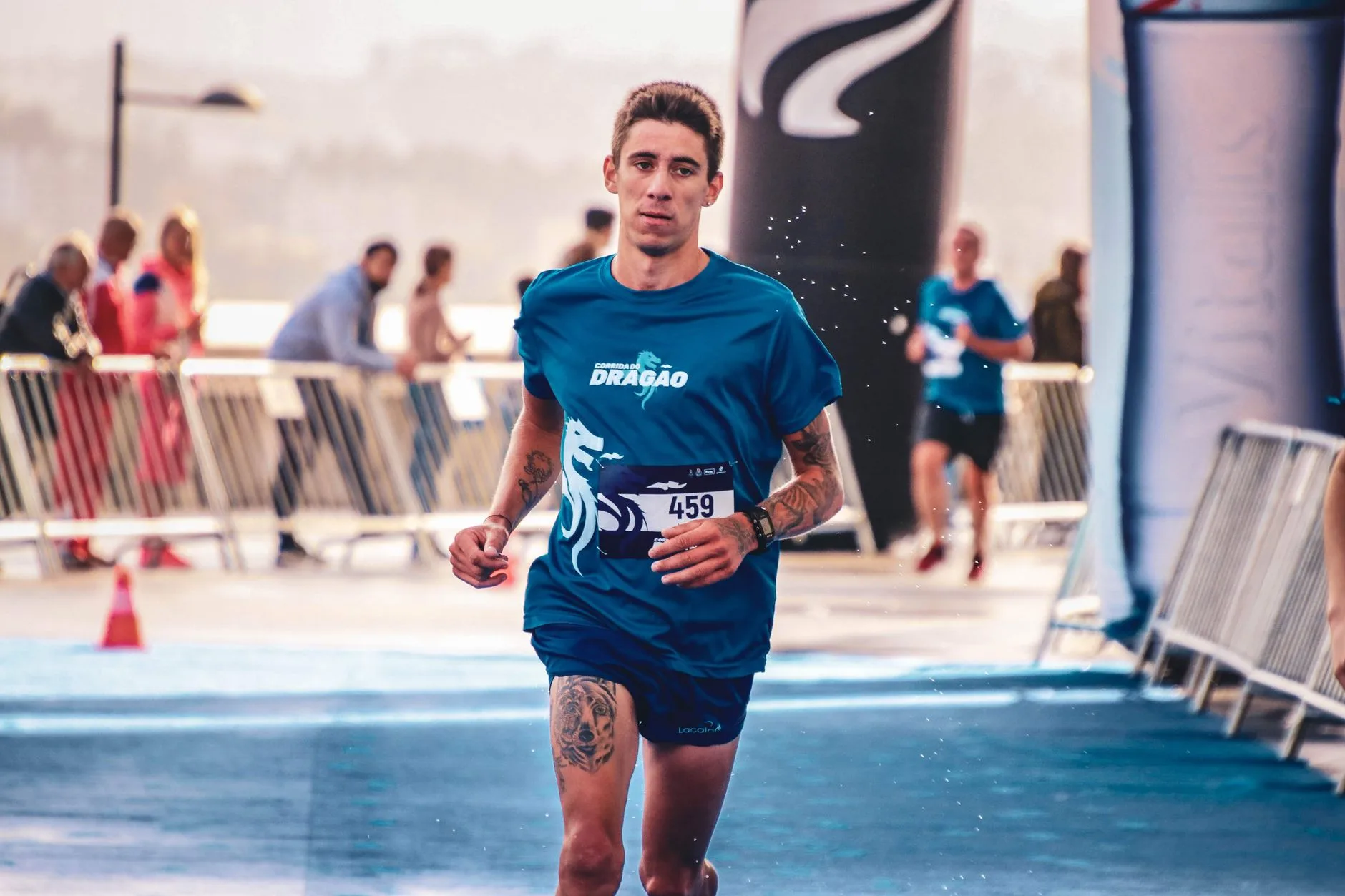
Photo by RUN 4 FFWPU on Pexels
It’s 11pm the night before your first race and you’re standing in front of a pile of running kit, holding your phone, googling “what do I actually need to bring to a 5k.” You’ve trained for this. You’ve done the long runs, the nervous parkrun attempts, the early alarms. But nobody tells you that the logistics — the bag, the breakfast, the bib, the bathroom queue — can feel just as stressful as the running itself.
That’s normal. Most of race-day anxiety for beginners isn’t about fitness. It’s about the unknowns: what time to arrive, what to eat, whether your new socks will cause blisters, what happens if you need the toilet five minutes before the gun goes. This checklist deals with all of it, in order, so you can stop googling and start sleeping.
The night-before checklist
Do this before you go to bed, not in a panic at 6am:
- Lay out your full outfit — top to bottom, including socks and underwear. Nothing new. If you haven’t run in it before, don’t wear it tomorrow.
- Pin your race number to your top — not your jacket you might take off.
- Check the weather properly, not just “is it raining” — temperature at your actual start time matters more than the daily forecast.
- Charge your watch and phone fully.
- Pack your bag (see below) so morning-you only has to carry it, not think about it.
- Eat a normal dinner at a normal time. This is not the meal to experiment with. Pasta, rice, something familiar, nothing unusually spicy or rich.
- Know your start time, your travel time, and add 30 minutes. Bag drop queues and toilet queues always take longer than you think.
If you’re running your first 10k rather than a 5k, the logistics get slightly more involved — our 10k race day tips cover pacing specifics that are worth reading alongside this.
What to pack: the race-day bag
Here’s a breakdown of what’s essential, what’s genuinely useful, and what you can safely leave at home.
| Item | Essential? | Why |
|---|---|---|
| Race number + safety pins (or race belt) | Essential | No number, no official time, sometimes no start |
| Timing chip (if separate) | Essential | Attach to shoe laces the night before |
| Running shoes you’ve run in before | Essential | Never debut shoes on race day |
| Weather-appropriate top/jacket | Essential | Check hourly forecast, not daily |
| Water bottle | Useful | Most races have water stations, but not always early enough |
| Energy gel or snack | Useful (10k+) | Only if you’ve practised with it in training — see our energy gels guide |
| Bin bag or old jumper | Useful | Keep warm at the start line, then discard or hand to baggage |
| Vaseline or anti-chafe balm | Useful | Underarms, inner thighs, bra line, toes |
| Plasters for nipples/toes | Useful | Cheap insurance against a ruined finish photo |
| Spare socks | Nice to have | Useful for cold, wet starts |
| Cash or card | Useful | For coffee, post-race food, parking |
| Headphones | Optional | Check race rules — some events ban them |
| GPS watch | Optional | Helpful for pacing, not required to finish |
If blisters have ruined a long run for you before, it’s worth reading about preventing blisters and investing in a decent pair of blister-resistant socks well before race week — not the morning of.
Race morning timeline
A rough structure that works for most 5k and 10k events:
- 3 hours before: Wake up, light breakfast (toast and banana, or porridge — whatever you’ve used before long runs).
- 90 minutes before: Leave for the venue, allowing for parking or transport delays.
- 60 minutes before: Arrive, find bag drop, use the toilet (queue early — this is not optional advice, it’s survival advice).
- 30 minutes before: Light jog or dynamic stretches. Our warm-up routine takes about 8 minutes and is worth doing even in a crowded start pen.
- 10 minutes before: Get into your starting corral based on your expected pace — not where your friends are standing.
- 0 minutes: Go out slower than you think you should. Nearly every beginner’s biggest race-day mistake is starting too fast on adrenaline.
What to wear (and what not to)
The golden rule is simple: nothing new on race day. That includes shoes, socks, shorts, sports bras, and especially anything with seams you haven’t tested over distance.
Dress for 10°C warmer than the actual temperature — you’ll warm up fast once you’re running, even on a cold morning. If you’re standing at the start line and feel slightly chilly, you’ve probably dressed correctly. If you feel comfortable standing still, you’ll overheat by kilometre 2.
For temperatures below 10°C, a cheap long-sleeve top or bin bag you can discard at the start works better than an expensive jacket you’ll regret carrying for 5k.
Fuelling before and during
What you need depends heavily on distance. A 25-minute 5k and a 2-hour half marathon are completely different fuelling problems.
| Race distance | Pre-race fuel | During race |
|---|---|---|
| 5k | Light breakfast, 1–2 hours before | Nothing needed |
| 10k | Light breakfast, 1–2 hours before | Water only, unless running 55+ minutes |
| Half marathon | Breakfast + possible banana closer to start | Water + 1 gel around 45–60 min mark |
| Marathon | Full breakfast, consider carb loading the day before | Gel every 40–45 minutes, water/electrolytes throughout |
The rule that matters more than any of these numbers: never try anything new on race day. If you haven’t practised a gel on a training run, don’t take one mid-race. Your gut doesn’t care that it’s race day — it reacts the same way it always does.
Managing nerves and the first mile
Pre-race nerves are completely normal, even for people who’ve run dozens of races. A racing heart rate and slightly shaky legs standing in the start pen don’t mean you’re not ready — they mean your body is doing exactly what it’s supposed to do.
The practical fix for nerves is pacing discipline, not positive thinking. Decide your target pace before the race, based on your training — not on how fast everyone around you looks like they’re going. The NHS guidance on building up running gradually exists for a reason: consistent, controlled effort beats adrenaline-fuelled sprinting every time.
A simple trick: run the first kilometre 10–15 seconds per km slower than your target pace. It’ll feel too easy. That’s correct. You’ll thank yourself at the finish, not the start.
After the race
Don’t disappear the moment you cross the line. Keep walking for 5–10 minutes rather than stopping dead — it helps blood return from your legs and reduces lightheadedness. Rehydrate properly over the next hour rather than all at once (the NHS has sensible guidance on hydration that applies well beyond race day). Eat something with protein and carbs within an hour or two if you can.
And if the race didn’t go how you hoped — too hot, too crowded, cramp at kilometre 8 — that’s data, not failure. Our piece on bouncing back from a bad run applies just as much to bad races.
The Honest Takeaway
- Pack your bag and lay out your kit the night before — morning-you should only have to get dressed and walk out the door.
- Nothing new on race day: not shoes, not socks, not breakfast, not gels.
- Arrive with 60–90 minutes to spare. Toilet queues are the single most underestimated part of race morning.
- Start slower than feels necessary. The first kilometre should feel almost too easy.
- A slower-than-hoped finish time is still a finished race. The checklist above is there to help you enjoy it, not just survive it.
Next read: If this is your first race ever, our couch to 5K guide can help you get properly race-ready